



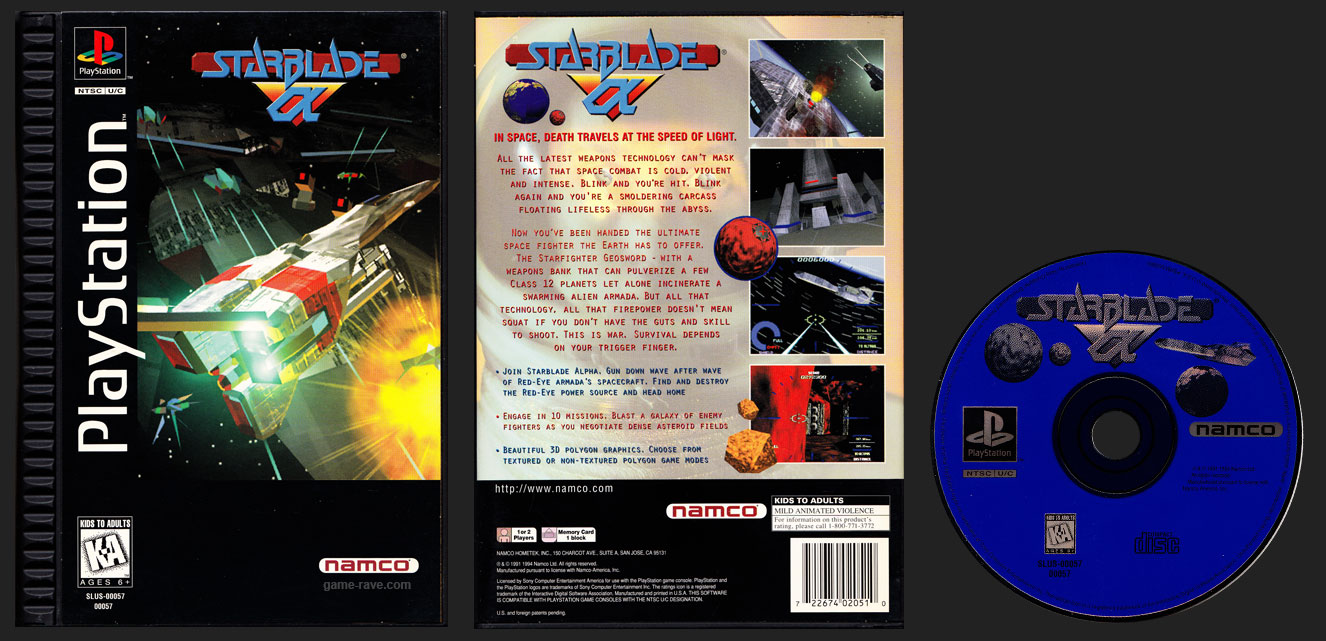
Plastic Ridged Long Box Release
| Genre: Full Motion Video |
CDs: 1 |
|---|---|
| Publisher: Namco |
Released: April 27, 1996 |
| Developer: Namco |
UPC: 7 22674 02051 0 |
| Sony ID: SLUS-00057 |
PSRM: 000600 |
| Players: 1 to 2 Players |
Memory: 1 Block |
| Accessories: None |
|
| ESRB: Kids to Adults – Mild Animated Violence |
|
| Box Copy:
In space, death travels at the speed of light. All the latest weapons technology can’t mask the fact that space combat is cold, violent, and intense. Blink and you’re hit. Blink again and you’re a smoldering carcass floating lifeless through the abyss. Now you’re handed the ultimate space fighter the Earth has to offer. The Starfighter GeoSword – with a weapons bank that can pulverize a few Class 12 Planets let alone incinerate a swarming alien armada. But all that technology, all that firepower doesn’t mean squat if you don’t have the guts and skill to shoot. This is war. Survival depends on your trigger finger.
|
|
Variants
- There are no known variants.
Misprints
- There are no known misprints.
Review
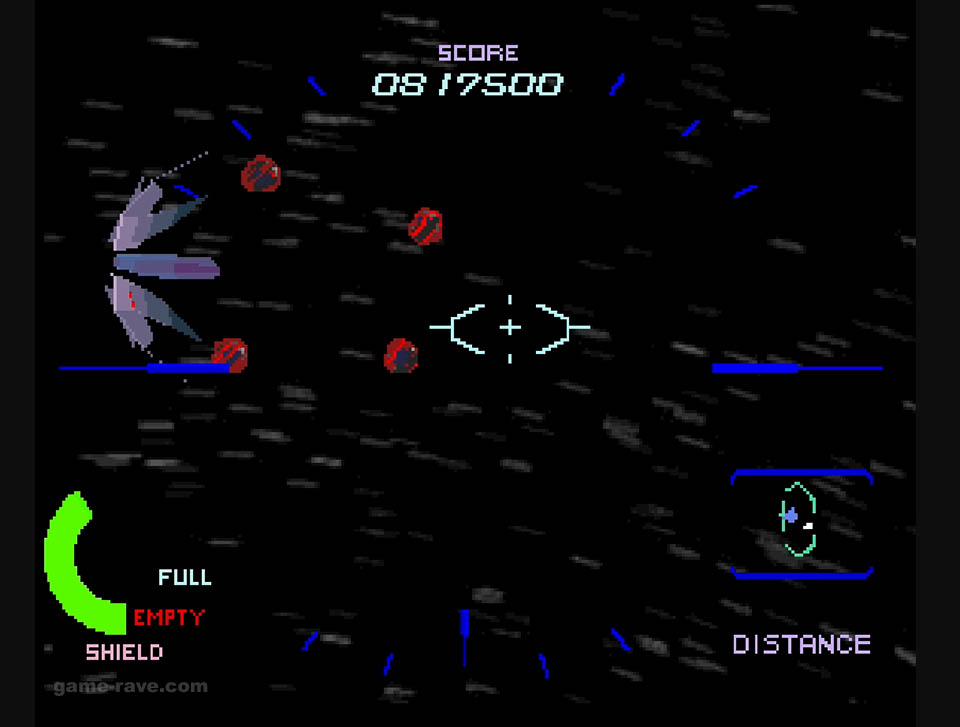
Namco is no stranger to arcade games, and this review focuses on one of their earlier long box home conversions, Starblade Alpha. Based on the original arcaded Starblade, it throws the original on the disc, but also offers what is essentially its own remaster. Players can choose between the original, flat-shaded enemies or swap in textures.
If you never played the original arcade machine, we did lose something in the conversion, specifically its surroundings. Namco’s 900-pound baby was a sit-down model, with a cockpit and badass panel arts all around it. The control was essentially a light gun, practically the Wii Remote of its time. Only you used it like a flight yoke to aim your on-screen cursor.
The display used a curved mirror to provide a simple trick of depth, and if you took damage from an enemy, the seat vibrated to simulate the impact. It was a hoot to experience, and the flat-shaded polygons and high resolution really made it look incredible for its time.
Starblade’s quarter-crunching life was met with high praise and sales, so a home conversion to consoles would be a sure bet. Leading the American pack was the Sega CD version, which needed a few tweaks to survive the hardware.
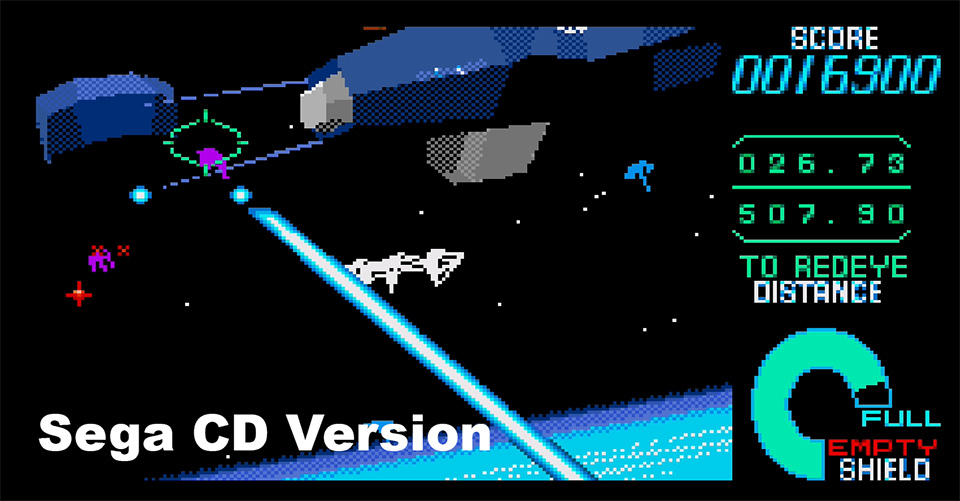
The enemies were switched to wireframes, and the full motion video-like backgrounds were reduced to solid colors and checkerboard patterns to keep things moving. Aside from some minor sections, the port was shockingly good for what it was, and it’s still super playable to this day. But there’s a particular detail that I never realized until I had played that version, more on that in a bit.
After Sega CD, Namco ported it to the 3DO, which formed the basis for the PlayStation version, so let’s skip ahead to my favorite gray box.
In the year of X, the Milky Way Galactic Federation watches in horror as a massive mechanical planet (sadly, not Unicron) arrives near their system, with the planet known only as “Red Eye”. It apparently was sent by a previous planet known as “The Empire.”
So a whole bunch of freedom-loving peeps create Operation Starblade, which is populated by 5 GeoSword fighter spaceships. You, my trusty space pilot, must plant your sweet patootie into the gunner’s seat. From your vantage point, you will use the ship’s twin laser beam cannons to obliterate anything in your path, no matter the size.
…and that’s the entire plot. Now that we have that out of the way, let’s get to the space pew-pews.
Starblade Alpha’s controls are super simple. You use the directional pad to move the cursor, and any of the 4 face buttons to fire. The four shoulder buttons act as speed modifiers. If you hold down one, you are a bit faster; if you hold two, even faster.
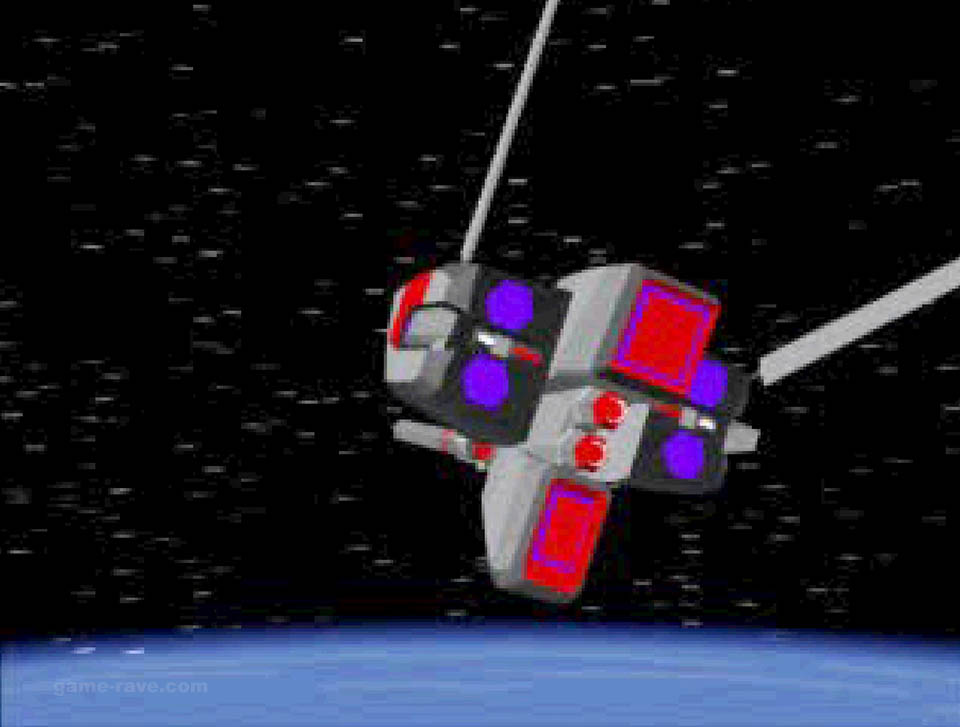
The GeoSword fleet is attacked before it can get on with the mission, so right out of the launch gate – quite literally – you’re plunged into the war with no going back. Hundreds of smaller-class fighters and bombers zip across the screen in every direction as you desperately try to maneuver away from the carriers. Sneaking in to survey the carnage is the Commander Ship, looking menacing with its giant wing and personal armada.
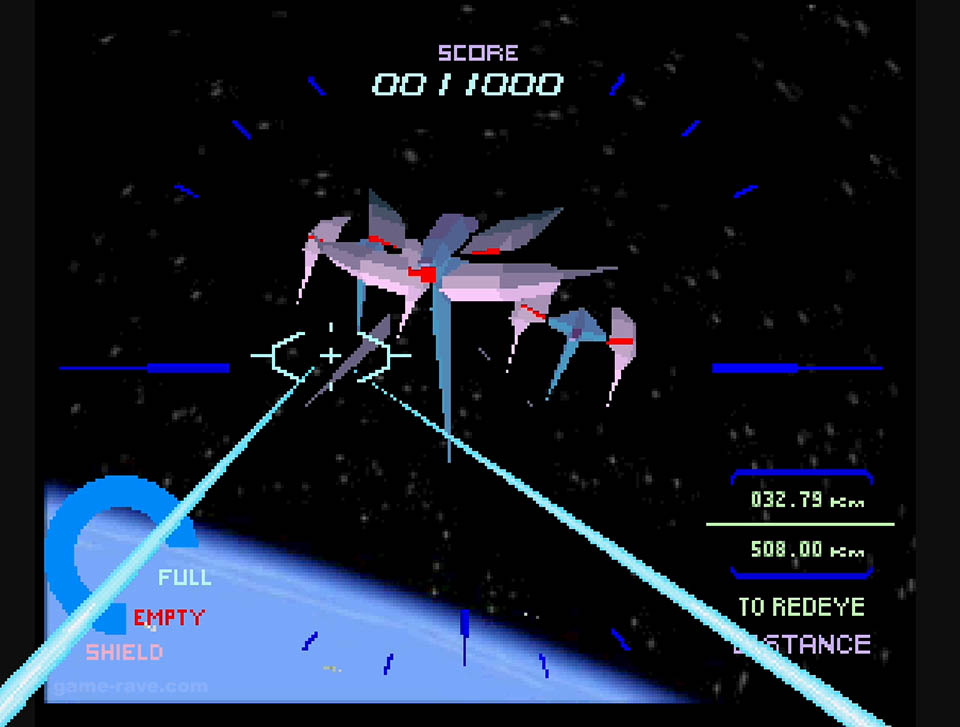
Don’t get too attached, though, as they’ll leave you to your death, just before you’re able to warp after them and closer to Red Eye. Coming out of warp lands you in the middle of an asteroid field, rife with floating mines and a hail of enemy missiles. As your pilot makes their way out of the rocky battleground, the first of the enemy fleets is met. As you weave in and out of the heavies, you’ll need to weave in and out of the construction yards.
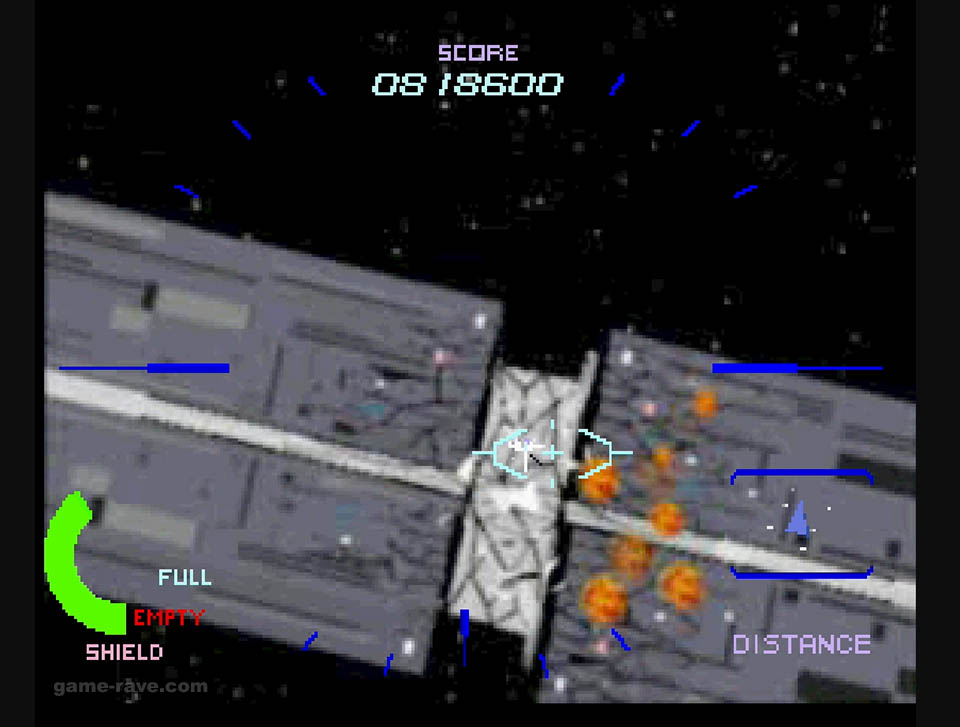
Once past this, it’s a straight suicidal dive down into Red Eye’s trenches and cityscape. Buildings and rock formations infused with laser turrets mercilessly send flak out in every direction. Red Eye’s core, known as Octopus, is close by, and we’ll have to fly into the heart to dismantle it.
After escaping with our lives, the one-way route slams us into the surviving enemy fleet, which brought their massive flagship with them. Once more, after surviving wave after wave, the journey takes us straight to the flagship’s core – just now with slightly different power rods. Once that’s left smoldering, it’s a mad dash outside to take down the commander ship. Fend off and shoot down his unholy barrage of missiles and bullets to finally see him explode and fade away into the blackness of space…and roll credits!
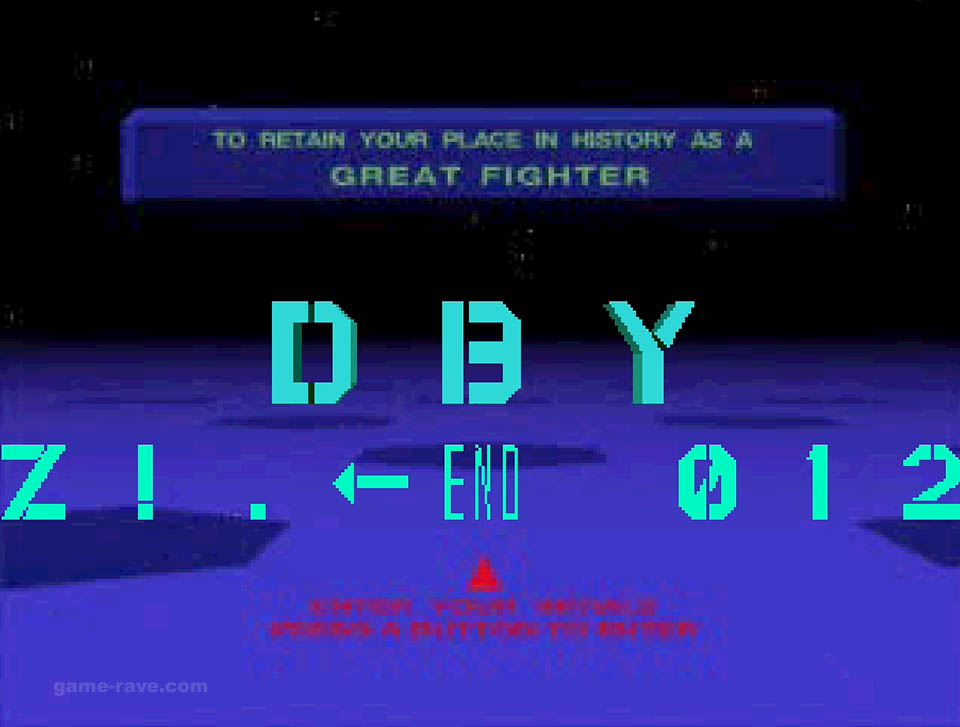
Once you’ve typed in your name for the credits screen, you can do it all over again with the other visual mode.
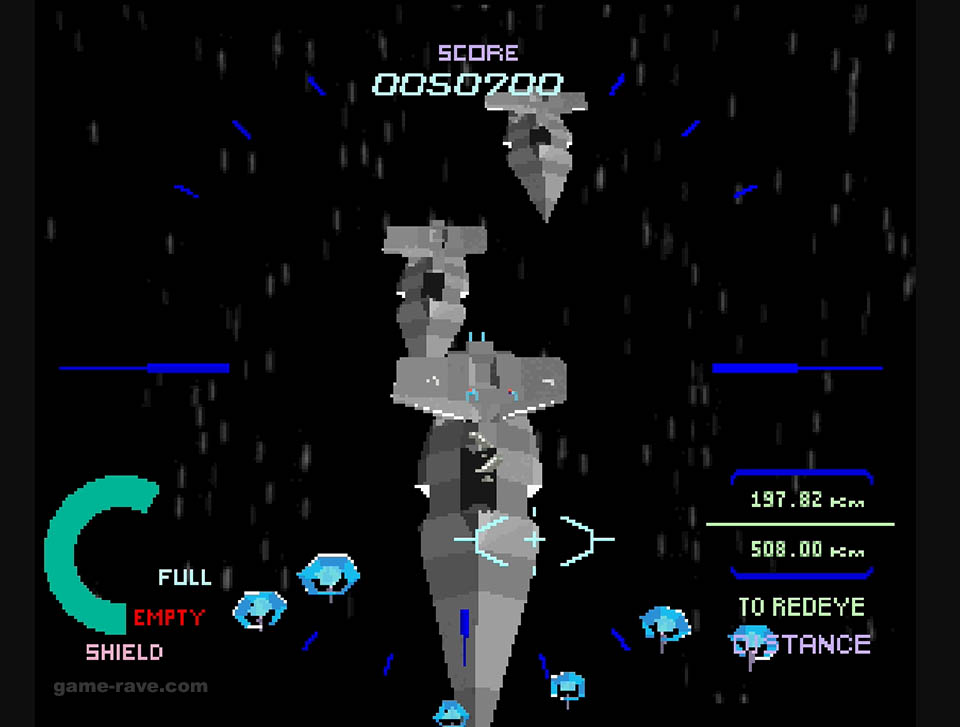
And uh…that’s it. Starblade is 20 minutes of cursor-based shooting, and if I can be brutally honest, it works. There are subtle details that make it work. The FMV is perfectly fine when playing on the TV it was intended for. The voice-over work, while borderline cheesy, fits extremely well, especially with the pilot correctly filling you in as you fly in and around the armada.
Something that did catch me off guard, and I never really noticed it till playing the Sega CD version, is the lack of a soundtrack. Like, it’s there for the eye-catcher, the credits, and the FMV scene, but actually in-game, there’s no soundtrack. There are so many explosions, laser blasts, and spoken words that you really don’t notice until the transition between stages. And like the rest of the game, it works. If you can play the game on a CRT with headphones, do it. It’s the only way to understand how cool it is to be music-free.
Aside from the two programmers’ cheats for Free Play and Rapid Fire, that’s everything there is to see with StarBlade. I feel like this was a great segue from Arthur! Ready To Race because they share similar problems in the original review time frame. With Arthur, it was the intended audience. With StarBlade, it felt like they missed the whole point of this arcade game. Most of the same criticisms were its short play time – you know, the same as it was in the arcade – and the lack of any extras. Aside from them re-rendering the whole game.
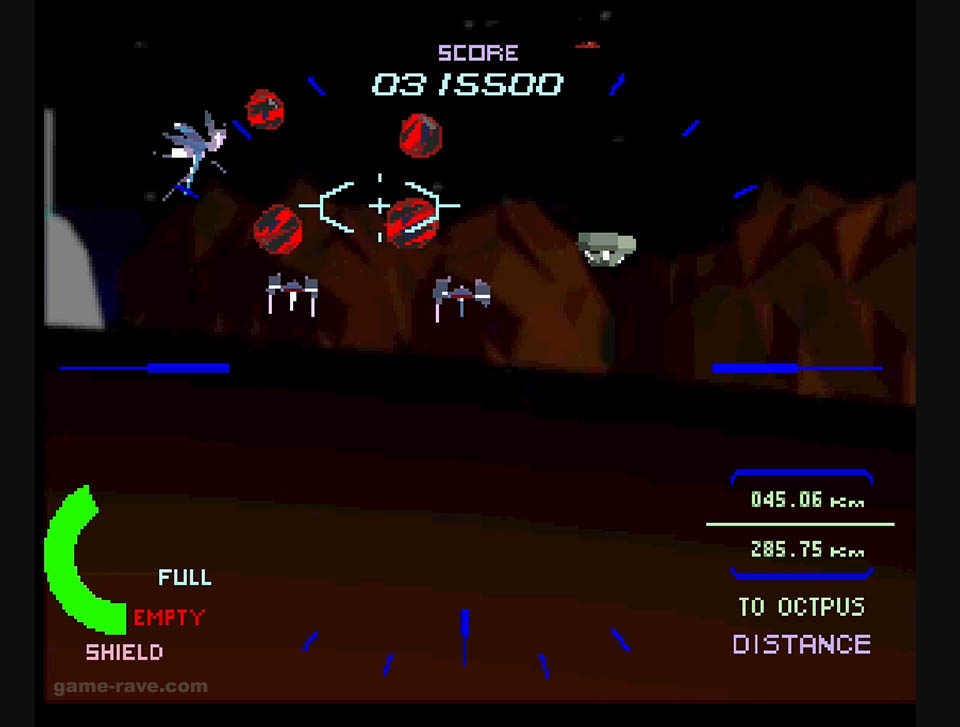
That last part looks like it ate up most of the compact disc’s available space. Further still, in Japan, Namco had published a Laserdisc with the arcade game’s full play-through, with enemy rosters and bonus music. I’m guessing they were looking for that to be a separate purchase of bonus goodies, which would have been lost when it wasn’t brought over to the States.
And that’s where this review would have ended, if it weren’t for the game’s dirty little secret. It’s never mentioned in the manual, but you can plug the PlayStation’s mouse into port 2 and use that as your cursor mover. Even wackier, this wasn’t a fluke. Once the mouse is locked in, Controller 1’s D-Pad no longer functions. You can still use the shoulder button modifiers to ramp up the cursor, though. The mouse completely changes the vibe by allowing free movement rather than just the 4 cardinal directions. It essentially makes the game easier, but that’s a good thing.
The game was never about the challenge per se – it’s going to end after 20 minutes, whether you like it or not. It’s about the points, and when you now have an easier way to make points, the addiction of the quarter cruncher’s origins comes shining through again. Oddly enough, the mouse essentially brings back the arcade’s light gun angle. Just…no yokes or big ass control box.
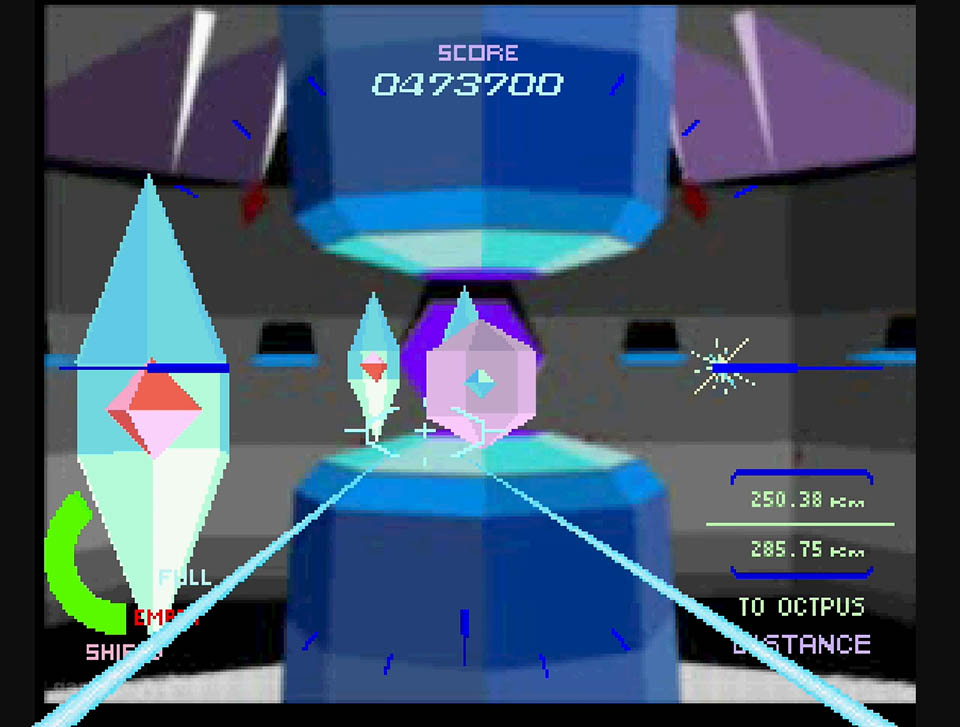
Thanks to the game’s short run time, I think I played it like 7 or 8 times. Twice with the controller across the original hardware and the Polymega for recording, twice with the mouse on original hardware, and one more to play with the programmer’s cheats.
On the review scale, it’s a solid 7 out of 10. Starblade Alpha is one of those rare games where, if you allow yourself to get lost in the vibe, it’s a perfect breaktime vibe from the 100-hour role-playing games and tough-as-nails completion quests found elsewhere. Use the mouse, play on real hardware with a CRT, and try to break the million-point barrier. It’s still a fun ride.
The Good
- 20 Minutes tops. The perfect ‘break’ game.
- Mouse control is amazing.
- Cheesy, but fun voice-over work.
The Bad
- As of this review, the game’s price.
- Modern TVs will make the FMV look awful
- Not listing the mouse was a crime.
Final Score: 7/10 – Solid
Yes, Starblade Alpha really is just 20 minutes long, but it doesn’t need to be any longer. In the modern world, it’s the PlayStation’s version of a mobile game; quick, point-based, and engaging if you allow yourself the chance.
Screenshots
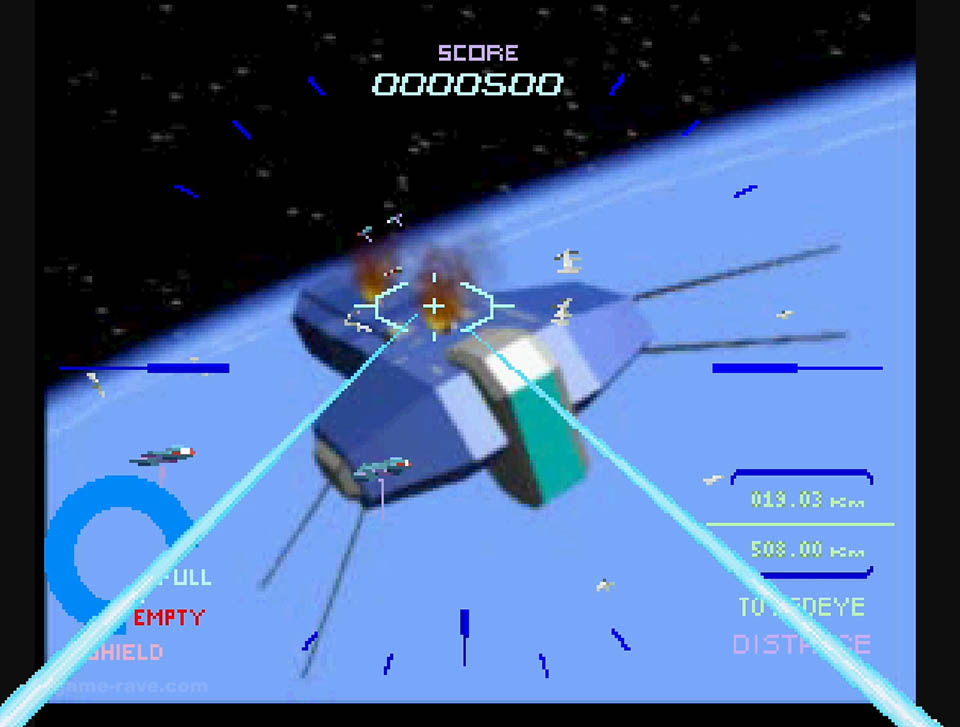
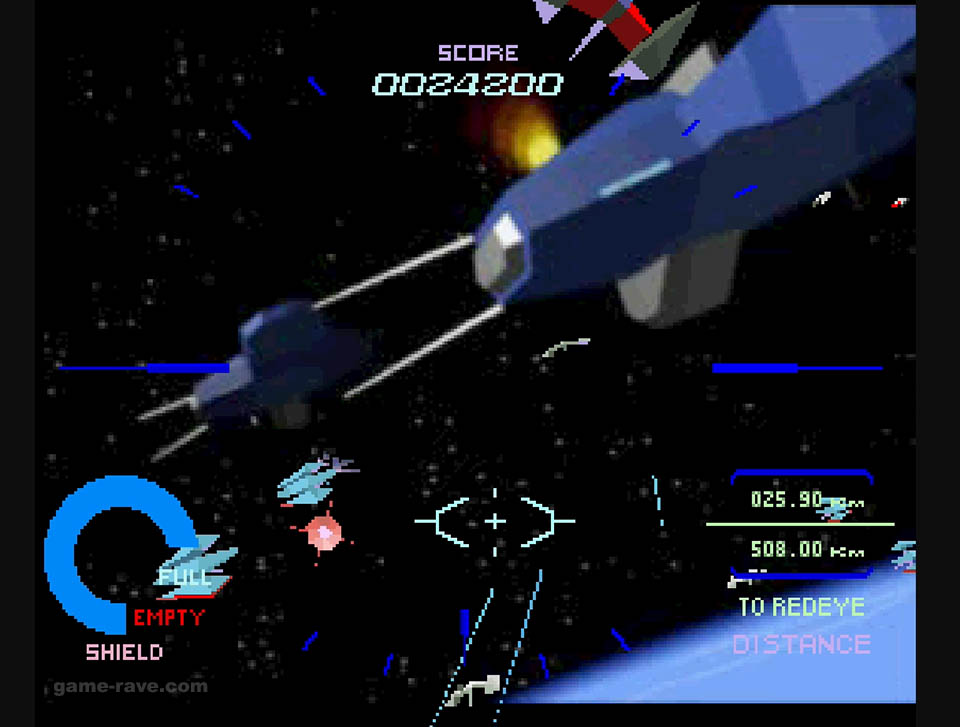
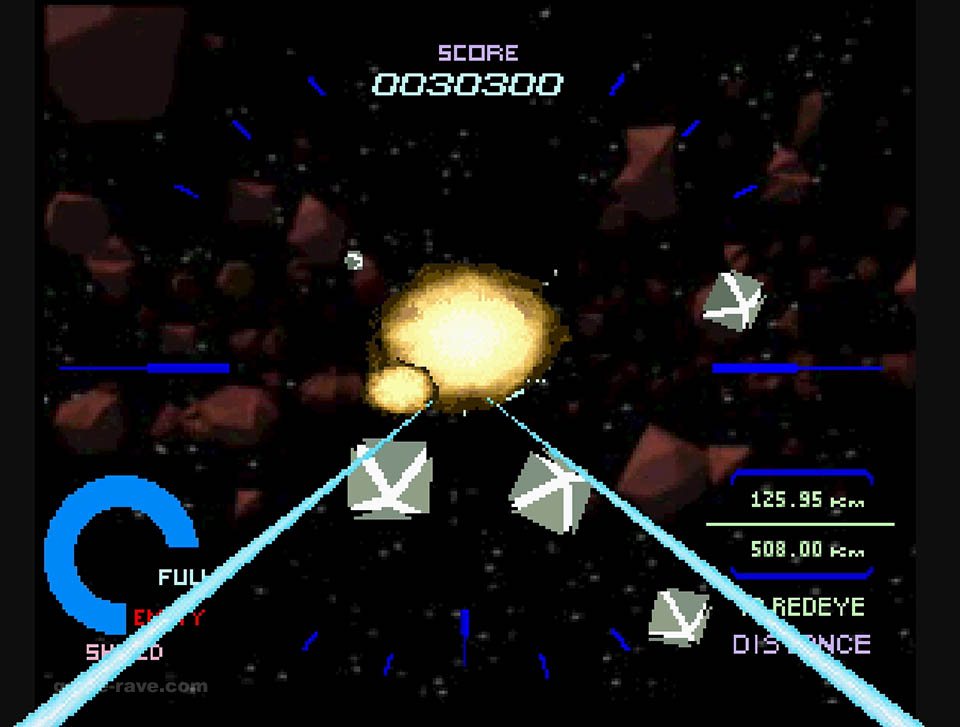
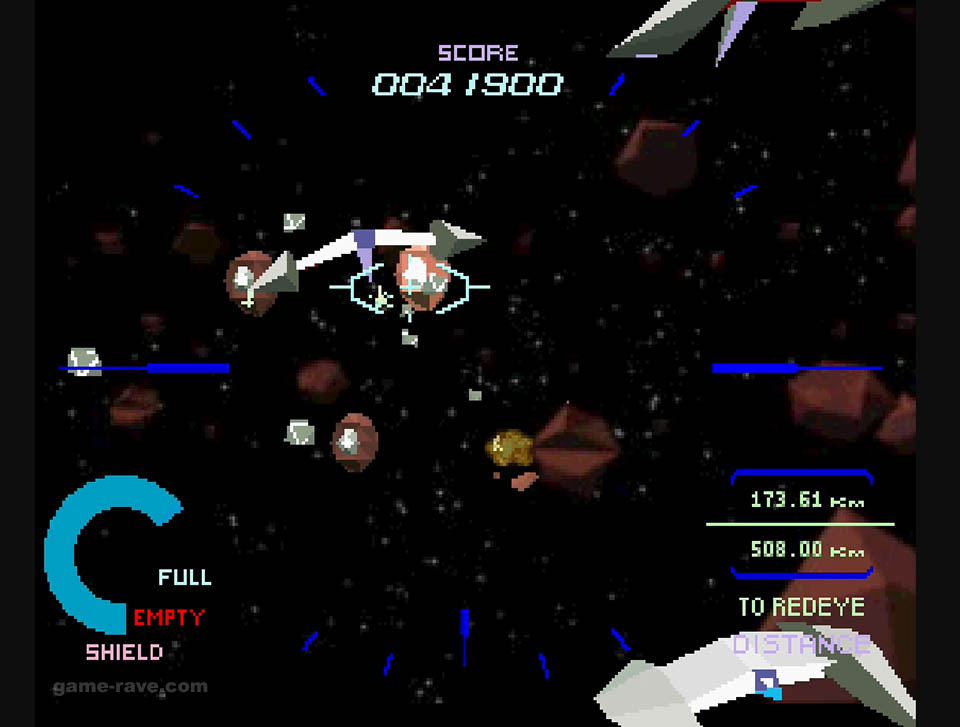
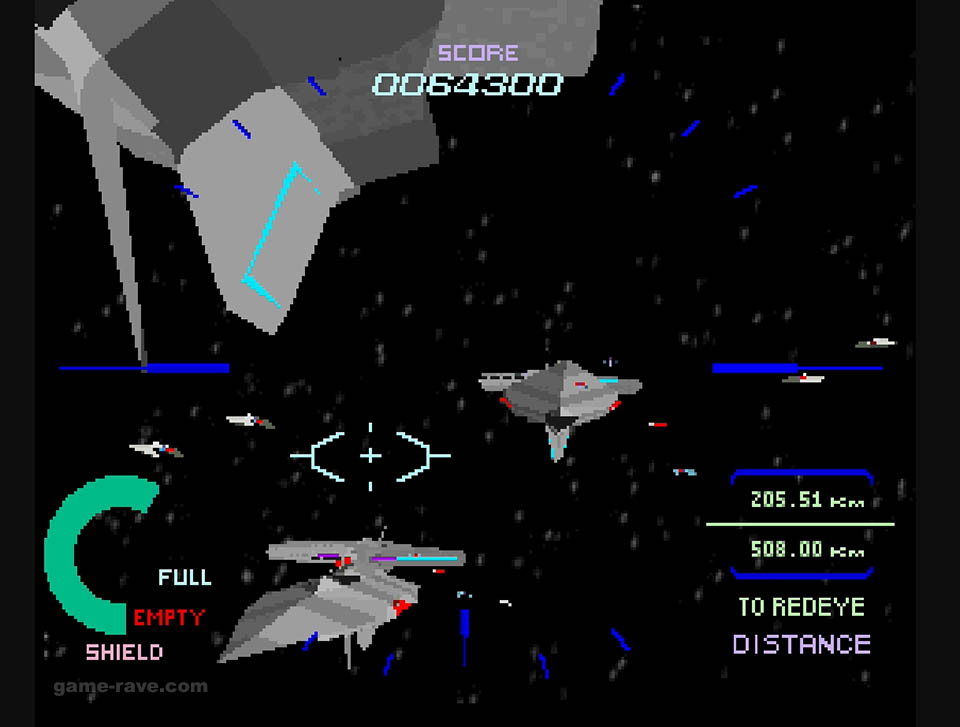
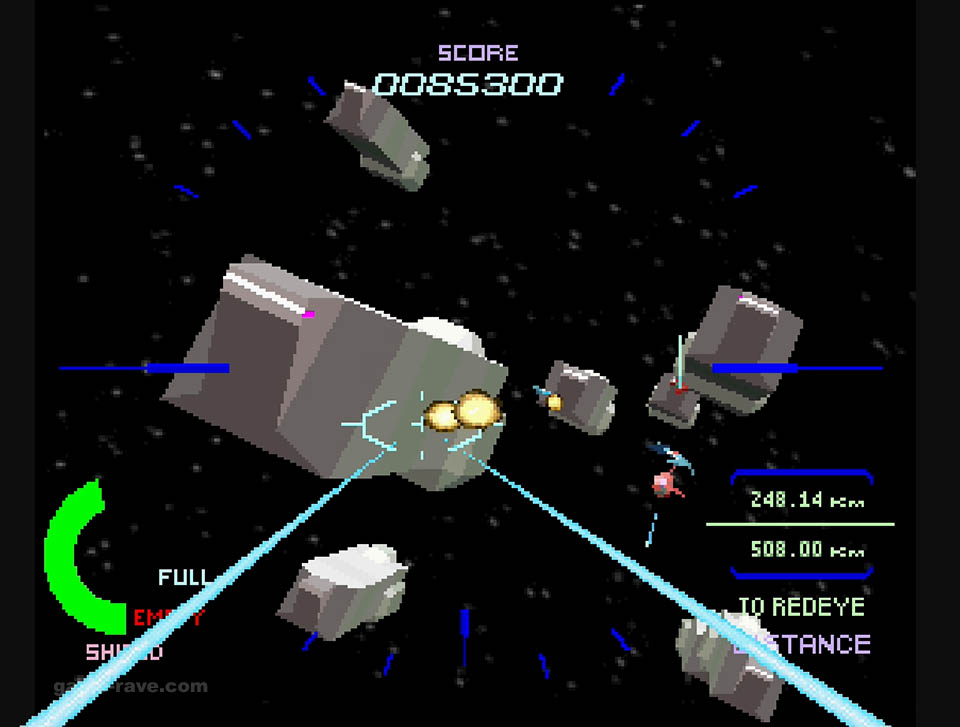
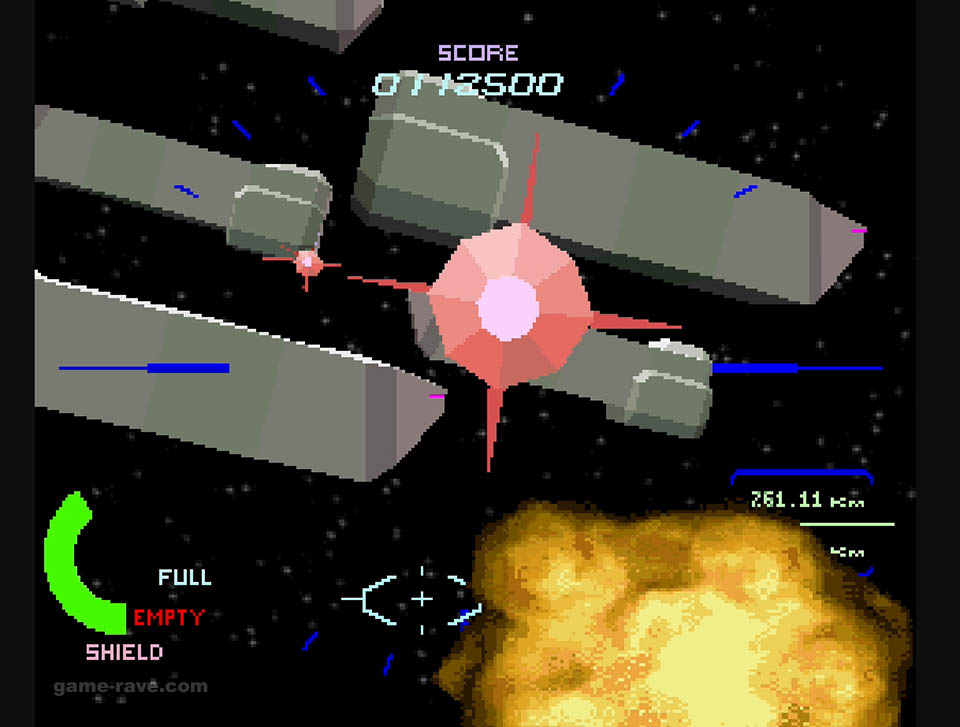
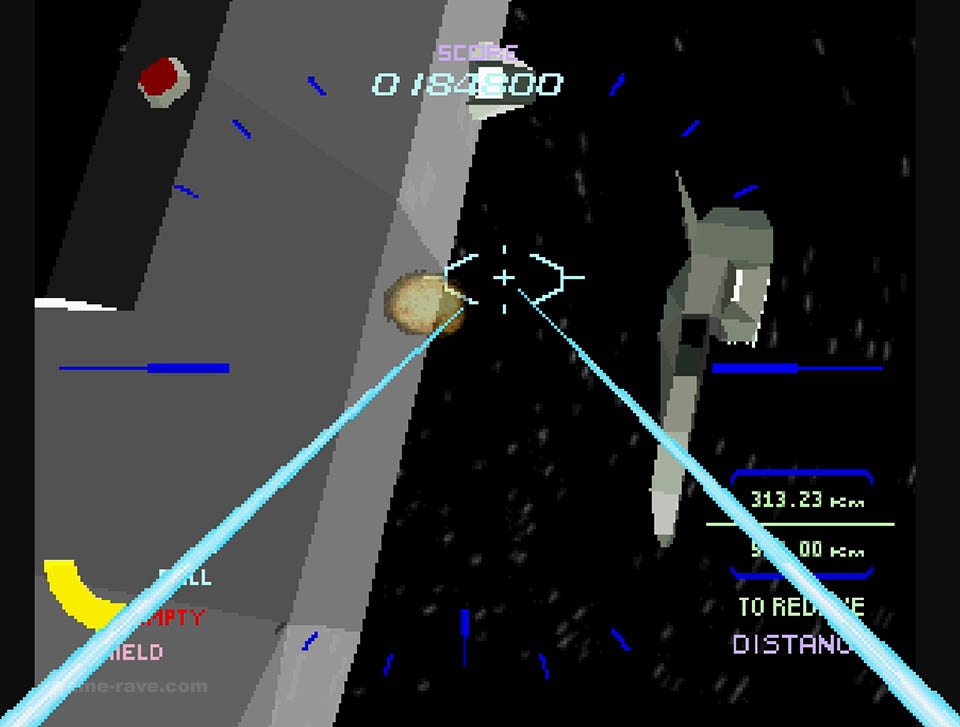
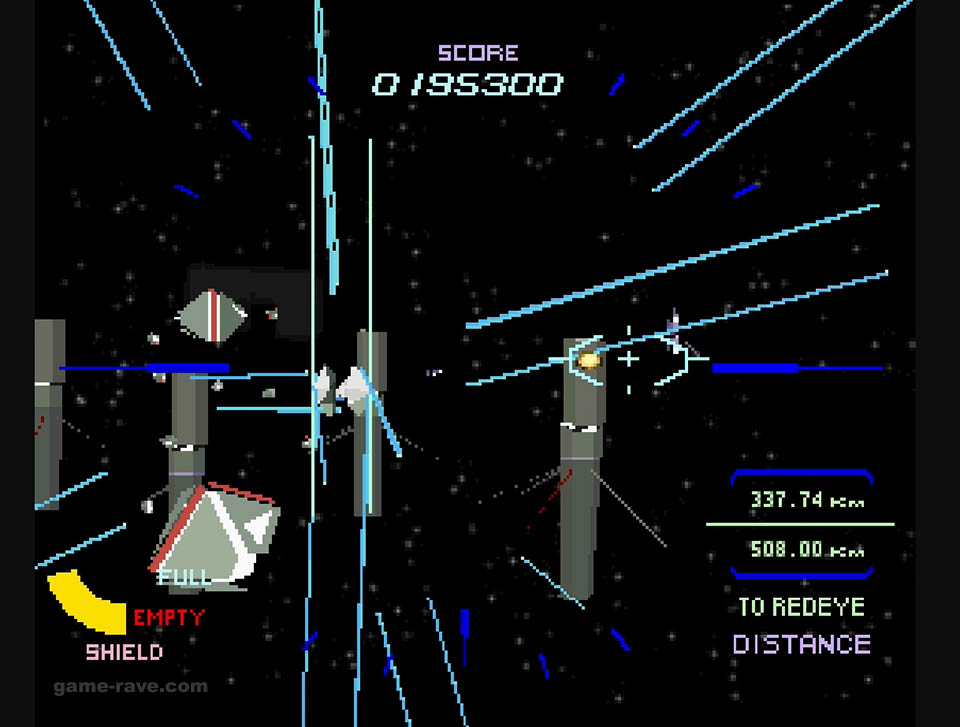
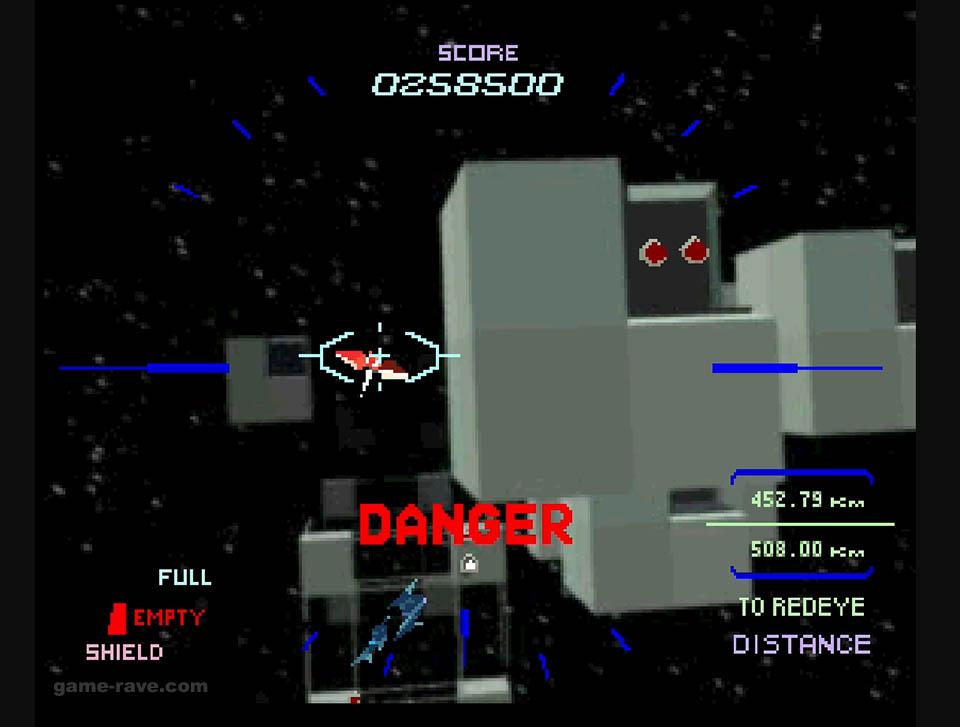
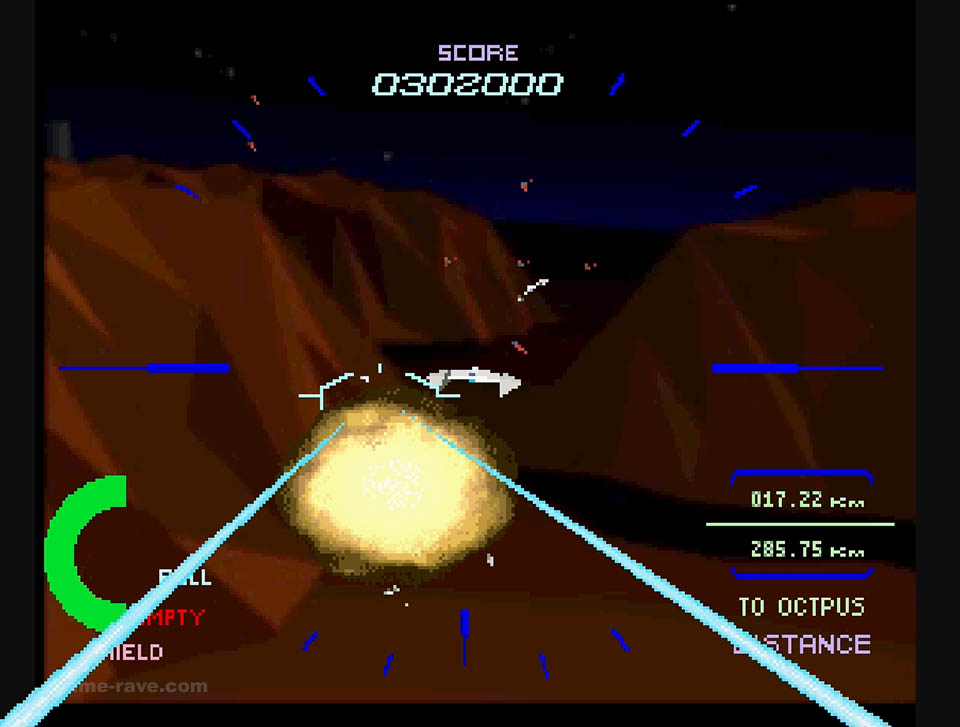
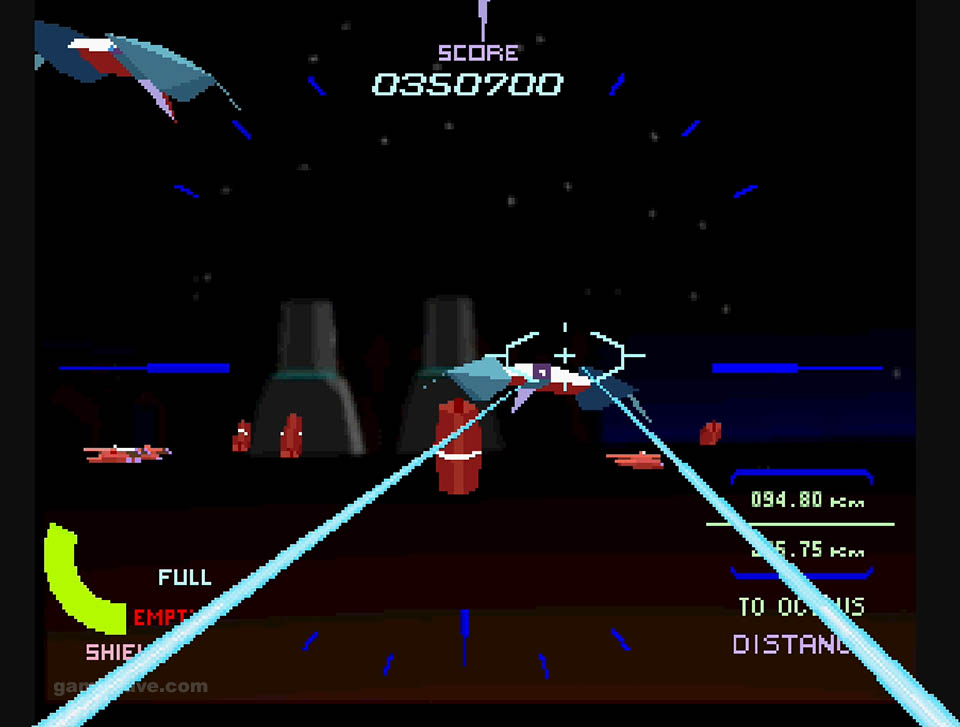
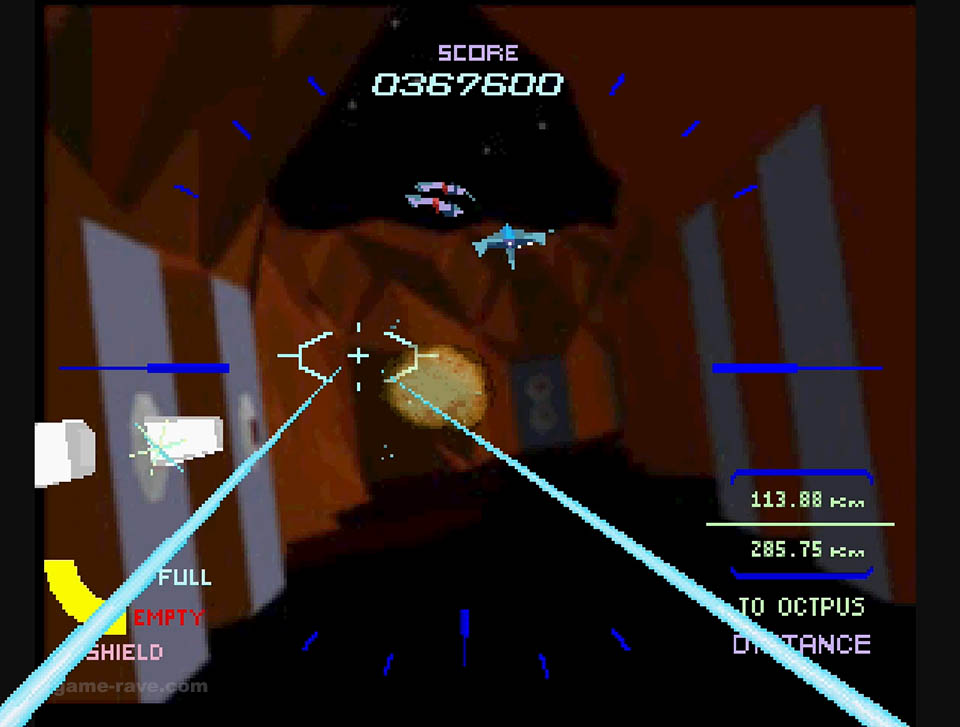
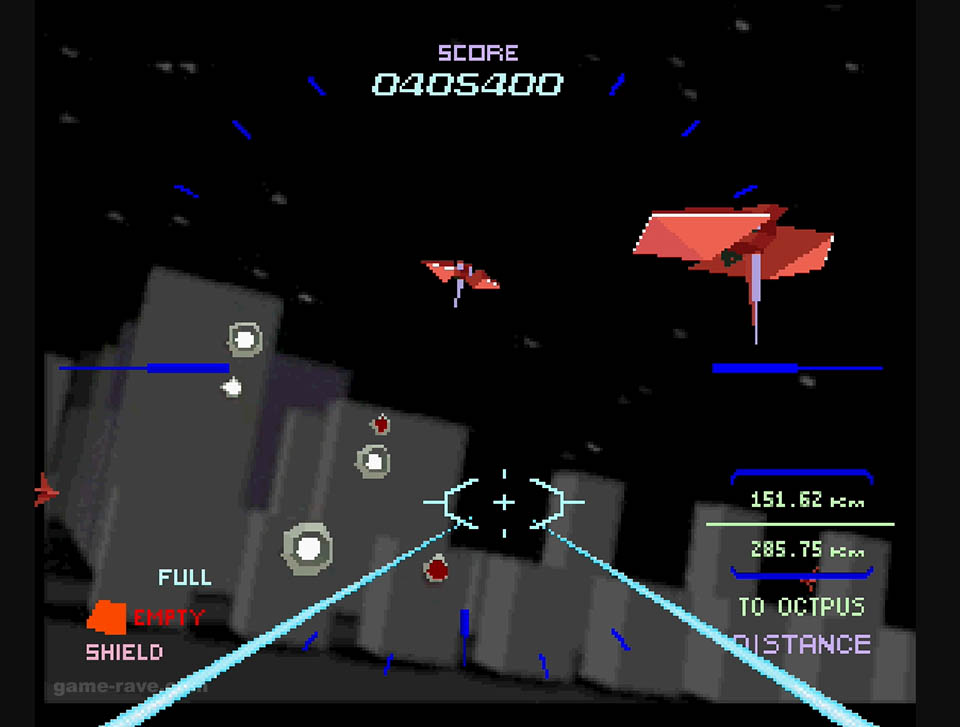
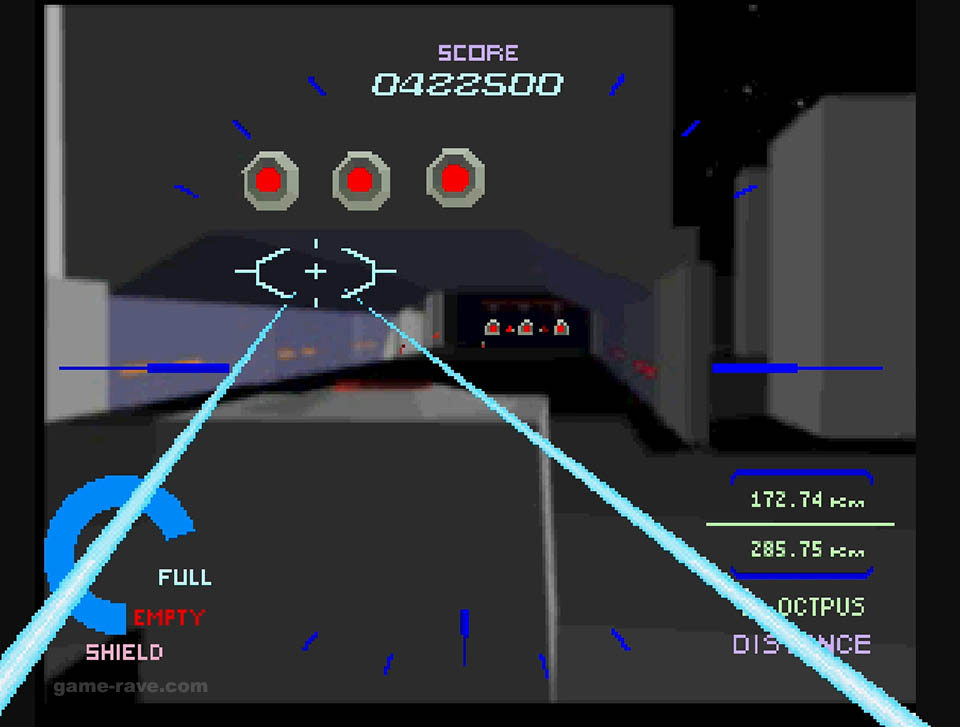
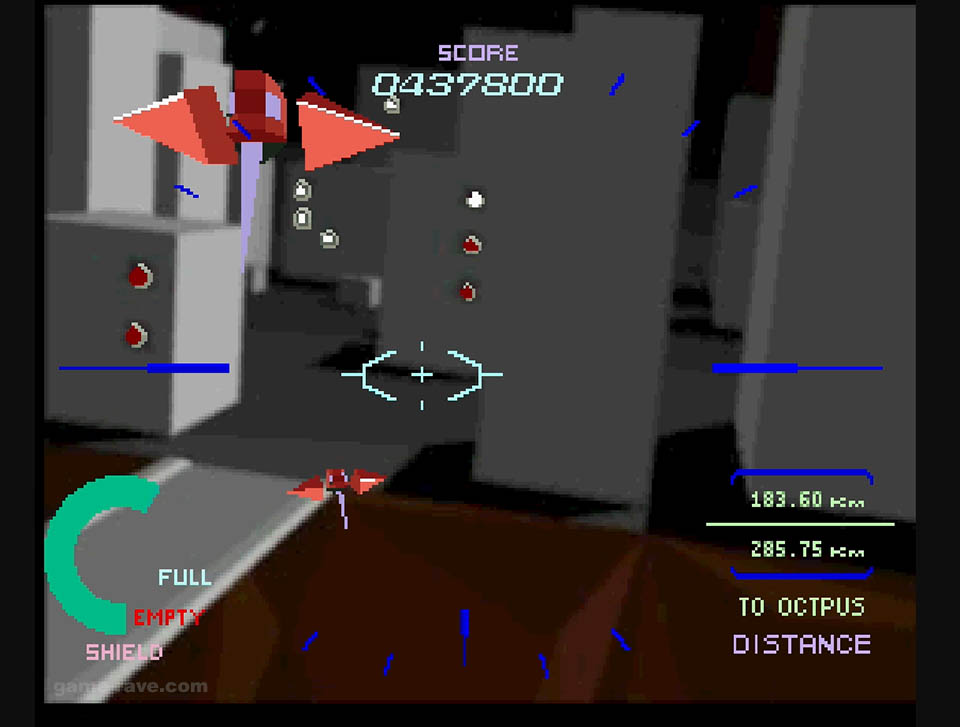
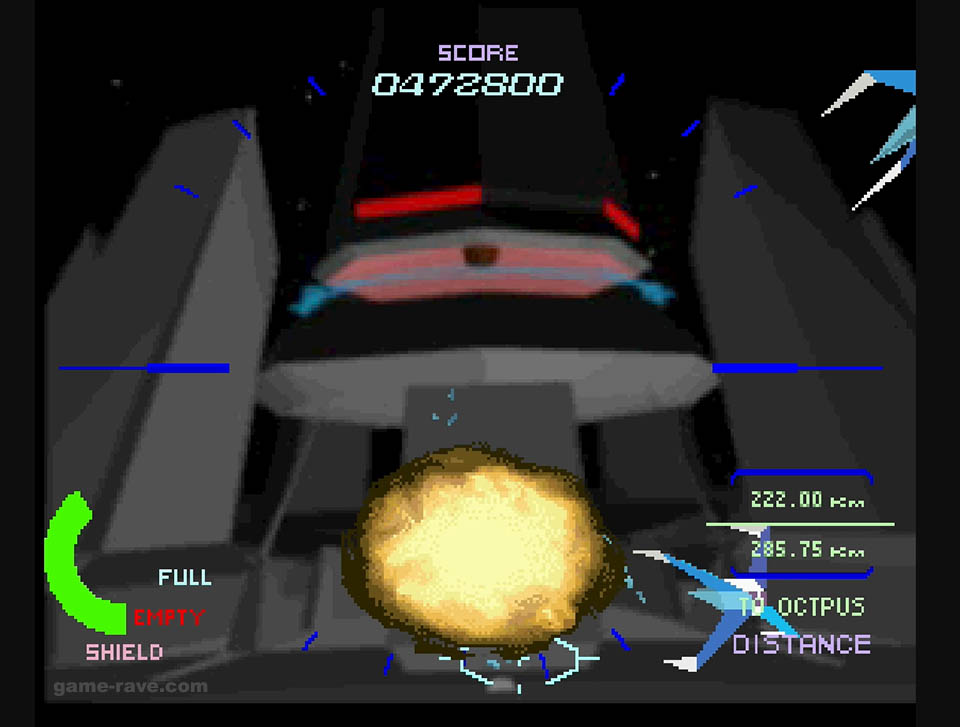
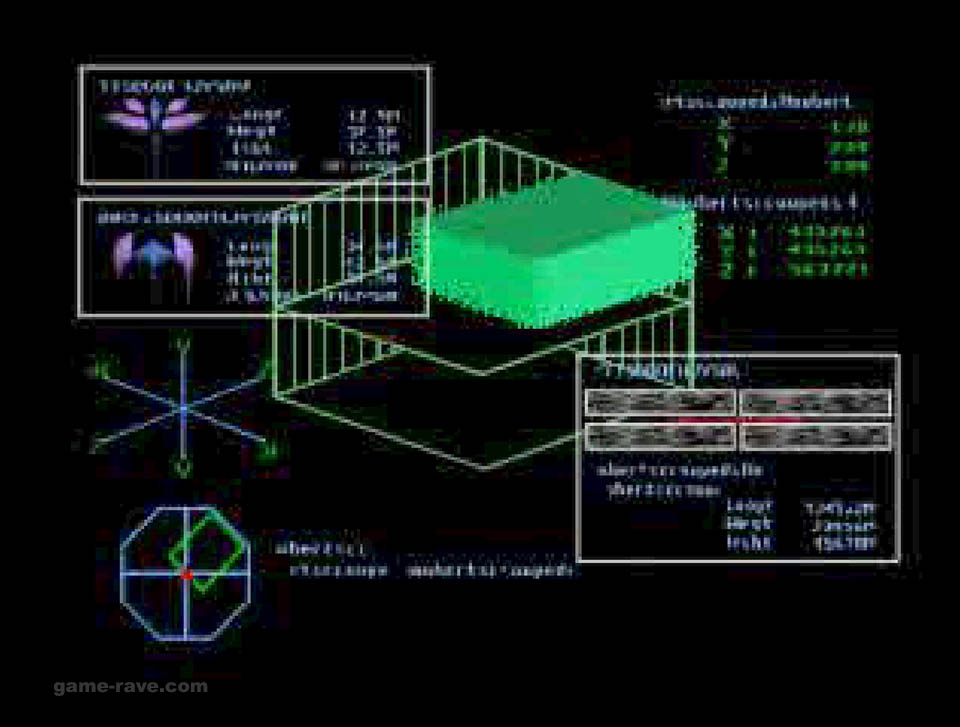
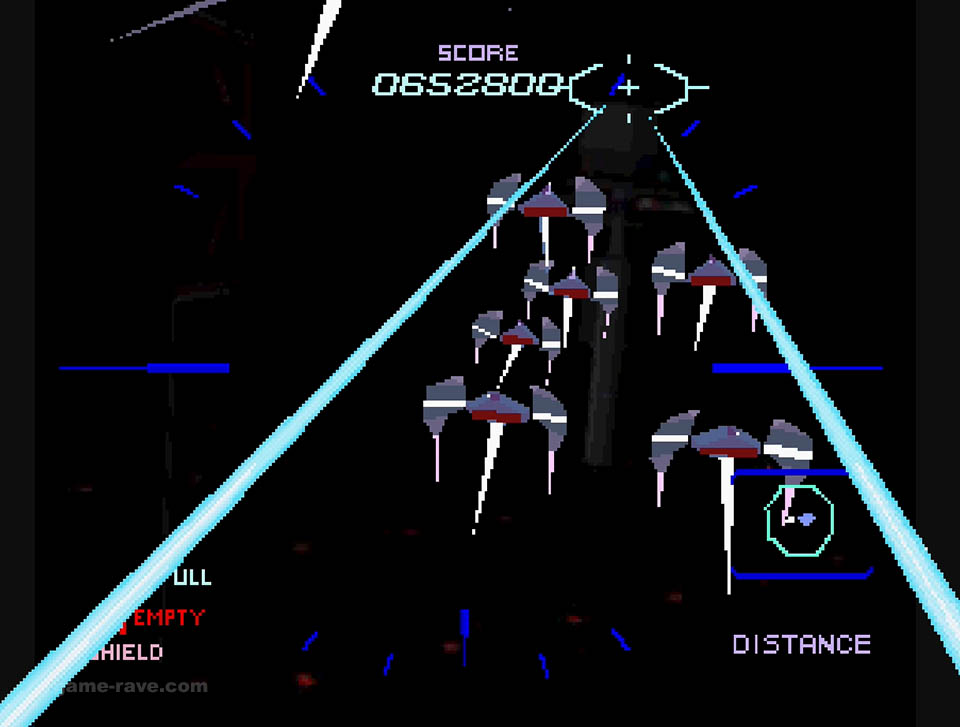
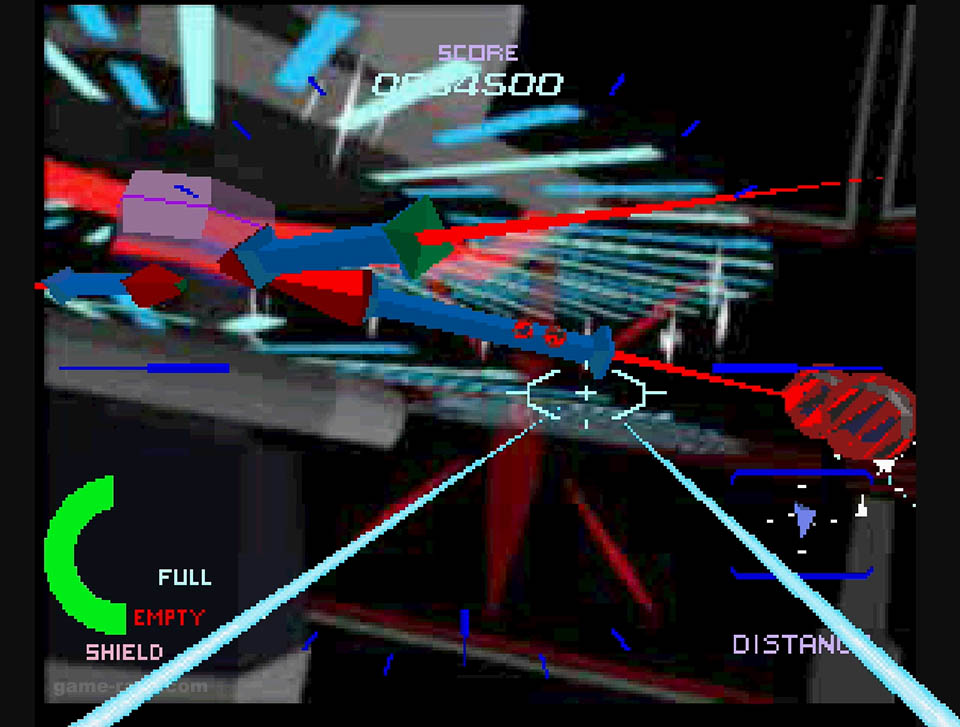
Videos
Video review of the game.

Trivia
- Funny little tidbit. Since the game is full-motion video, it essentially plays itself. If you were to start the game and put down the controller, you would still make it to about 213 in-game kilometers before dying. That’s almost halfway through the first stage! If you turned Free Play mode on via the code, you could sit and watch the game, needing only to fire when the few boss fights occur.
- Starblade alerts you to Memory Card usage, but it is only for the High Score table. The menu never shows up unless you actually place in the top scores.
- The game does support a Mouse, though it doesn’t tell you that on the box. You need to plug it into controller port 1.
- The 3DO version includes the same option of original or improved graphics.
- Namco hid the arcade version of the game inside the PS2 game Tekken 5. You had to get to a certain level in a mini-game and secure an in-game item after about 14 rounds. It would then be unlocked in the museum mode.
- The Sega CD version uses wireframe enemies. It’s kind of a trip to watch, and it makes it look more like Tron than Starblade. But makes it run super smooth.
Secrets
Starblade Alpha gives games exactly what they need.
- Infinite Continues
At the title screen, press Up, Right, Down, Left, Cross (x3). You’ll hear a low rumble. Rather than credits, you’ll now see ‘Free Play’ on-screen. You must wait until the letters begin forming on screen. - Automatic Rapid Fire
At the title screen, press Up, Up, Down, Down, Circle, Triangle, Square while the letters are flying together. If you entered the code correctly, you will hear a low rumble sound. Press Cross to use the rapid fire.
Guide
Thanks to Namco’s Japanese Laserdisc novelty, I was able to compile a simple points guide to help you enjoy the game more.