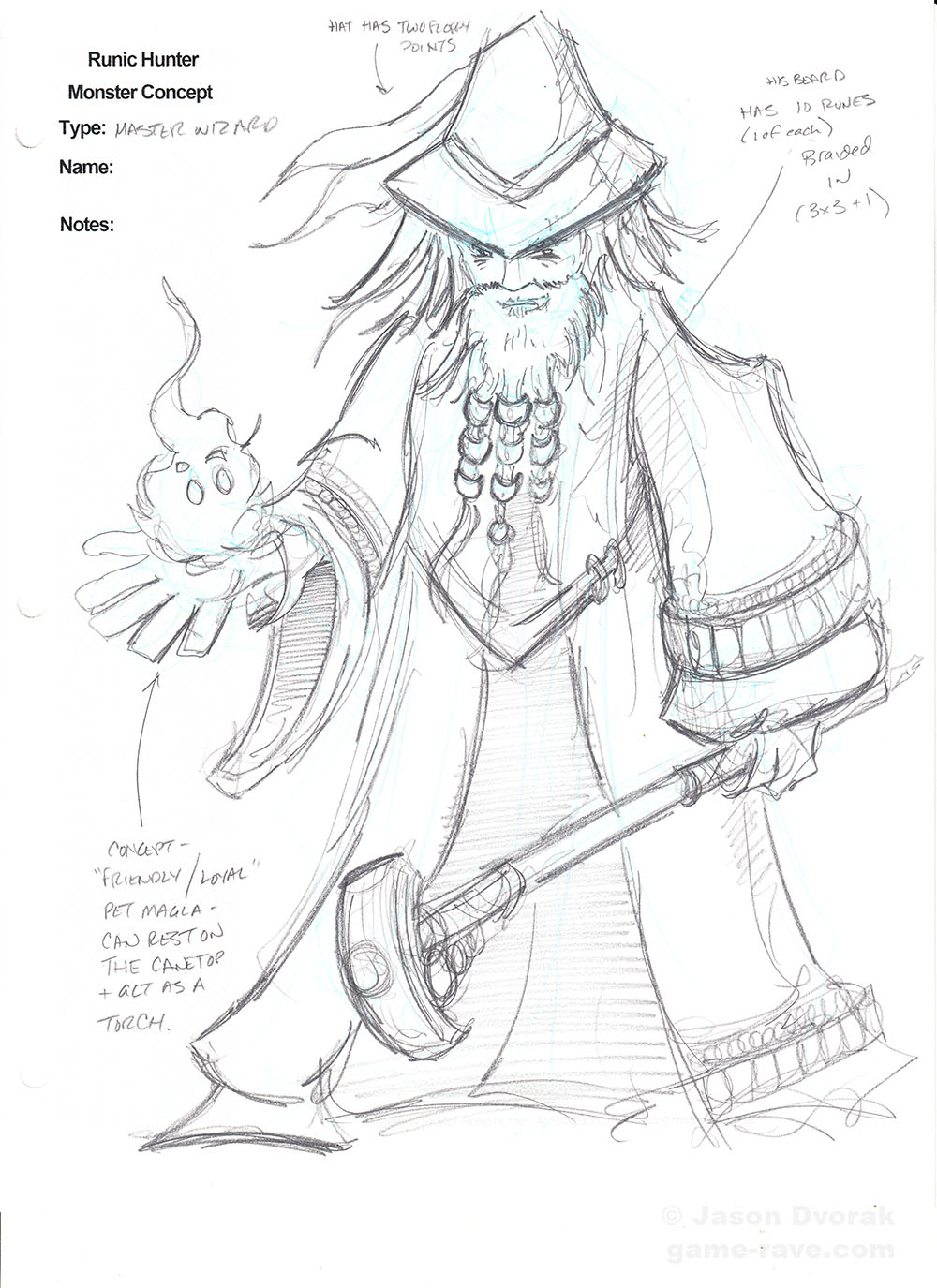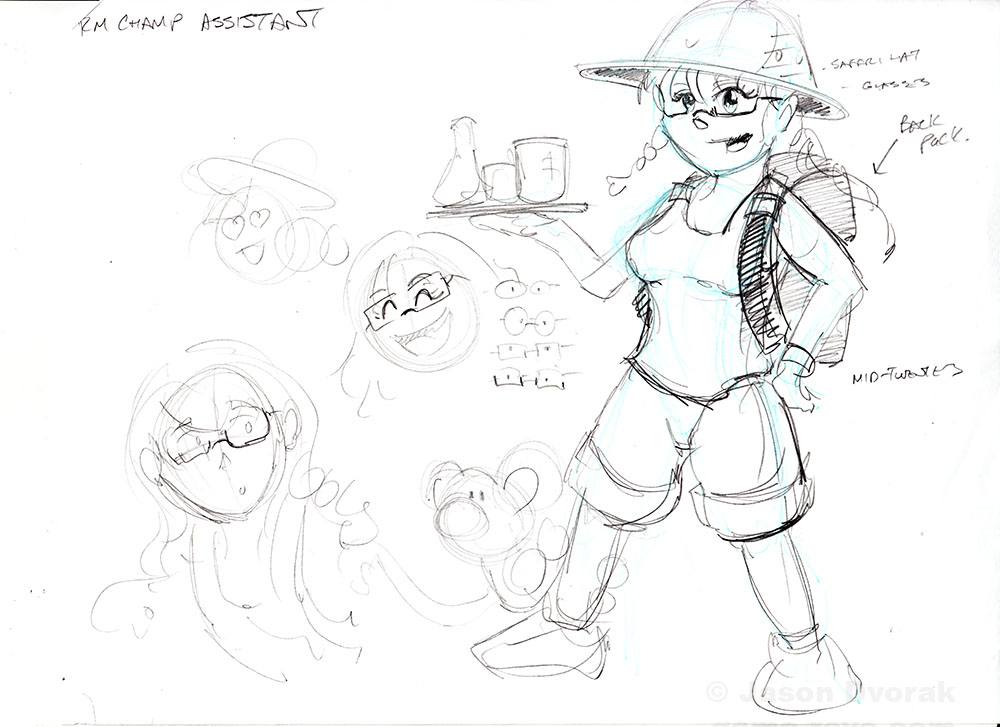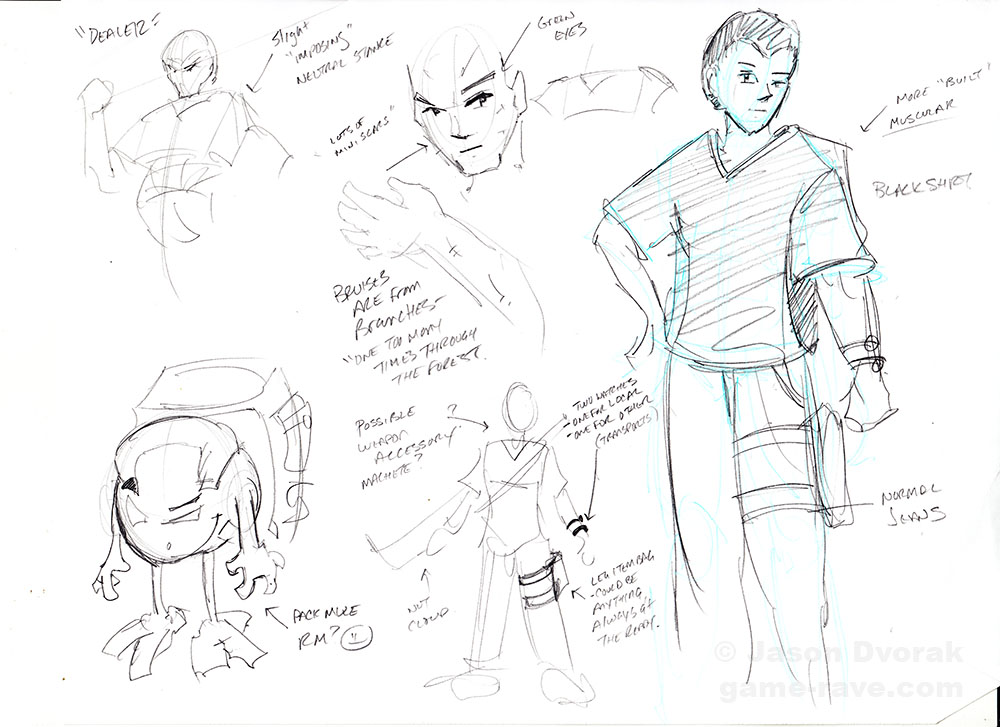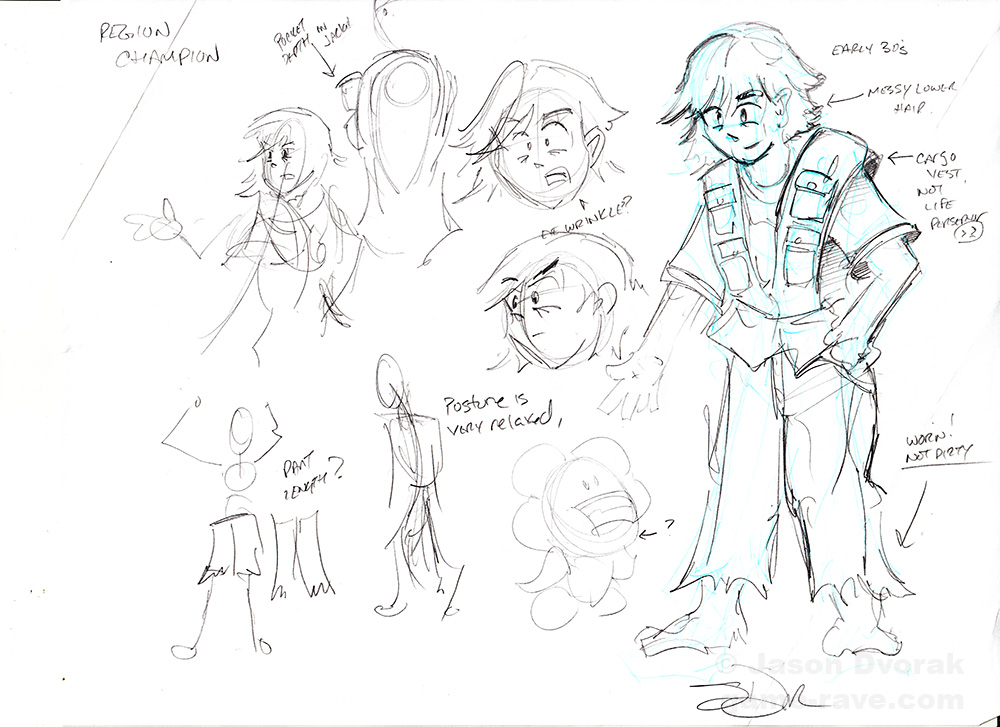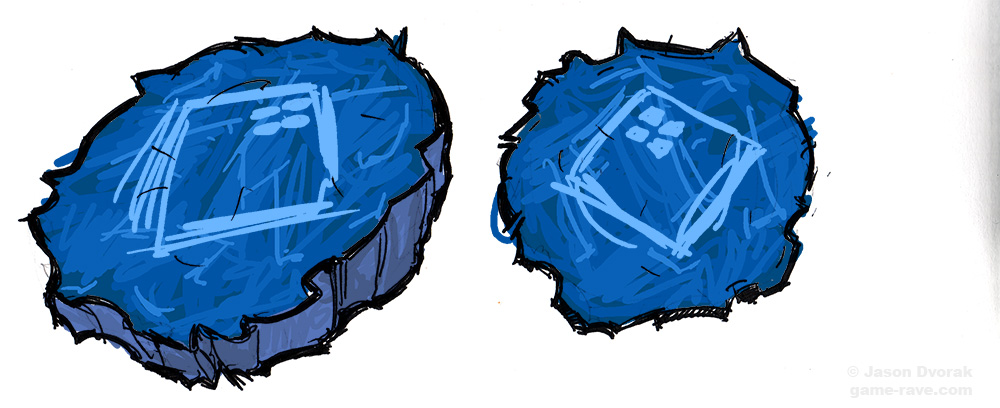
In August of 2010, I was still working at GameStop when a few of my regulars came in. They were trying to organize a group of people to create an indie game in the same style as Pokémon, named Runic Hunter. A co-worker had mentioned my art background, and I was invited to lunch to talk shop and discuss the plan. It sounded intriguing, and I had never done anything like it before in my life.
A day or two later, over lunch at a local place, we set up the first meeting. Between that and the second meeting, all of the artwork and concepts you see were produced. Regretfully, it never got past these first few stages due to various reasons, but the art remains. I figured 15 years was enough time for any NDA-type stuff (which there was none) to have expired, and I could share my one-time attempt at being a concept artist.
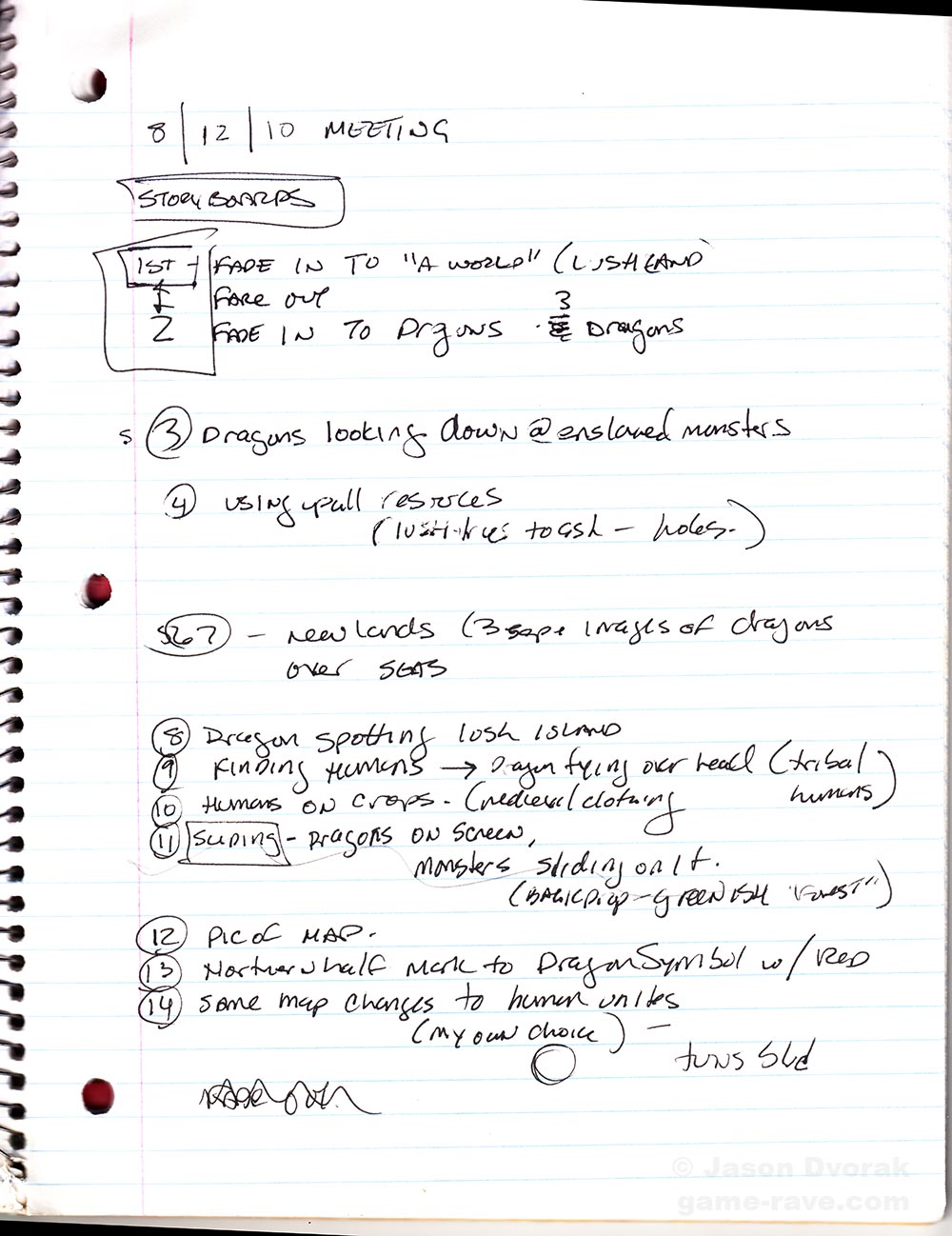
First Meeting Journal – Opening Movie
Man, there’s just something about opening an old spiral and seeing how illegible your writing was and still is.
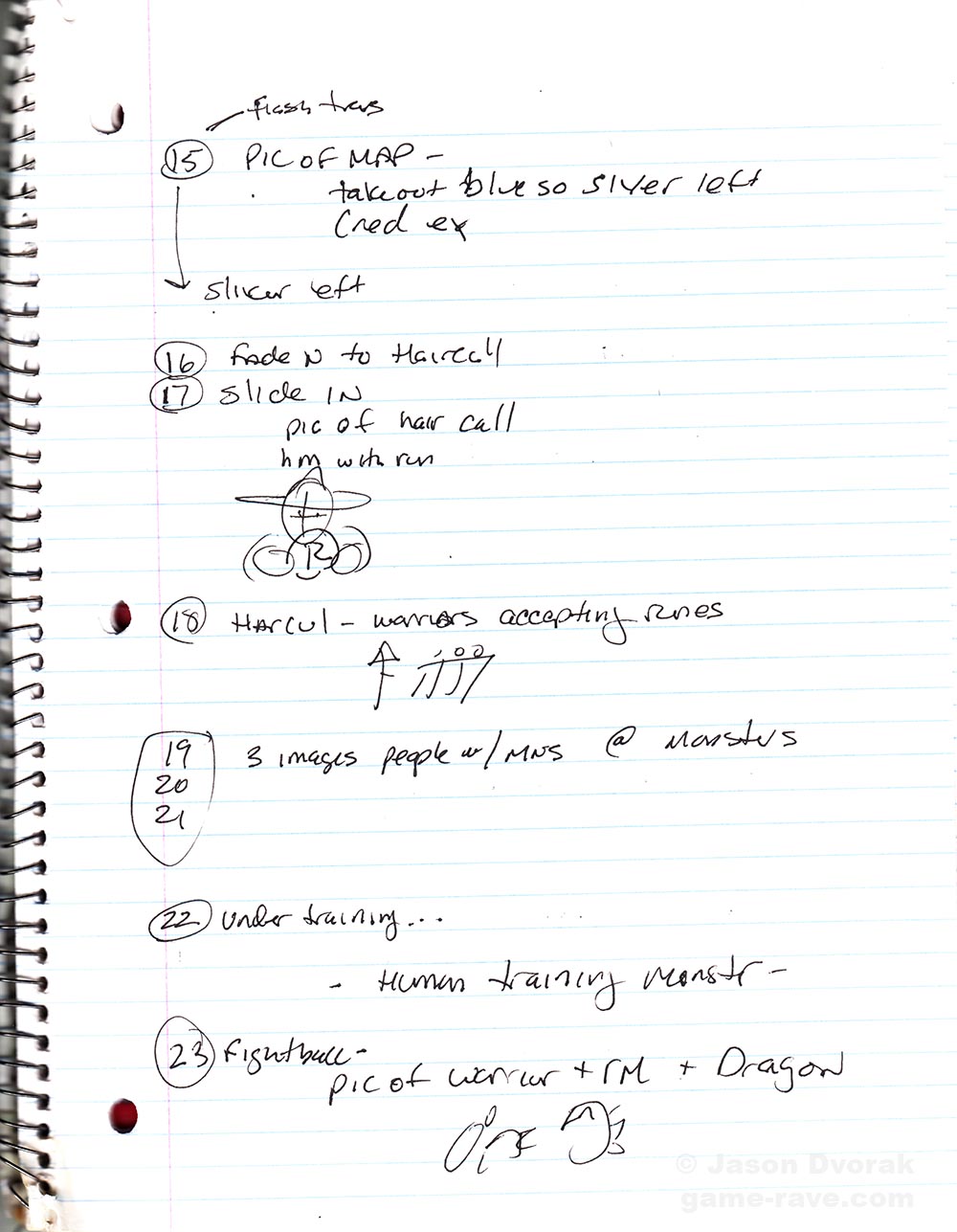
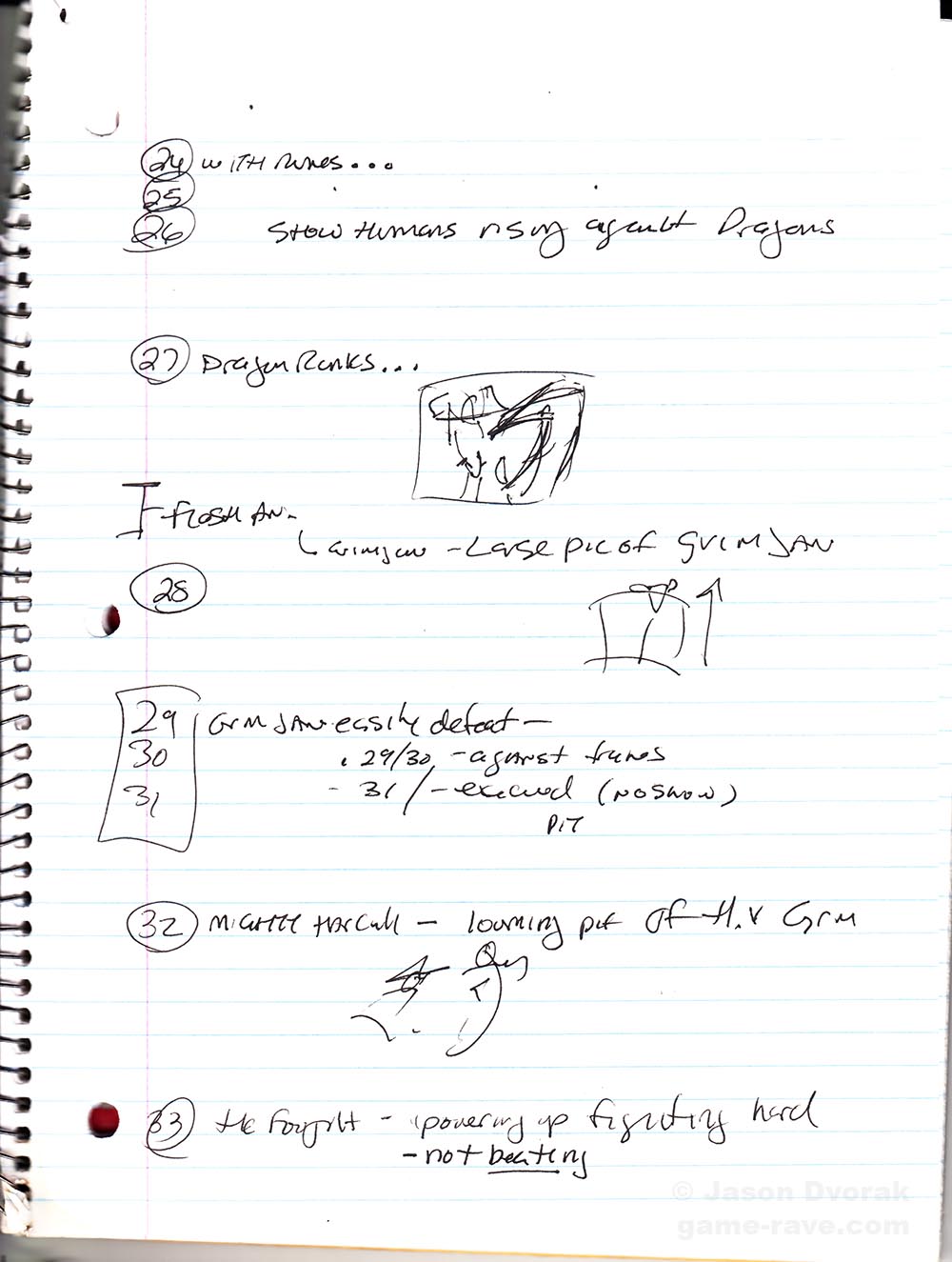
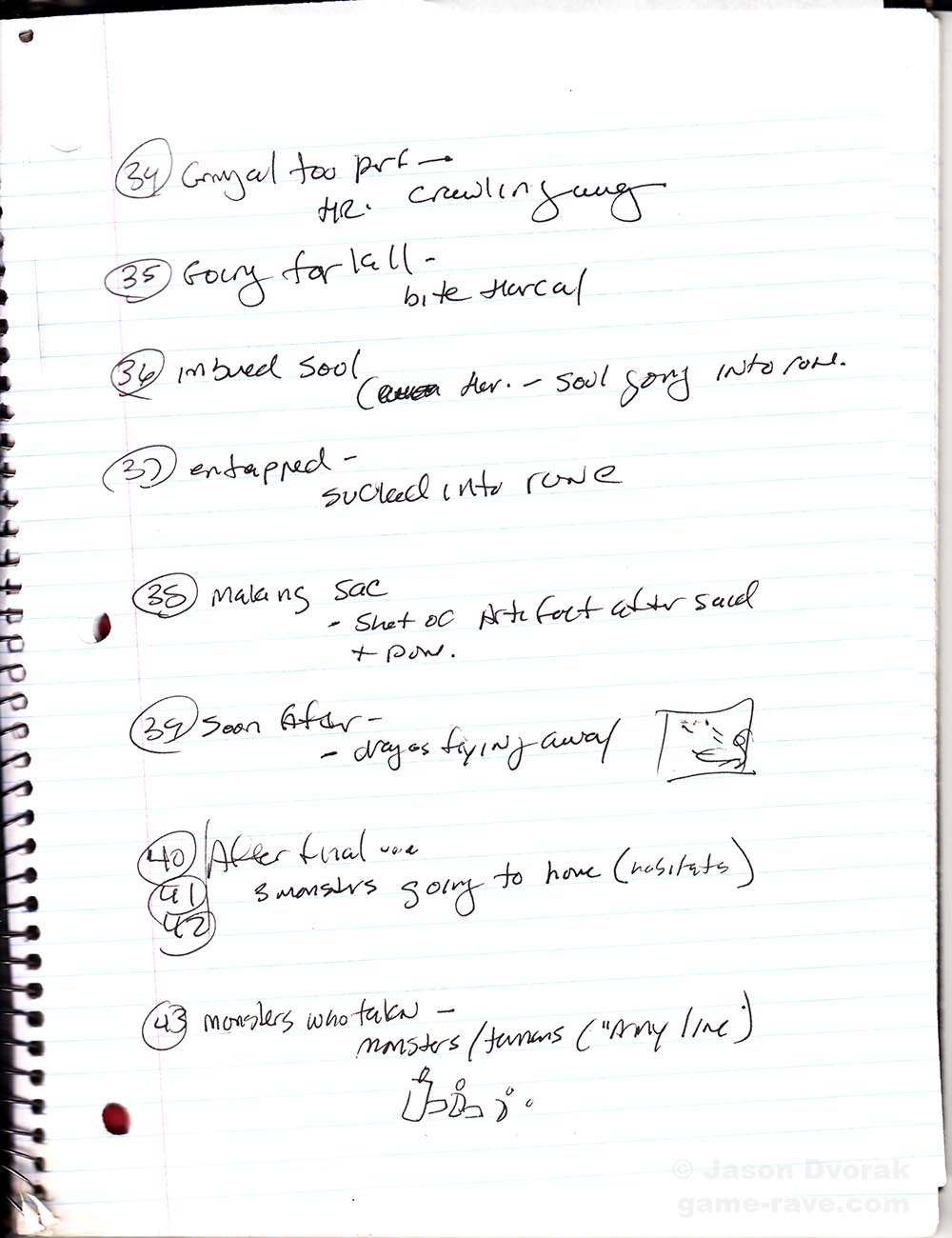
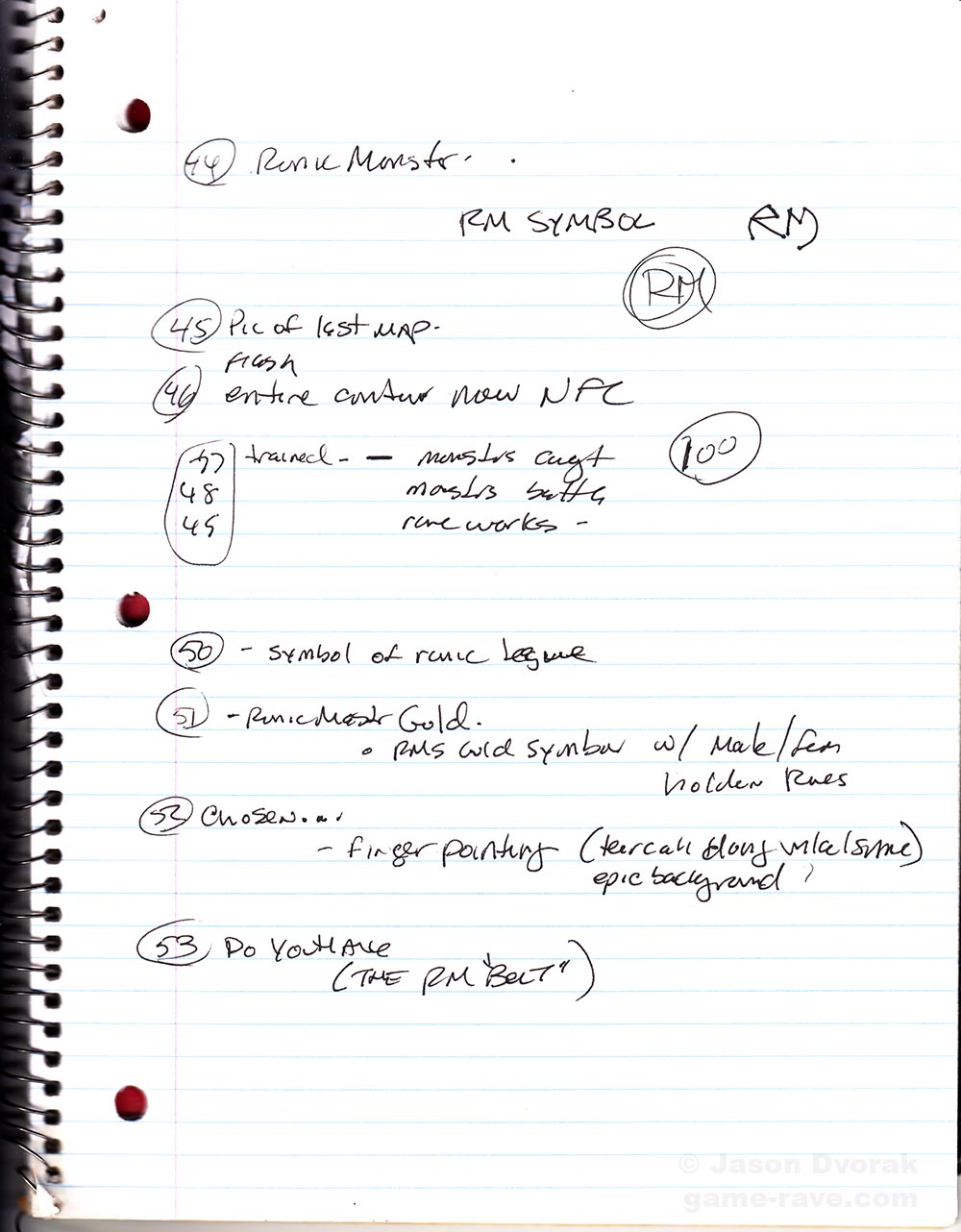
The first notes to be taken were for the opening movie. The game’s lead ran down his thoughts, and I acted like a stenographer, rapidly writing down his stream of consciousness while trying to make video and editing notes as I went. If you treat each storyboard as a slide, the numbers mark each slide and sequence. When multiple numbers are in a single circle, it means I need to have each frame transition to the next.
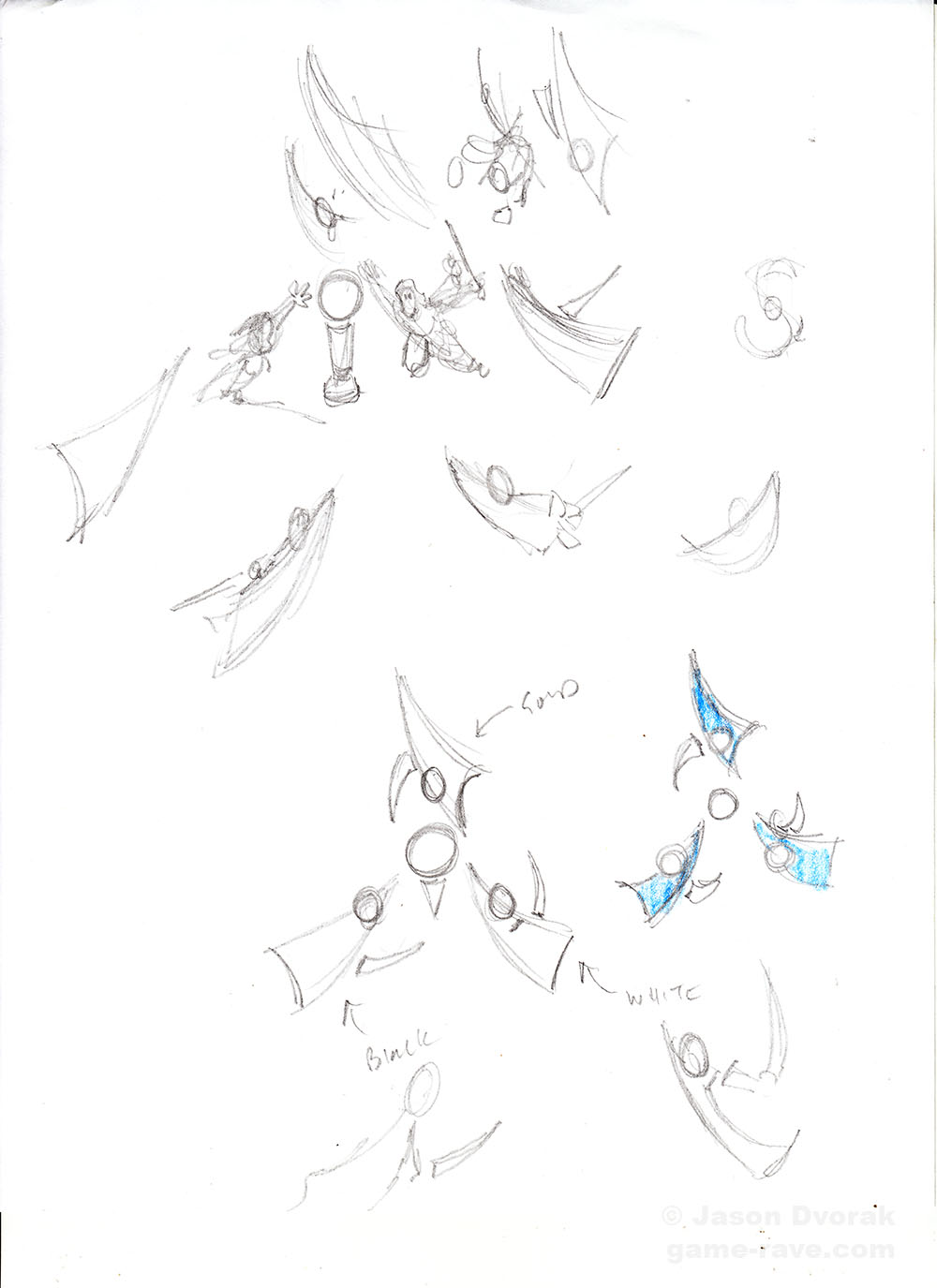
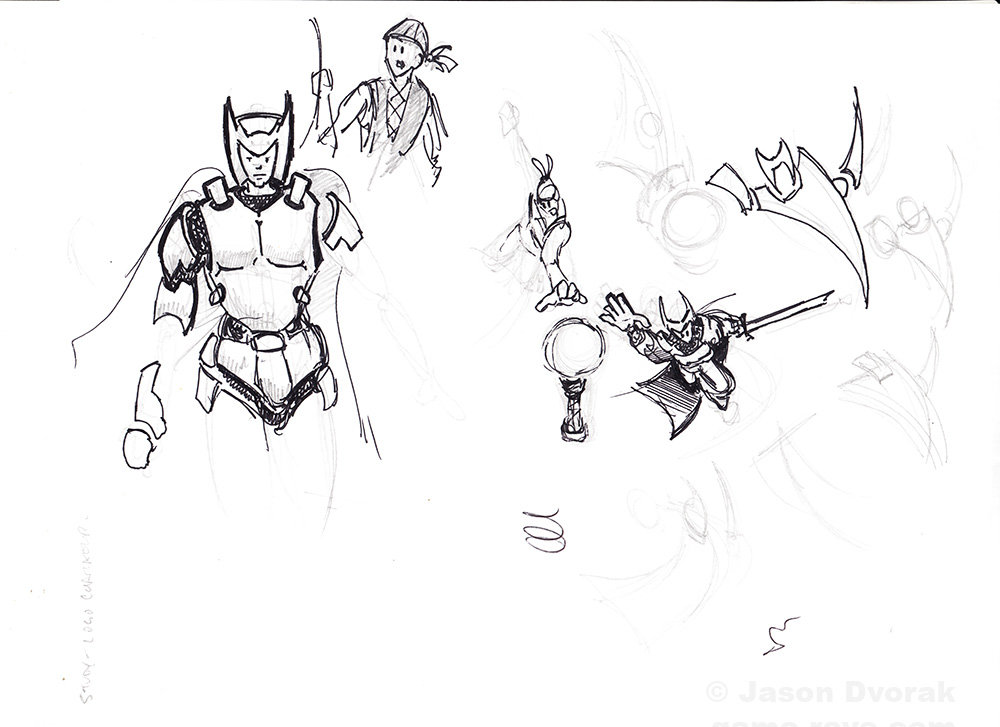
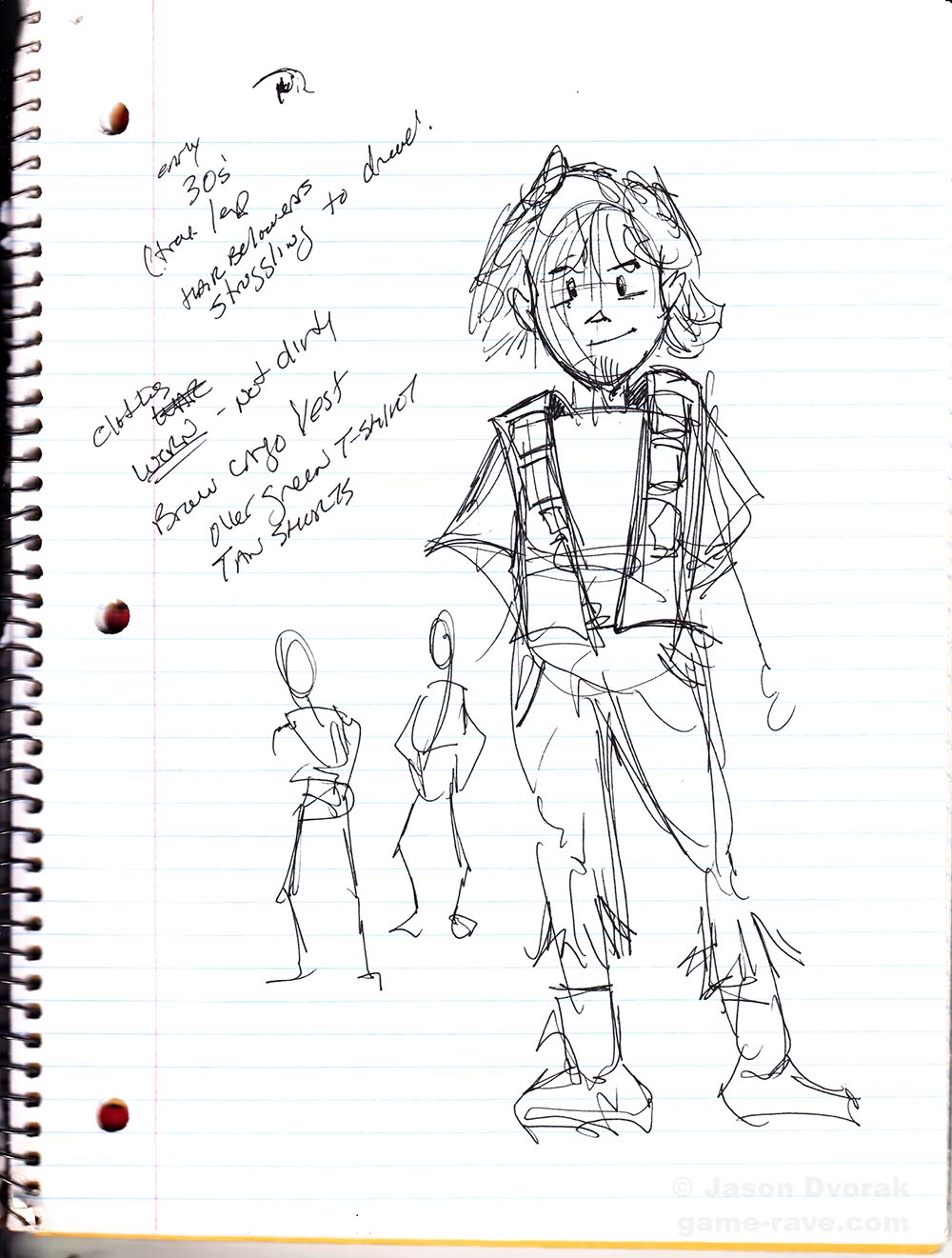
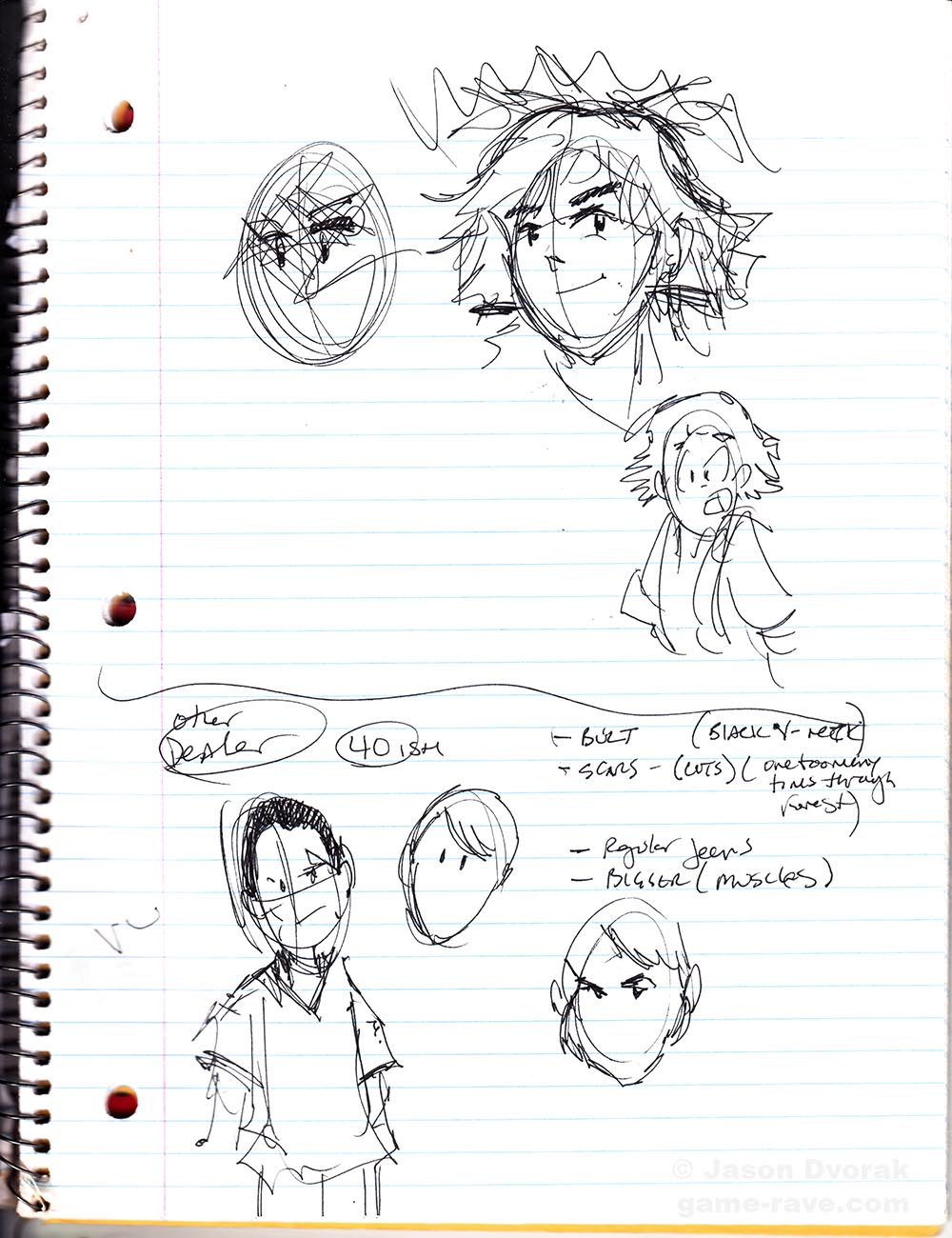
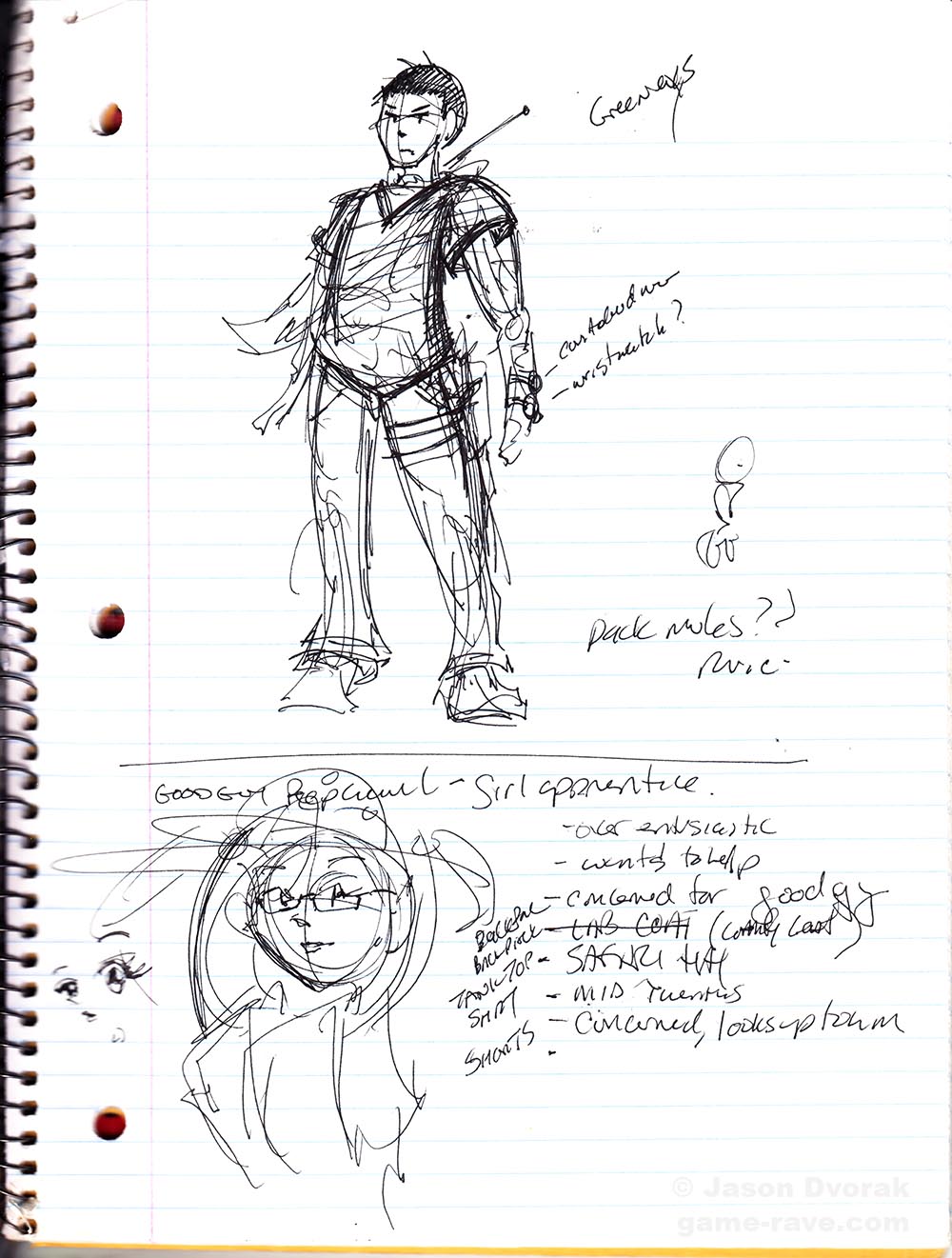
Once we had gotten through that, there were some quick sketch ideas for the main playable hunters. These would be fleshed out later in the process.
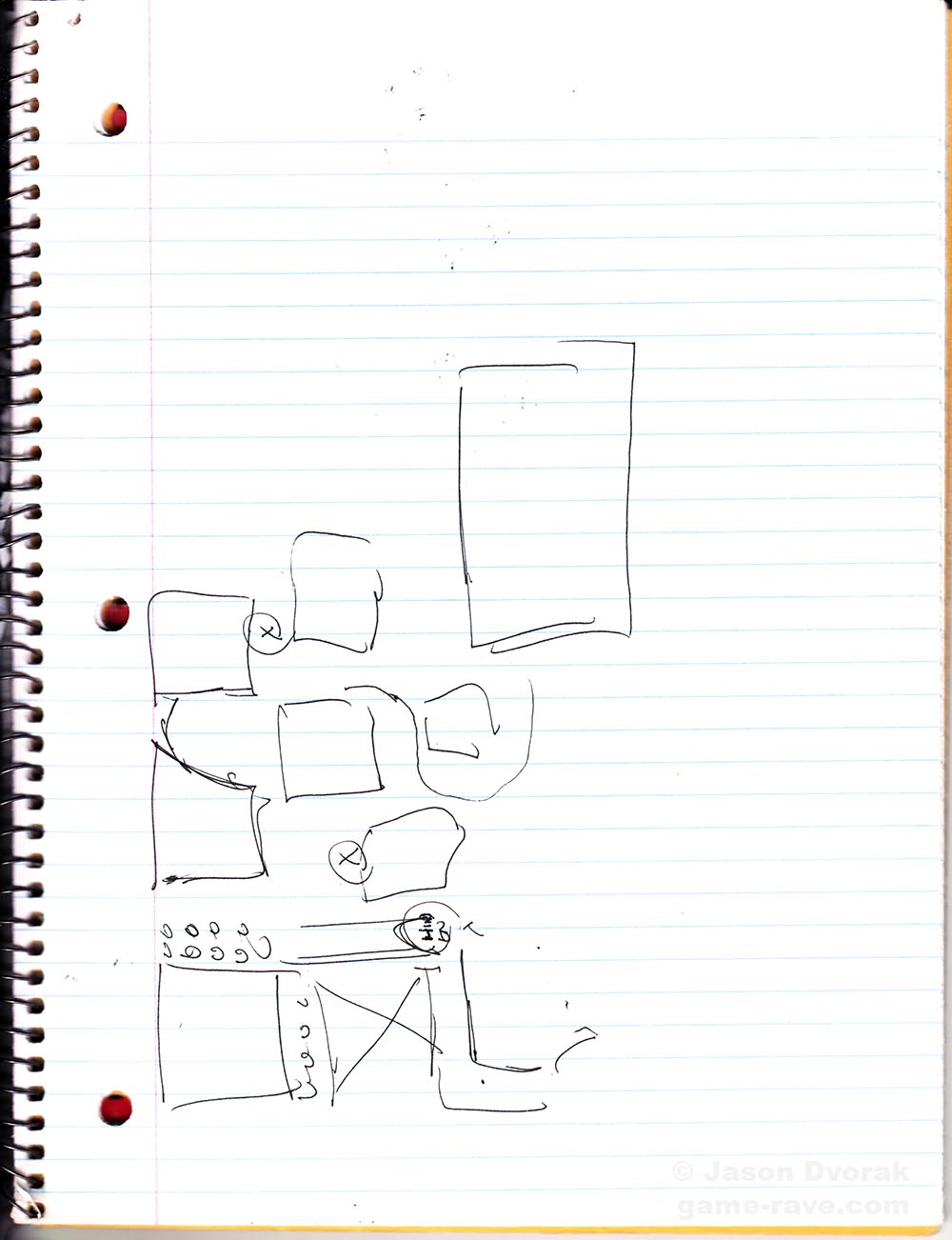
On the last page with the squares – I believe – was me quickly jotting out a map of the first area for reference.
Storyboarding – Early phase
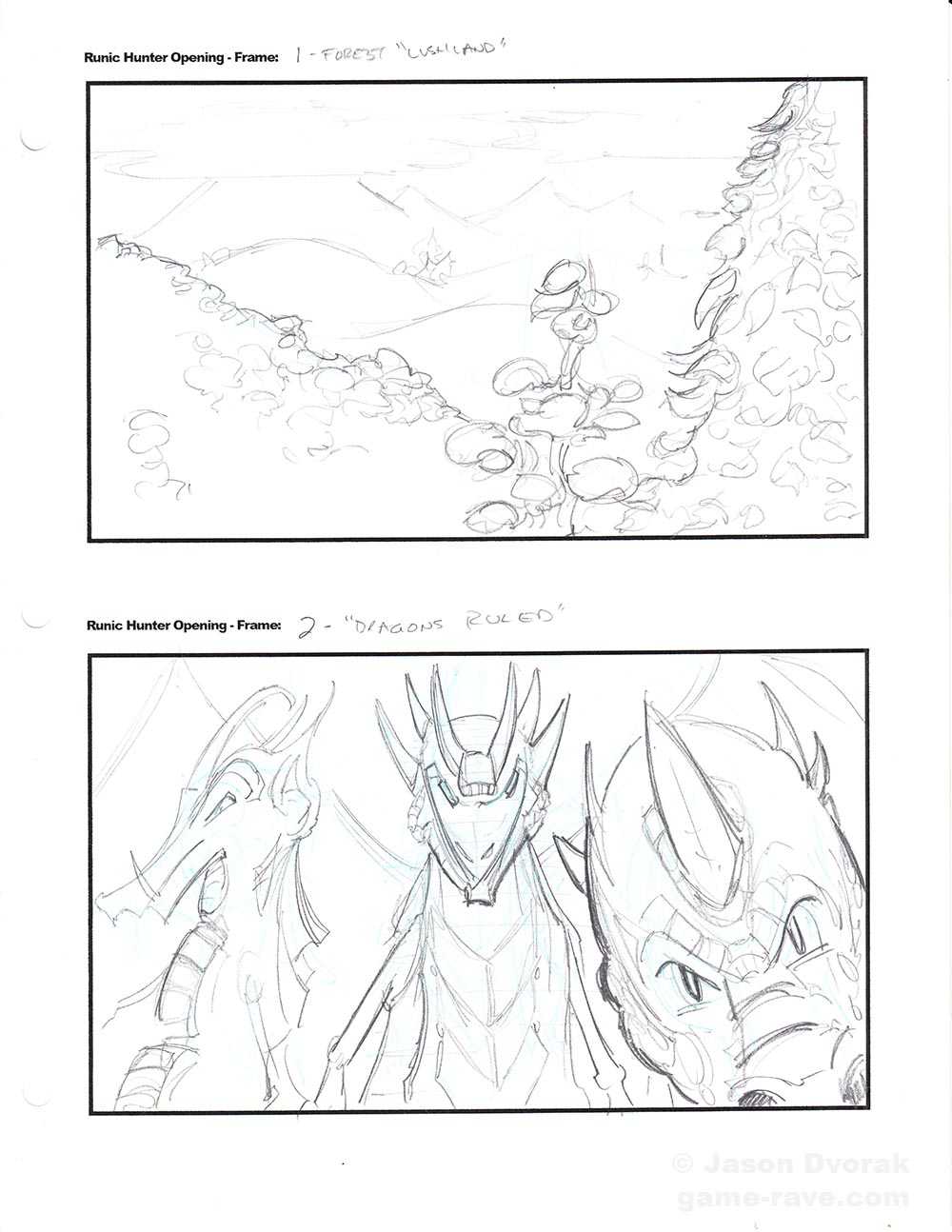
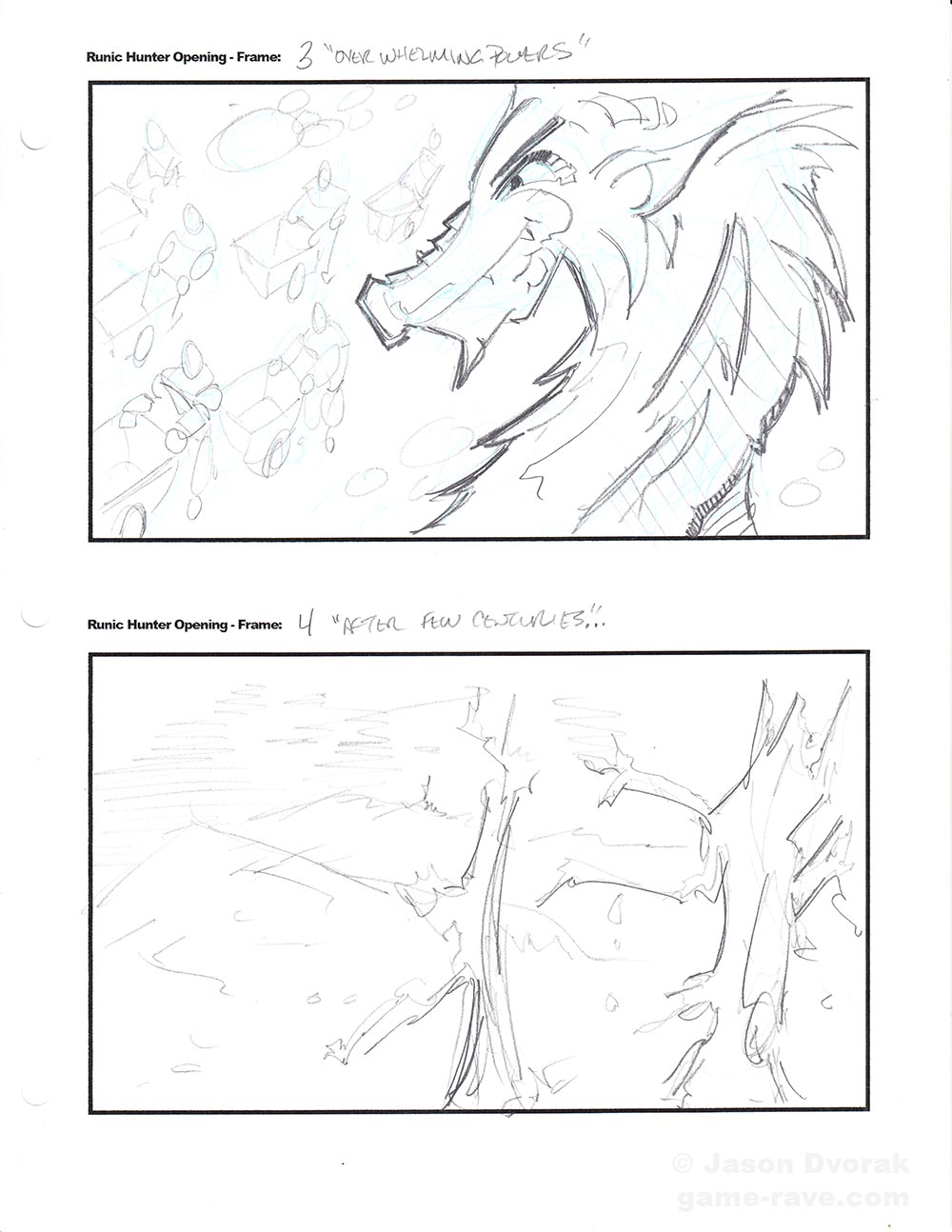
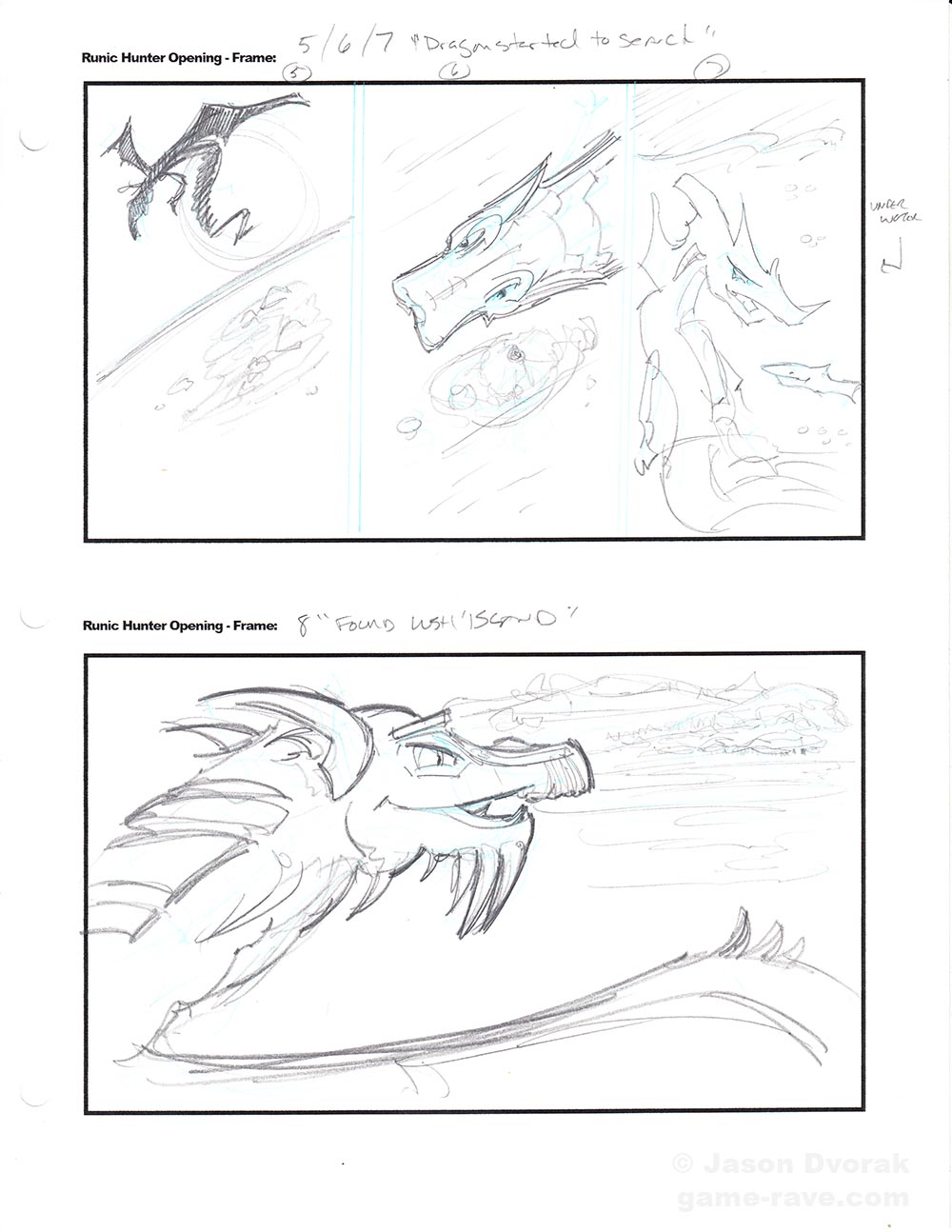
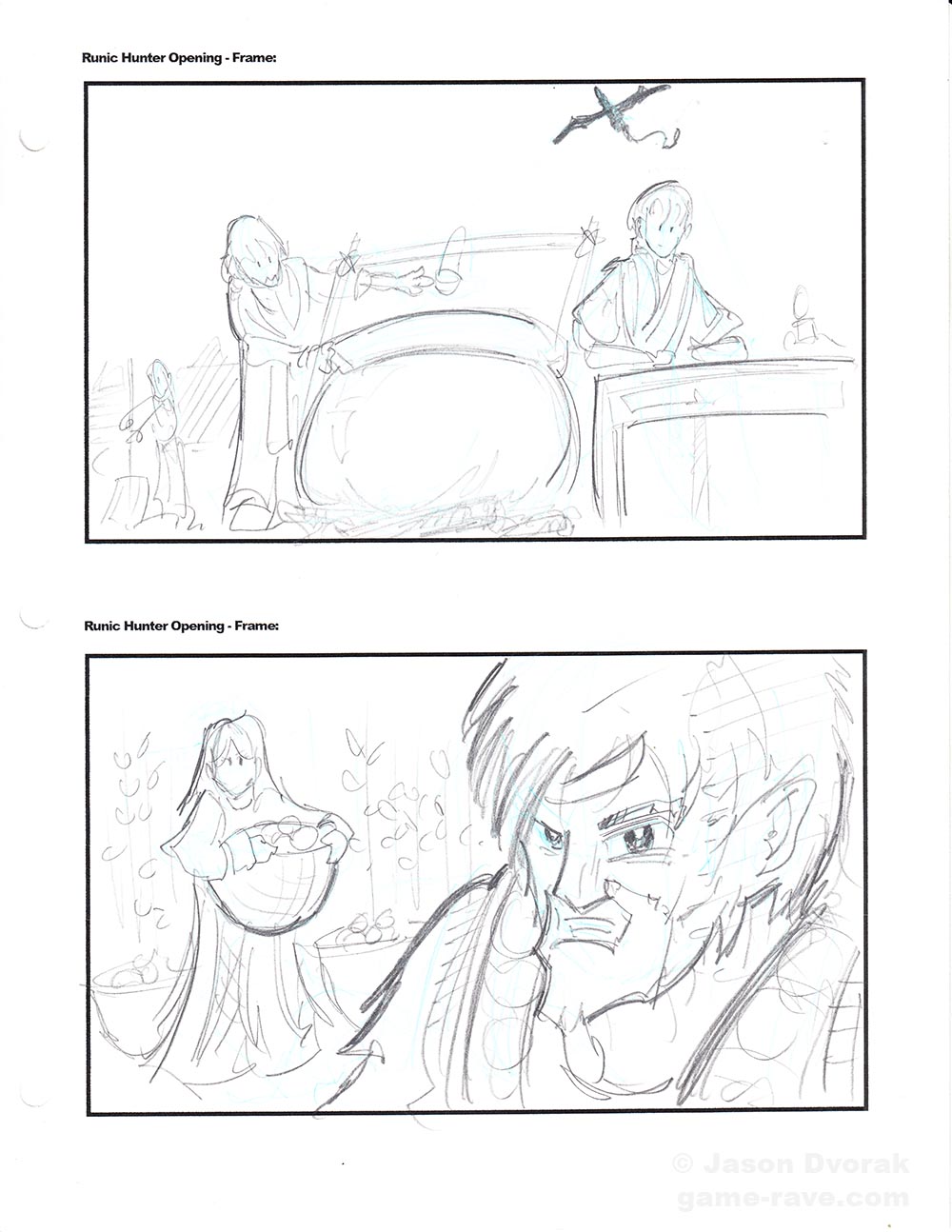
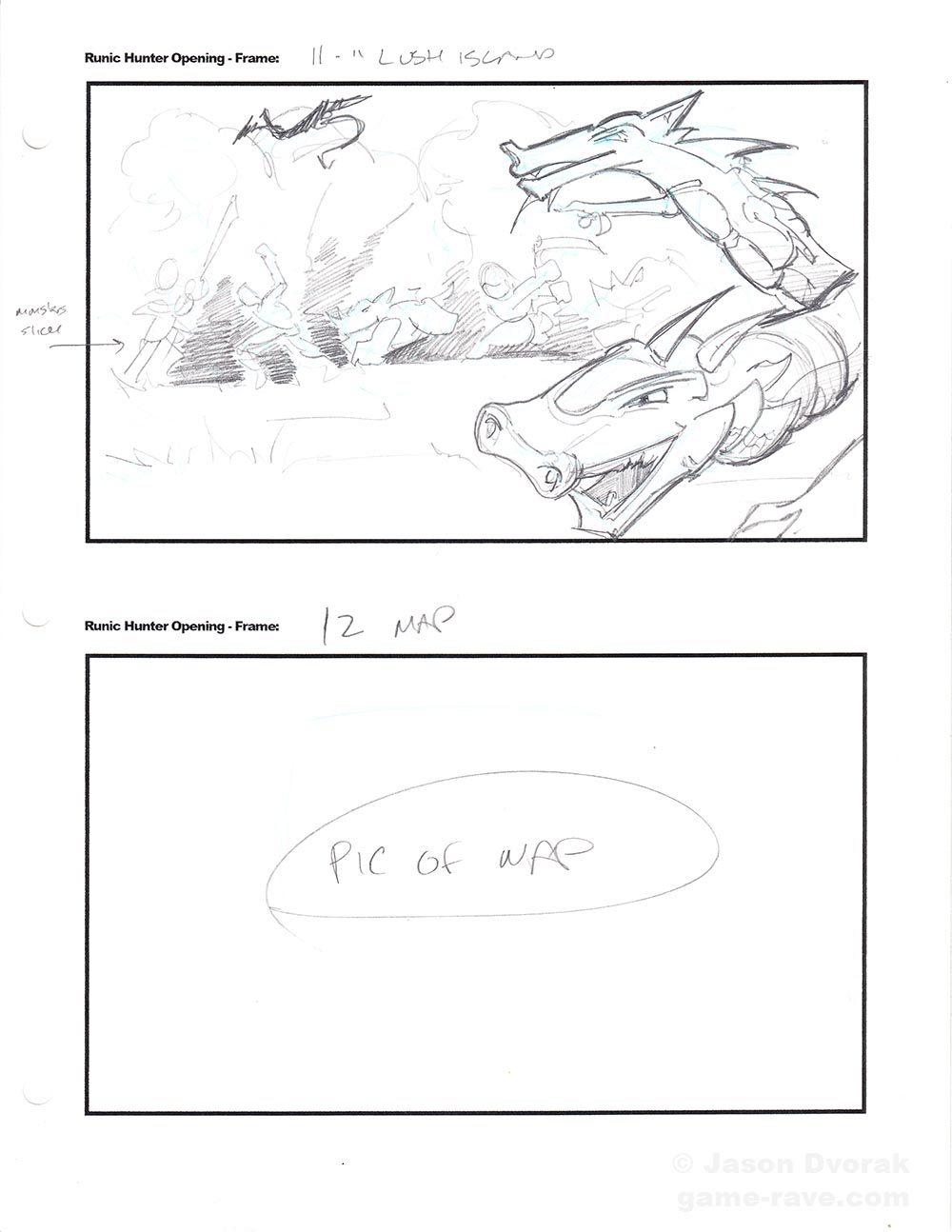
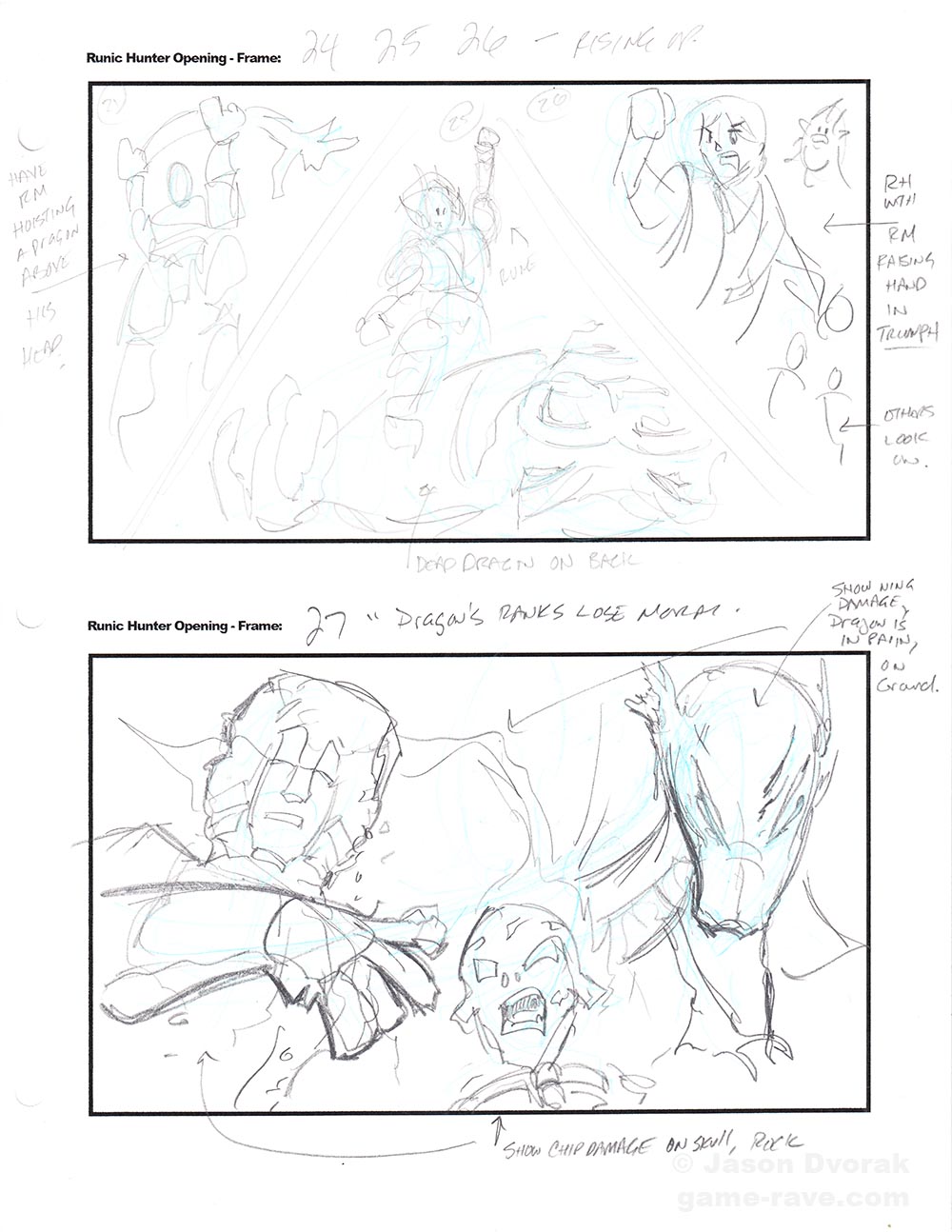
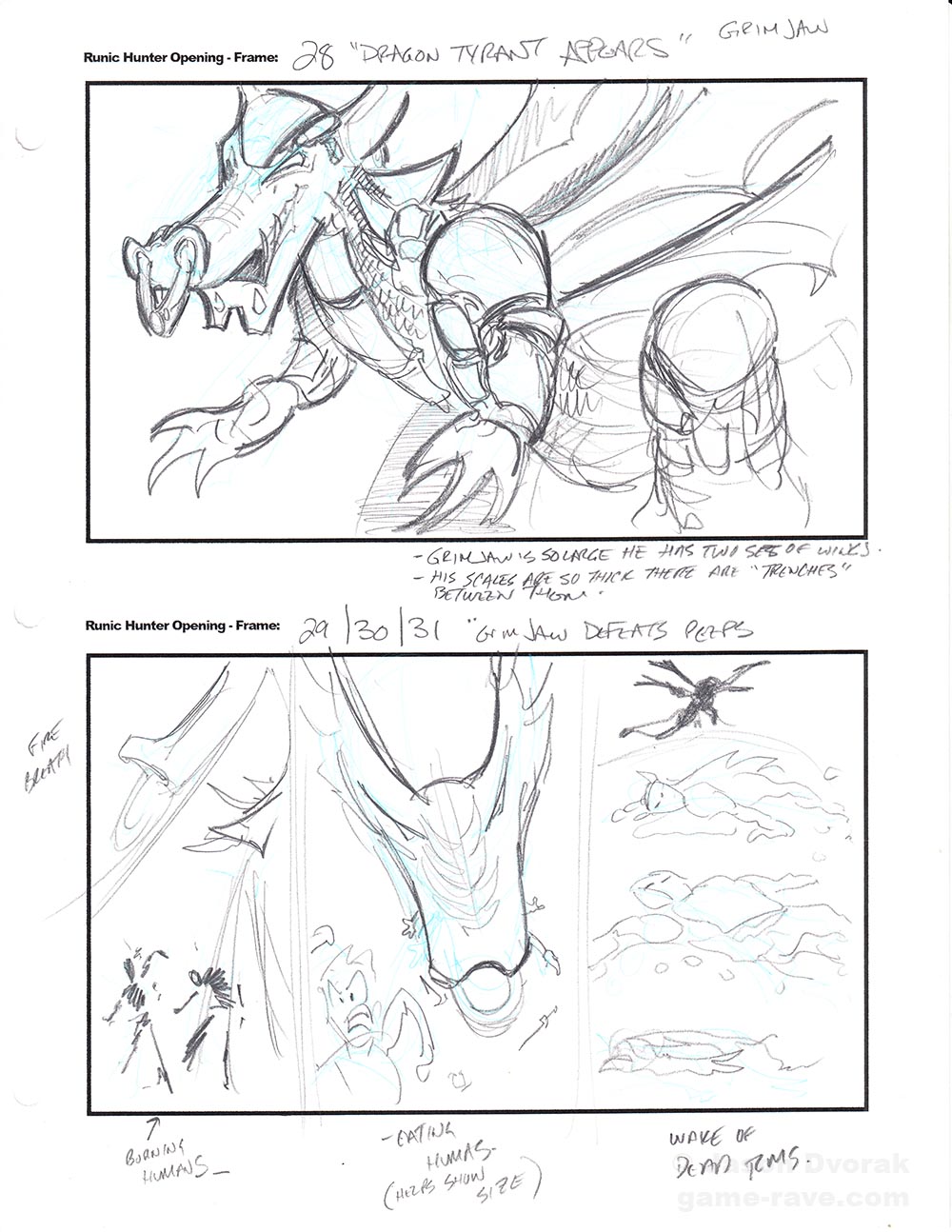
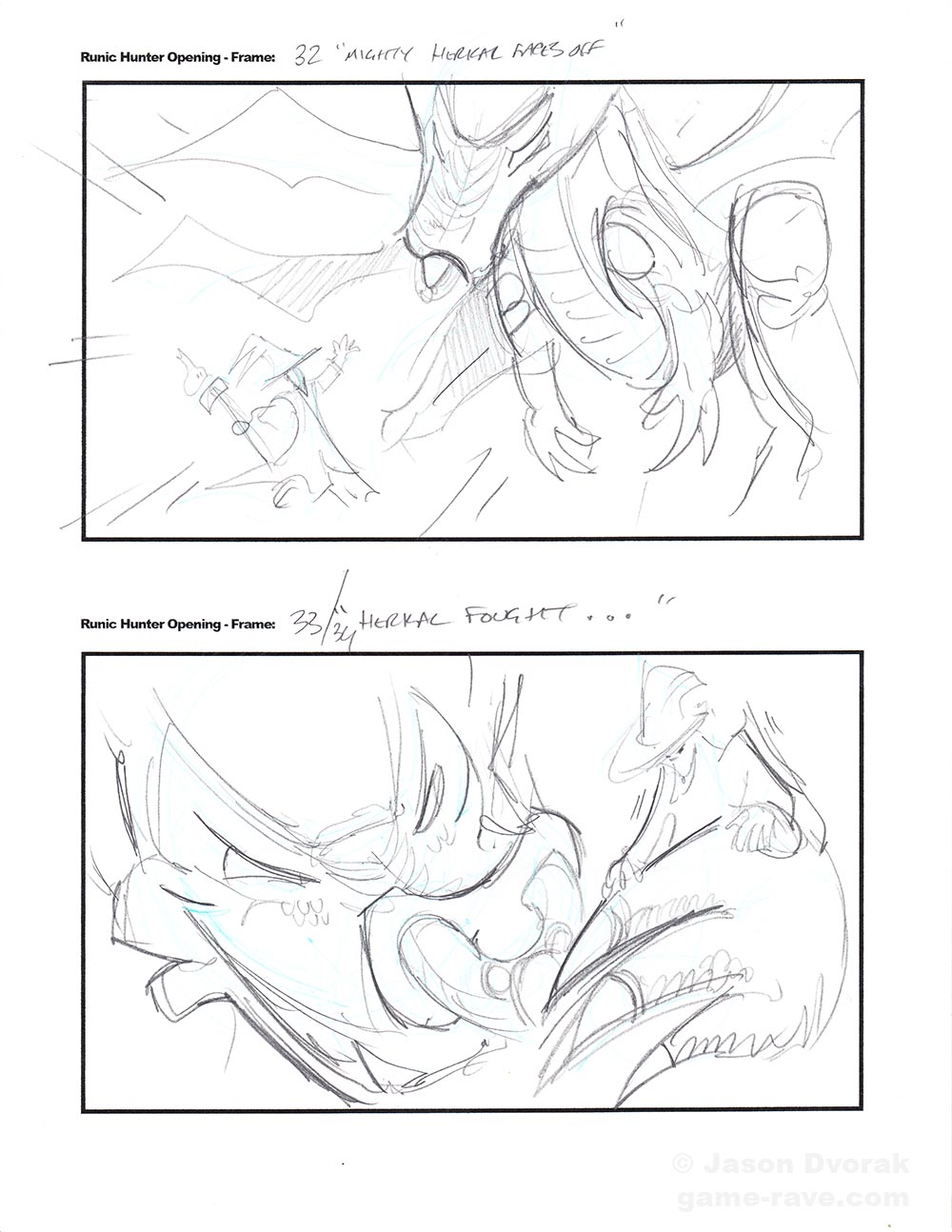
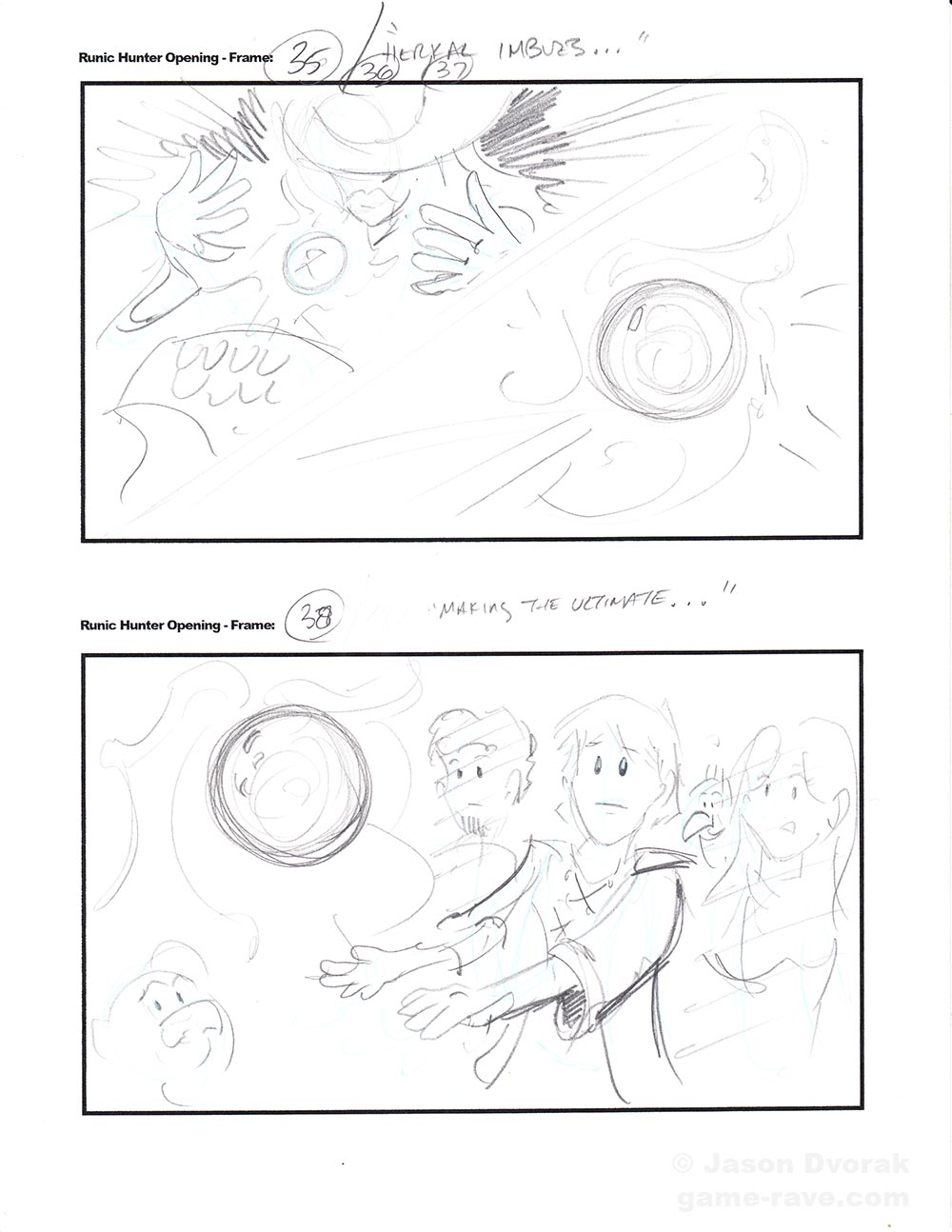
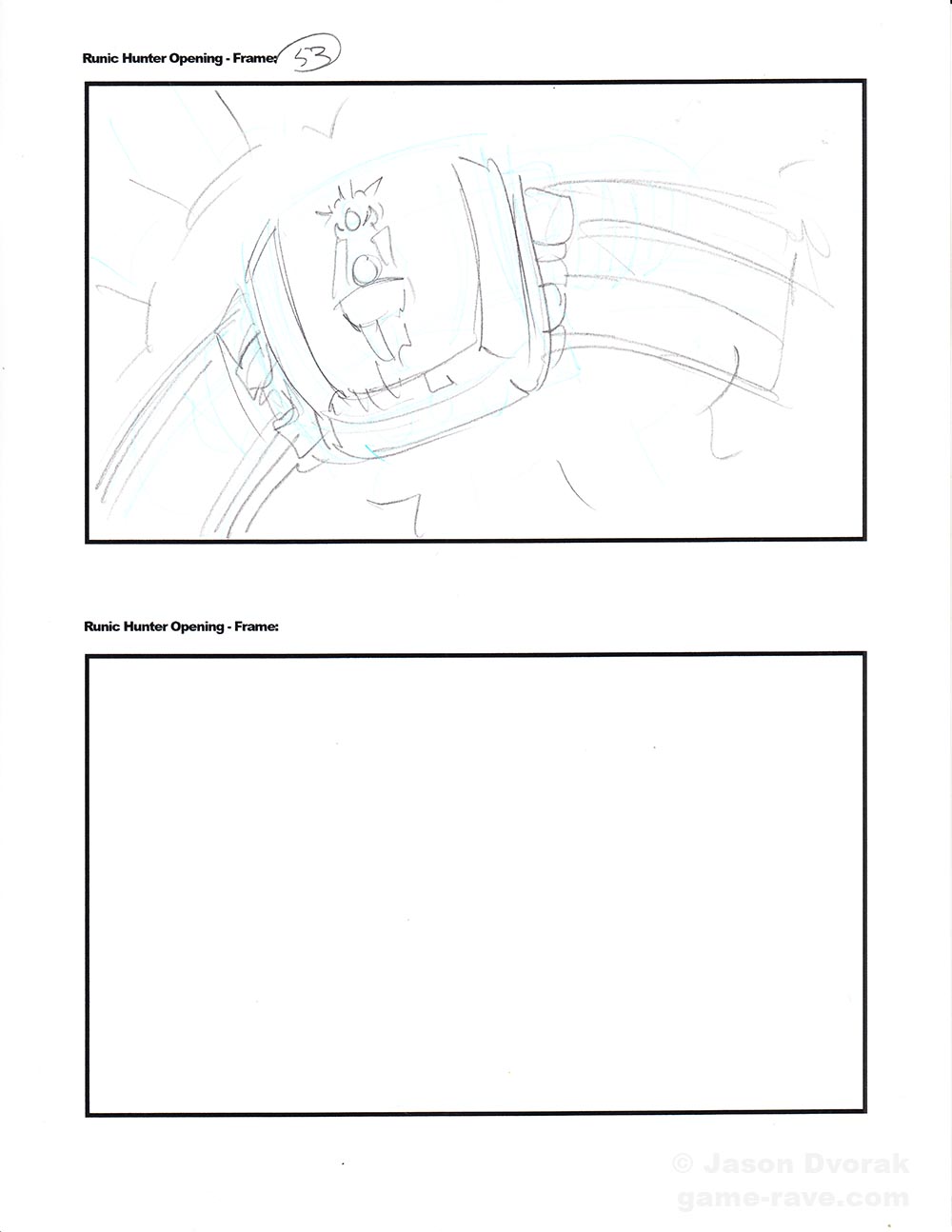
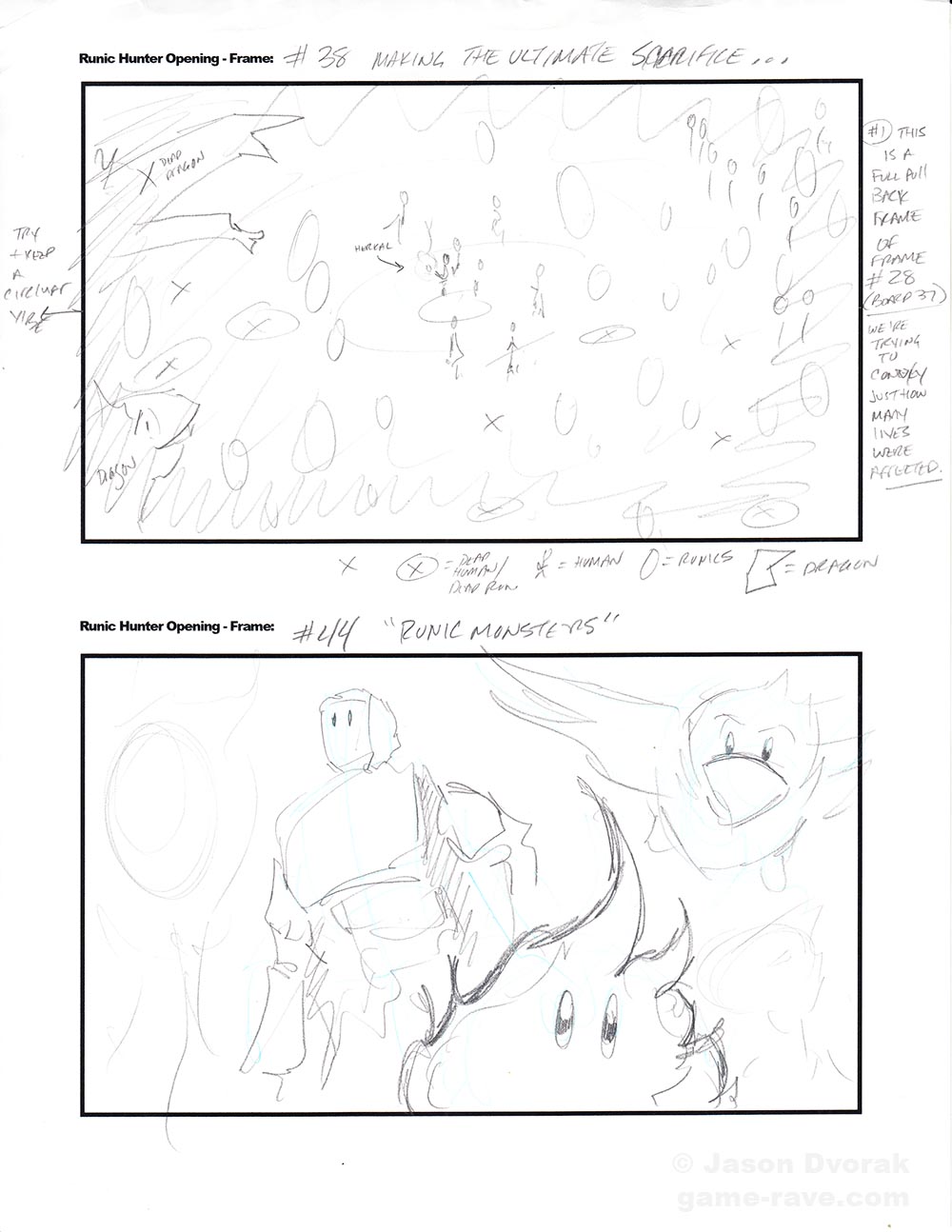
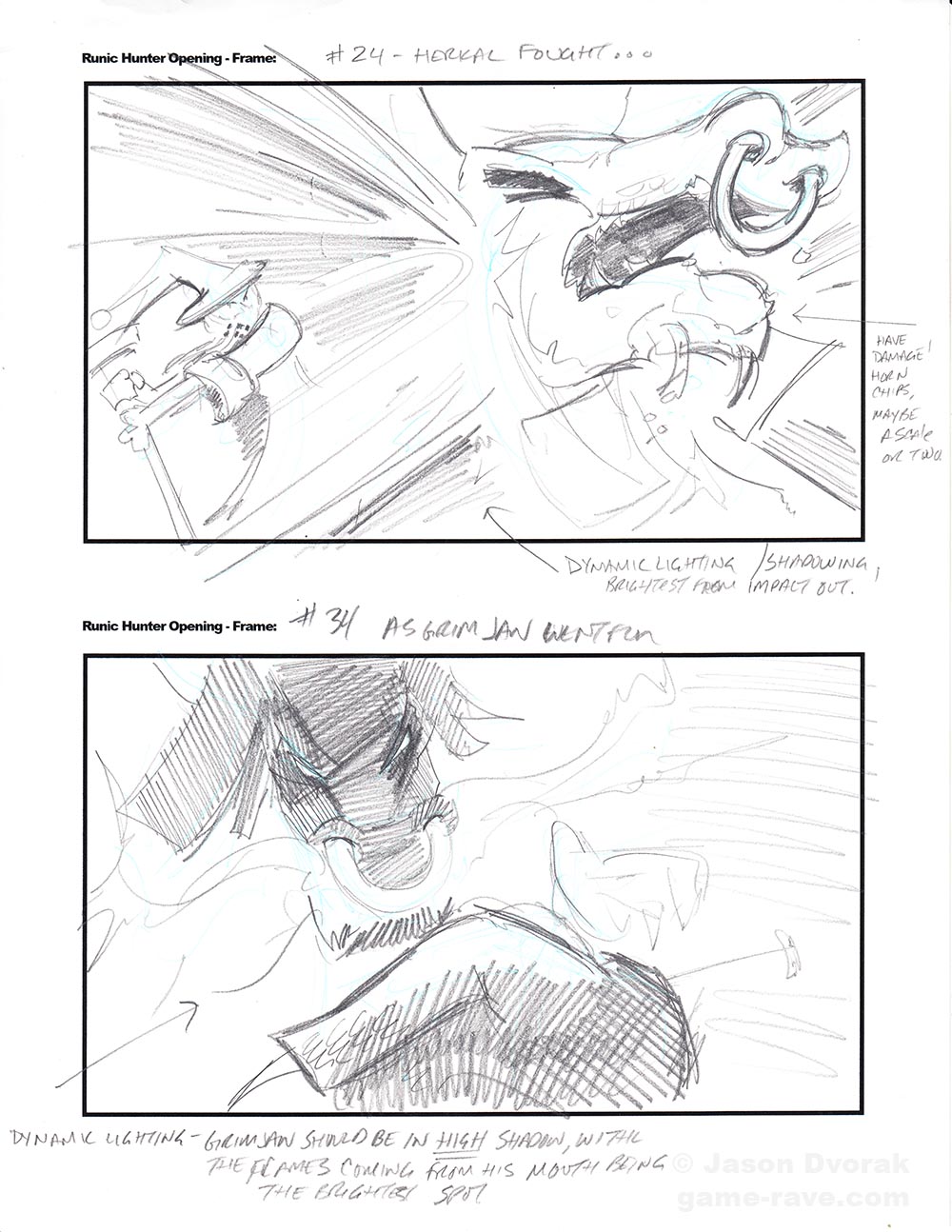
Once I had the notes from above, the next step was to storyboard the events visually. This would give the artist the roadmap they would need to start creating the slides. While the storyboards are in numerical order, the last two pages show alternate takes on four previous panels. These focused on either dynamic shadow concepts or different camera angles.
While there are random animations and image notes in the margins, above each slide is the narration it would be timed to. Had the audio for the sequence been recorded, some slides would likely have been cut due to their selected speech happening too quickly. Assets that we didn’t have, or didn’t even know what they might look like, were left blank or just added in as text.
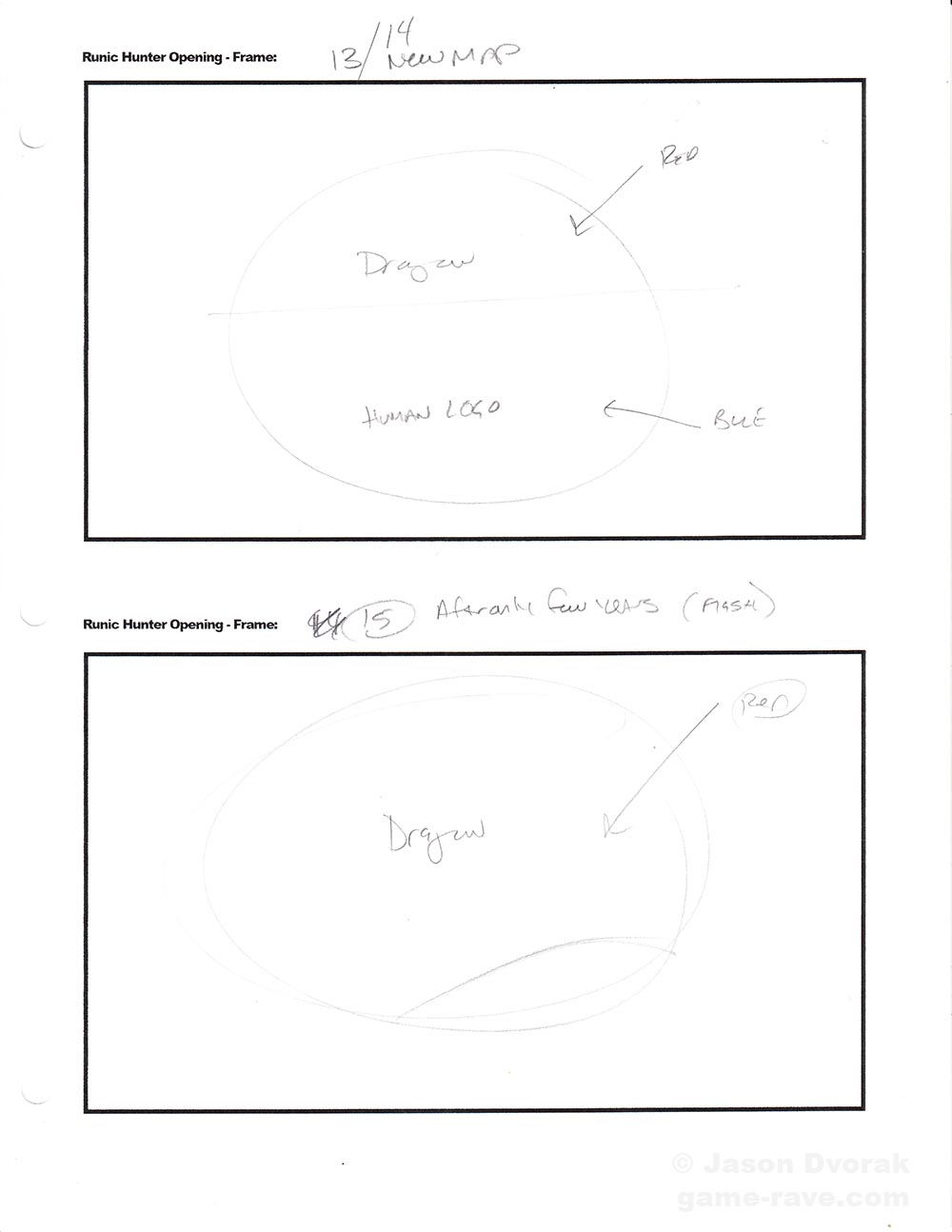
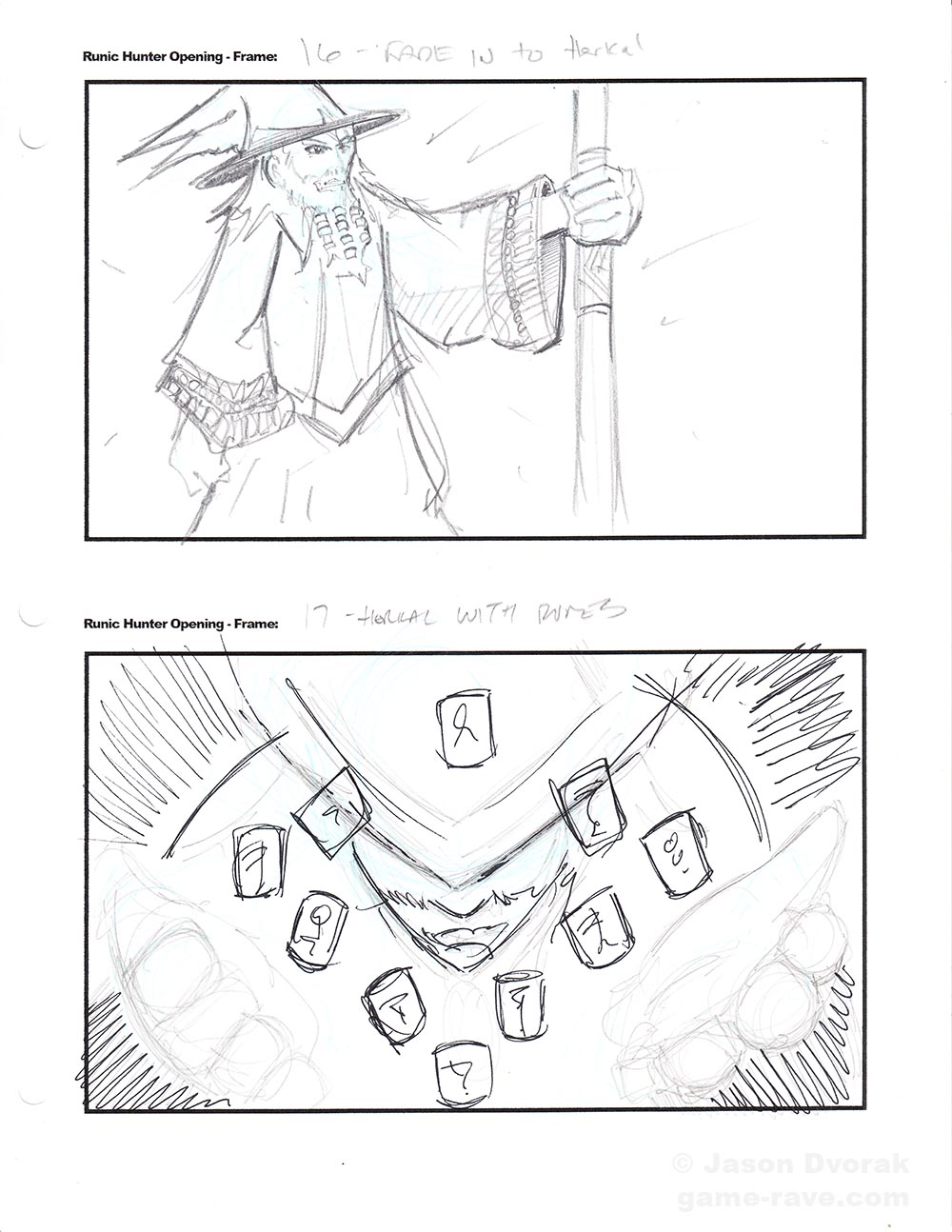
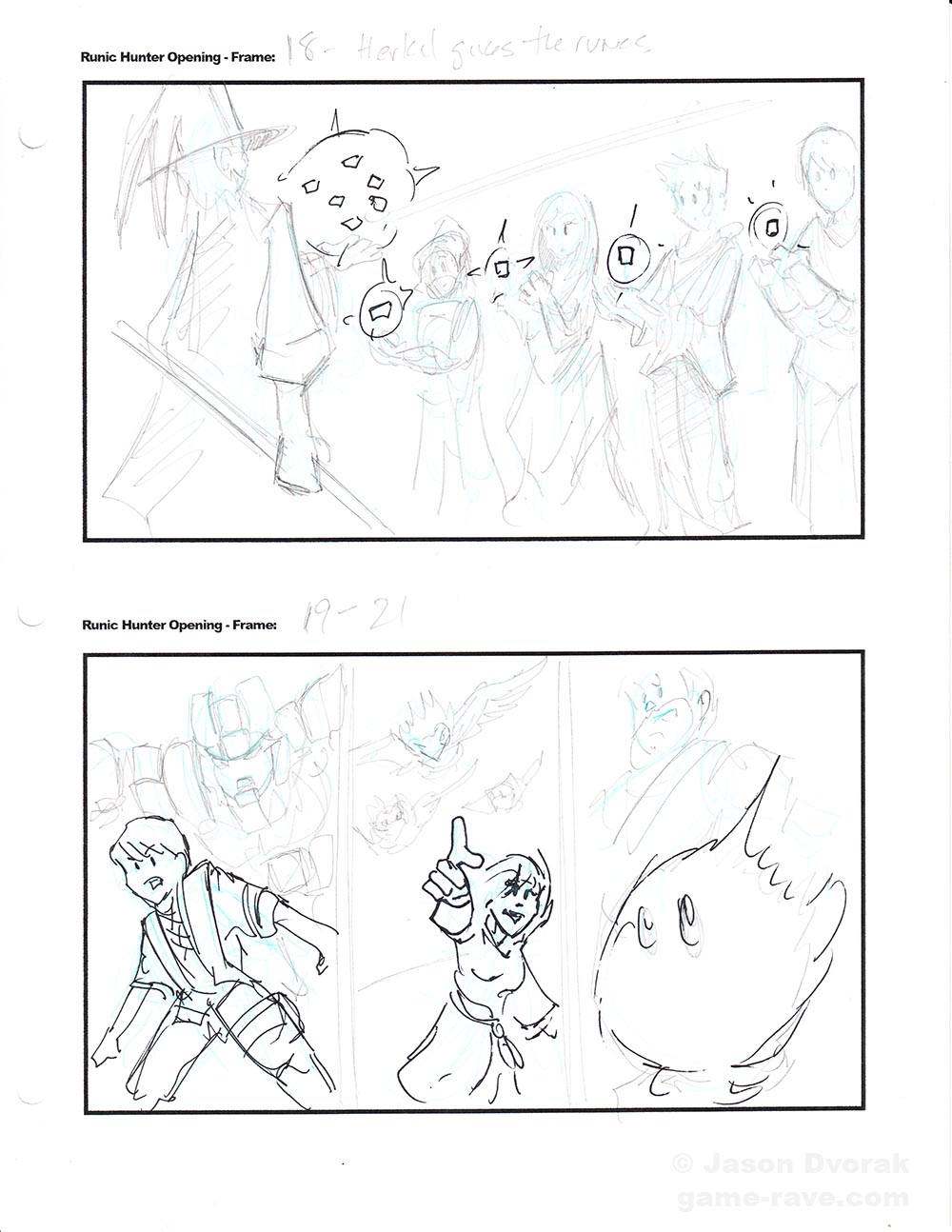
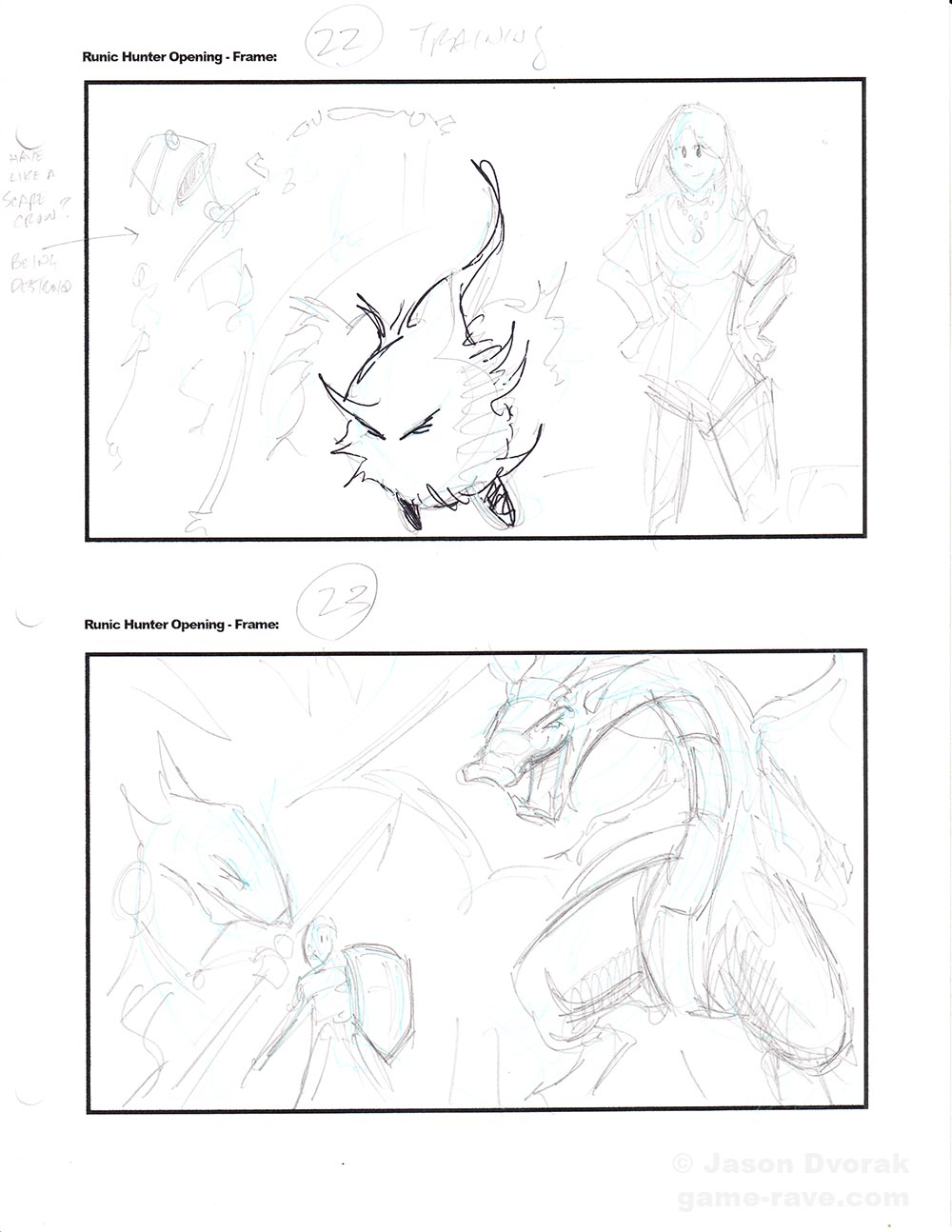
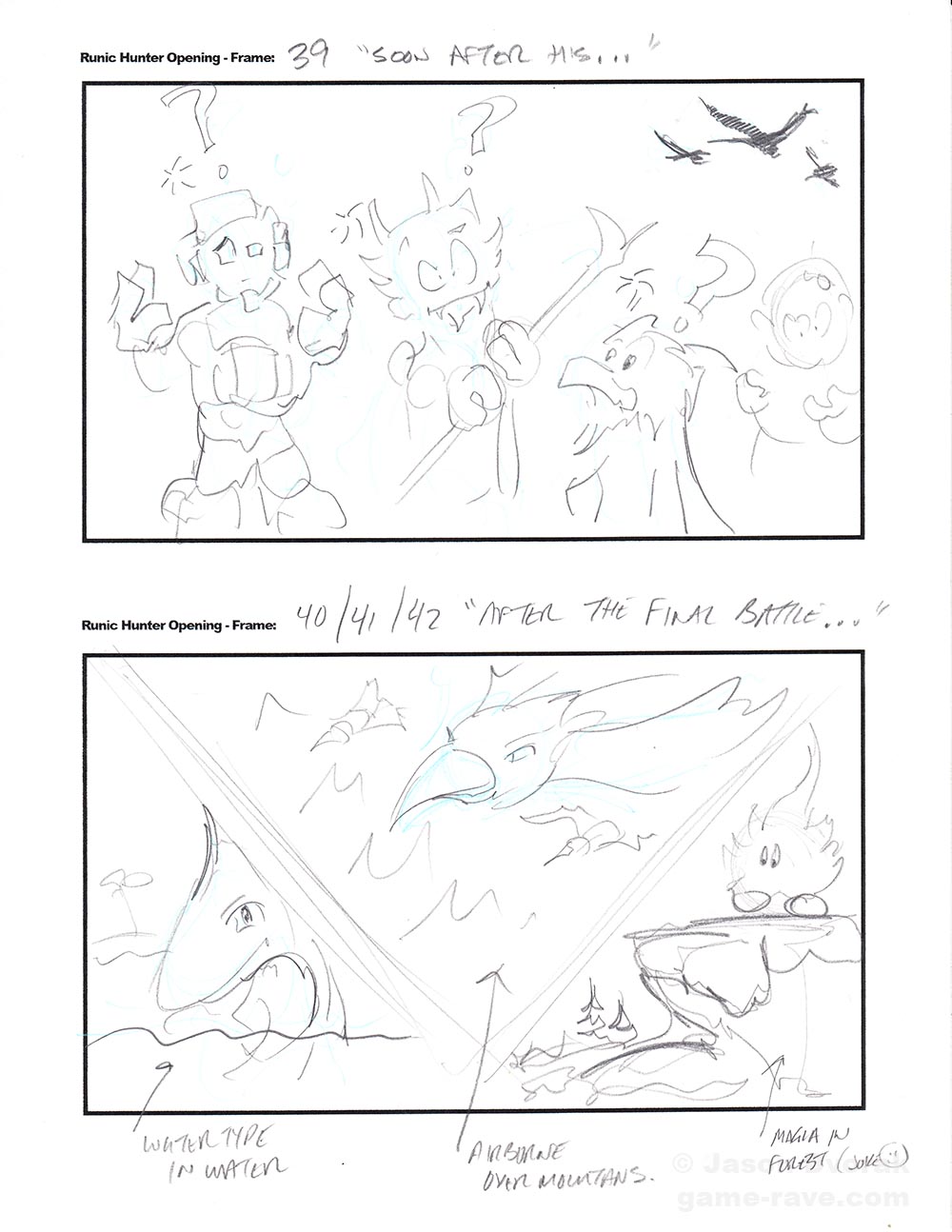
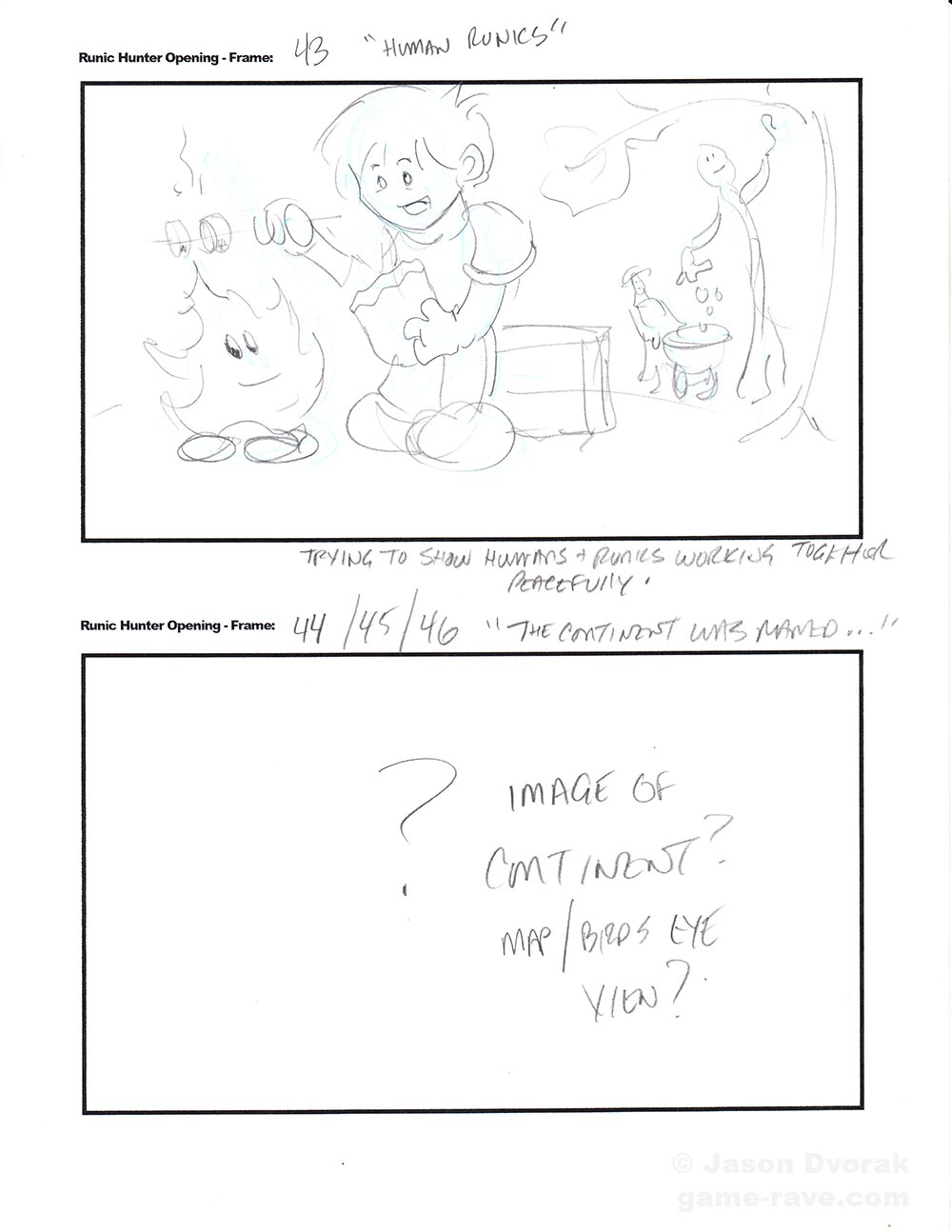
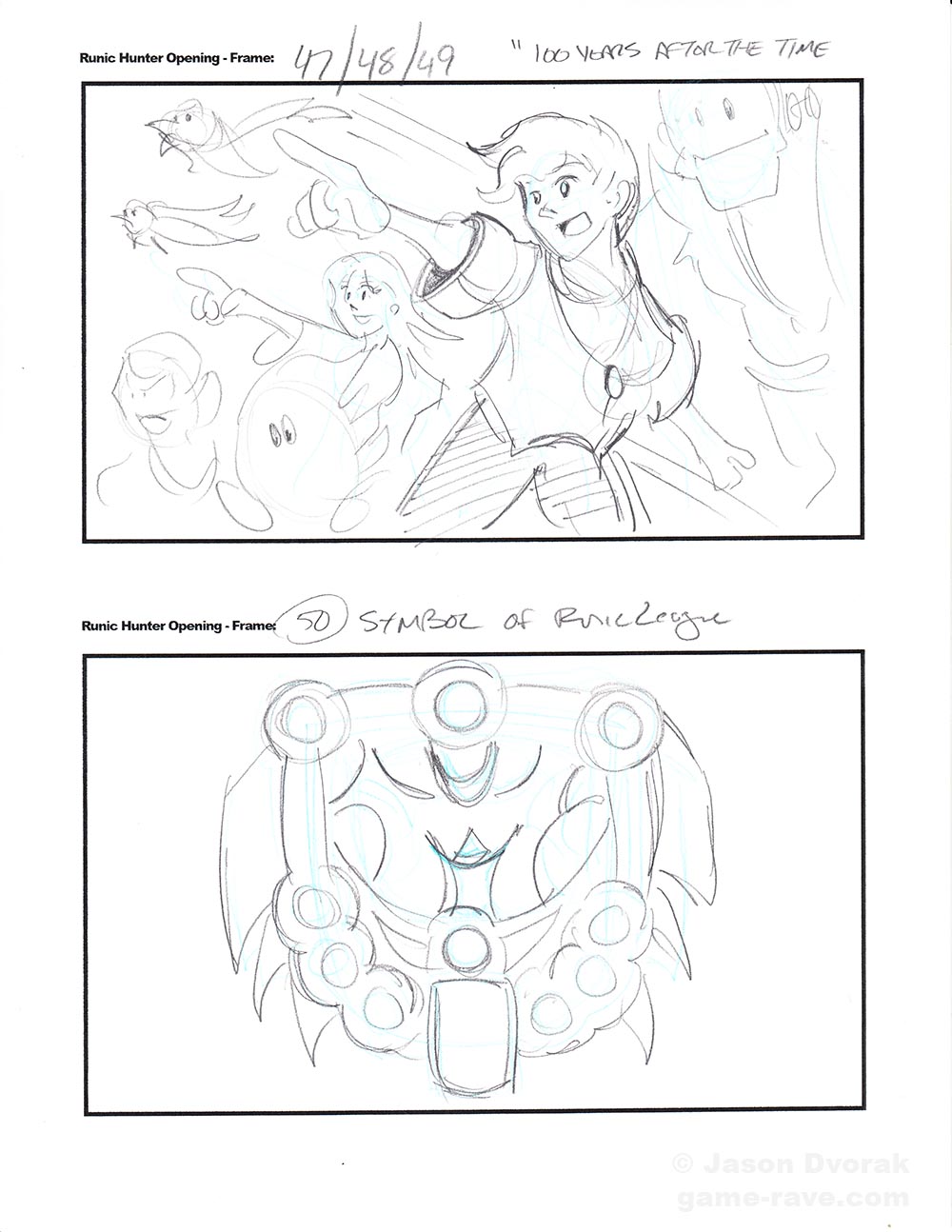
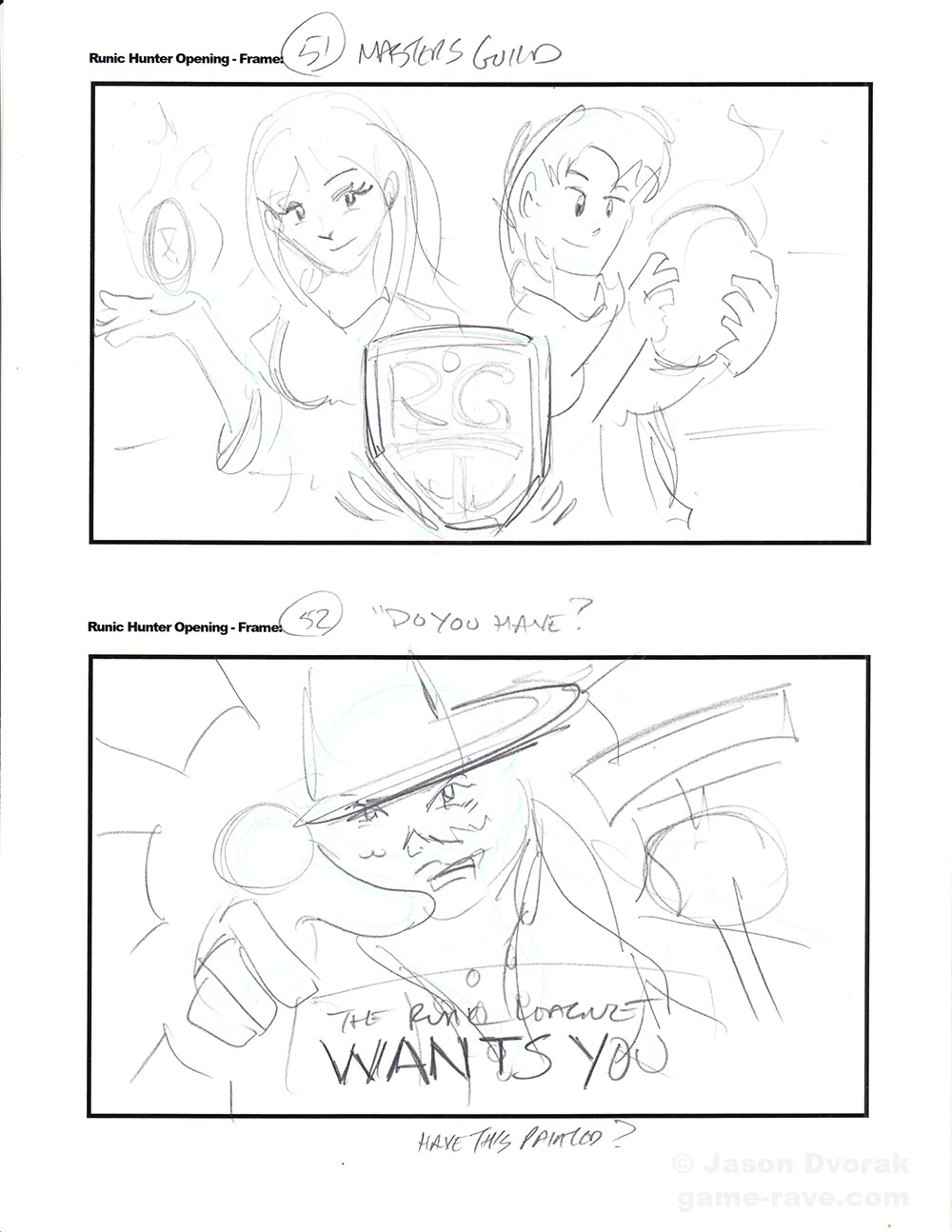
Sequencing
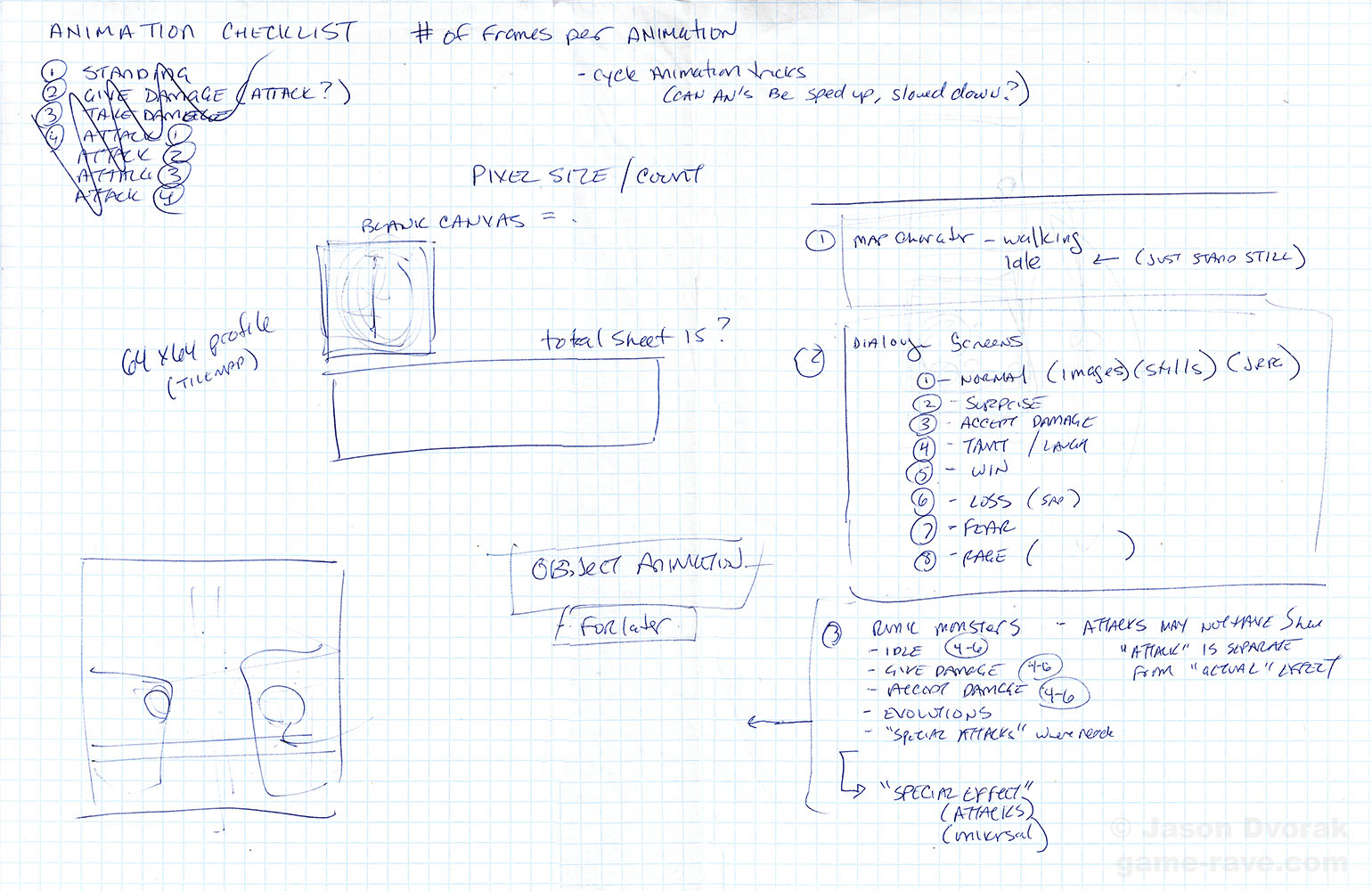
This was a mental map put to paper of what the battle screen might have looked like. Small stuff includes the production notes of sprite tile sizes, character locations, and animation levels. The main point of this was for me to understand how many choices would be available in battle, then translate those into animation checklists. So the “Normal” phase might include images of characters in various dialogue poses and expressions. But then I would need to map out animations for each attack, taking a hit, etc.
Probably the scariest part of the entire process since you realize just how large the ‘shopping list’ for needed art is.
Class & Element Types
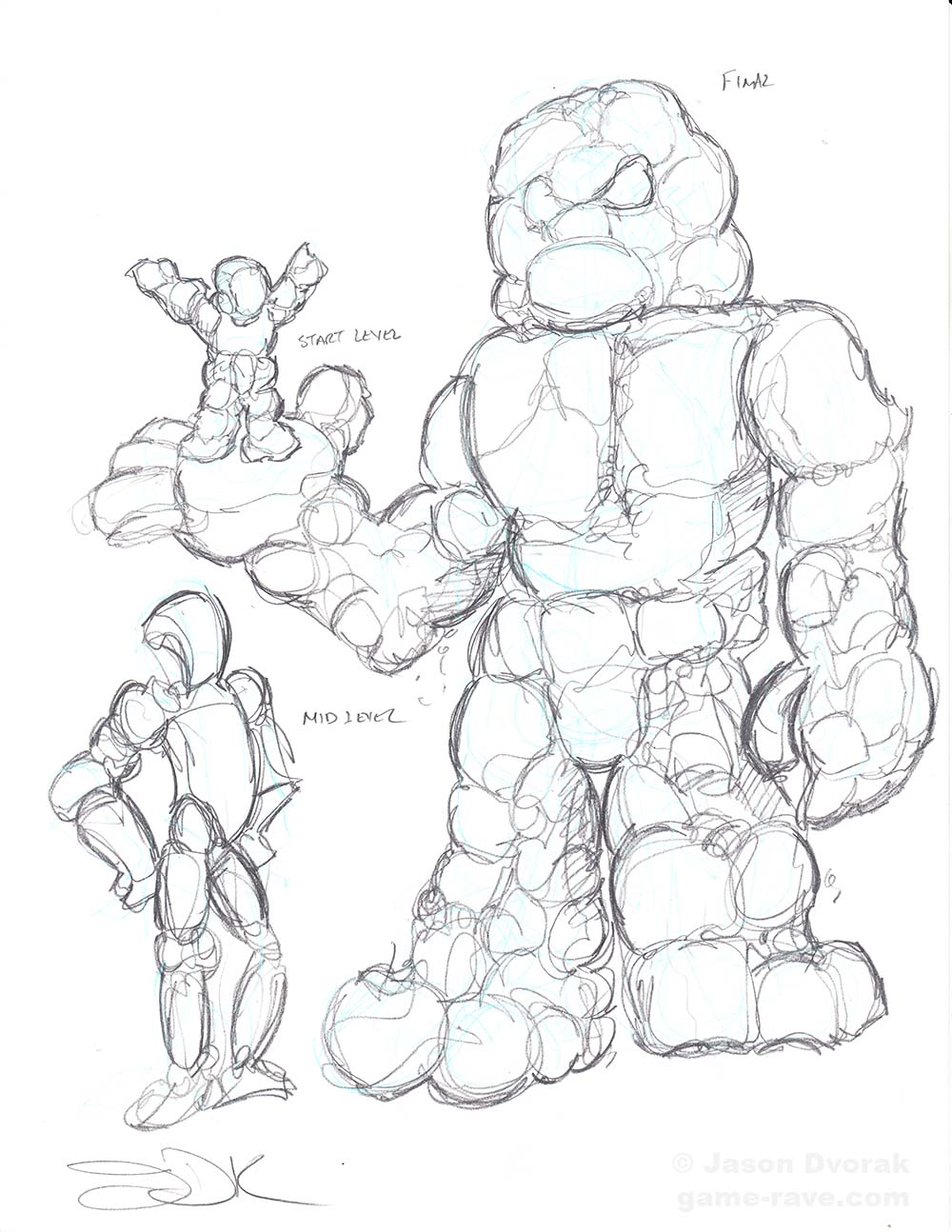
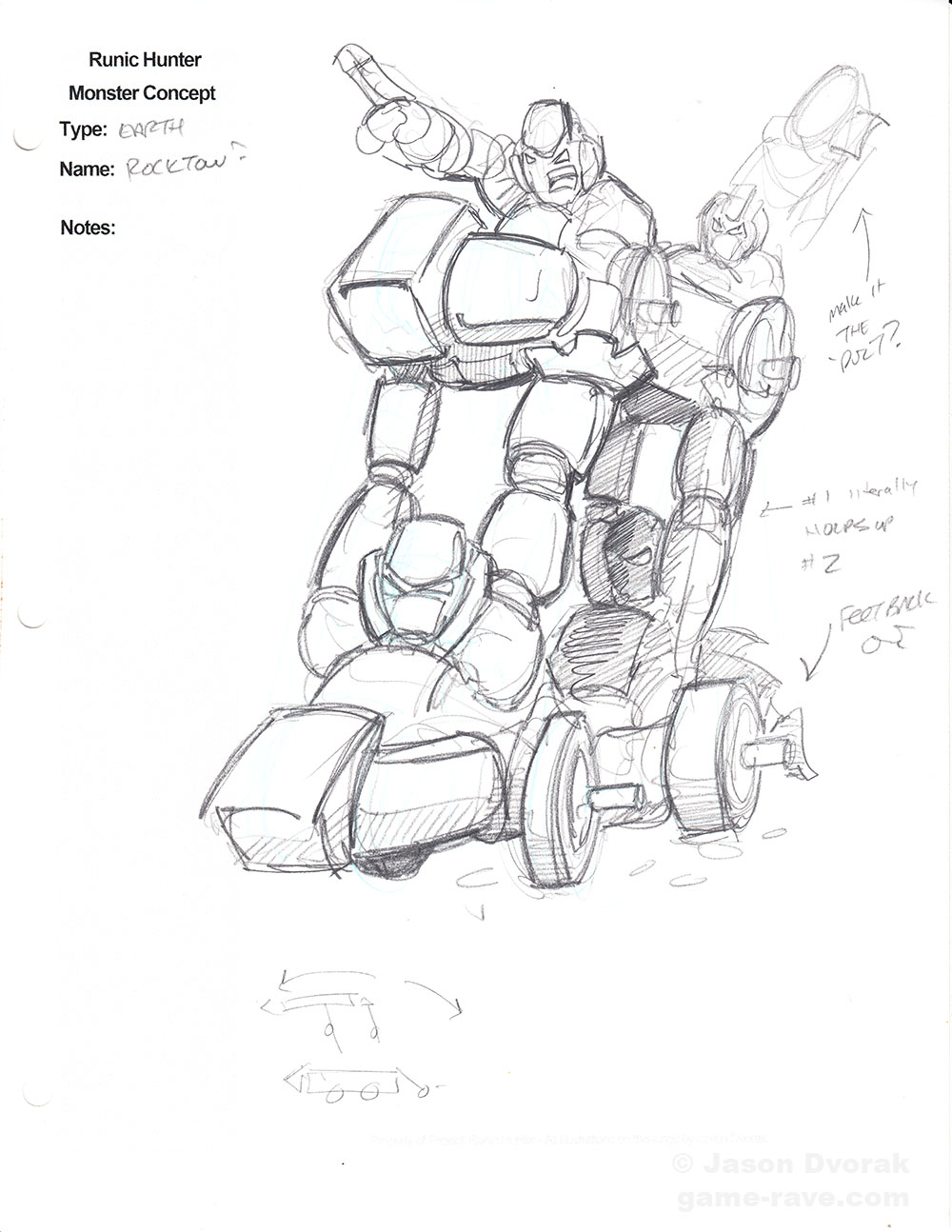
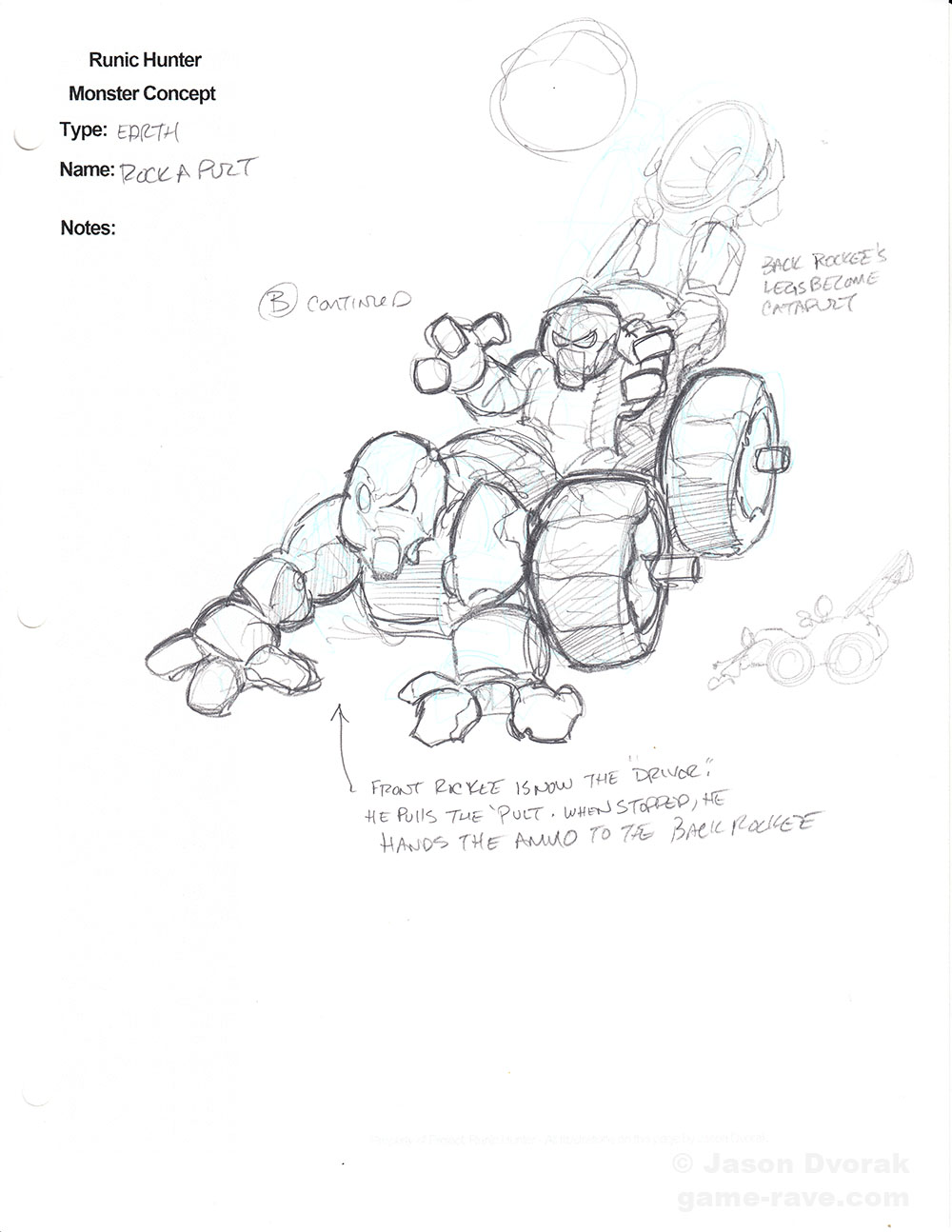
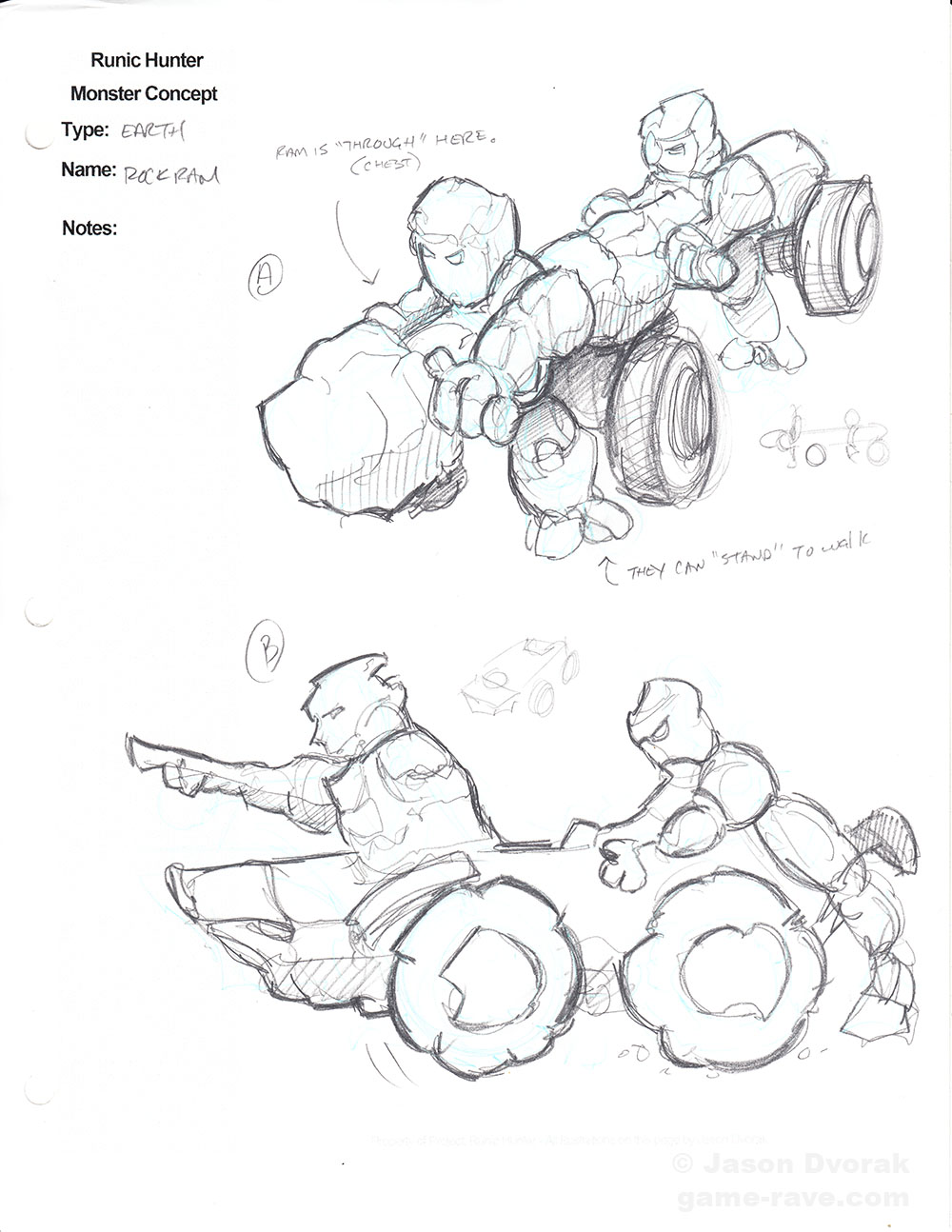
If you’re going to be collecting monsters, you’re going to need various classes. This was my favorite part of the whole process, as I was mostly given free rein to throw everything to the wall and see what stuck. Many ideas focused on trying to do what no one else had done before. Ones I hold close to my heart were the rock golems, particularly the “car” types. I loved the nod to the Flintstones with these rock golems, who essentially were the car, and then they had smaller golems travel in them.
Earth
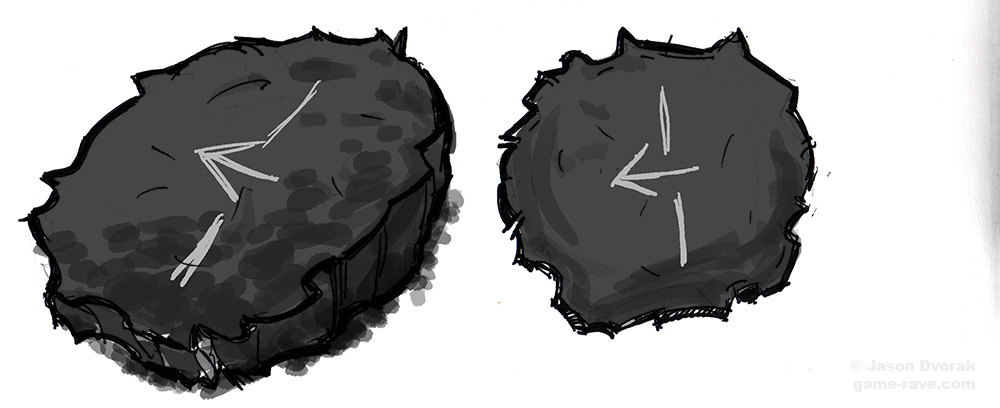
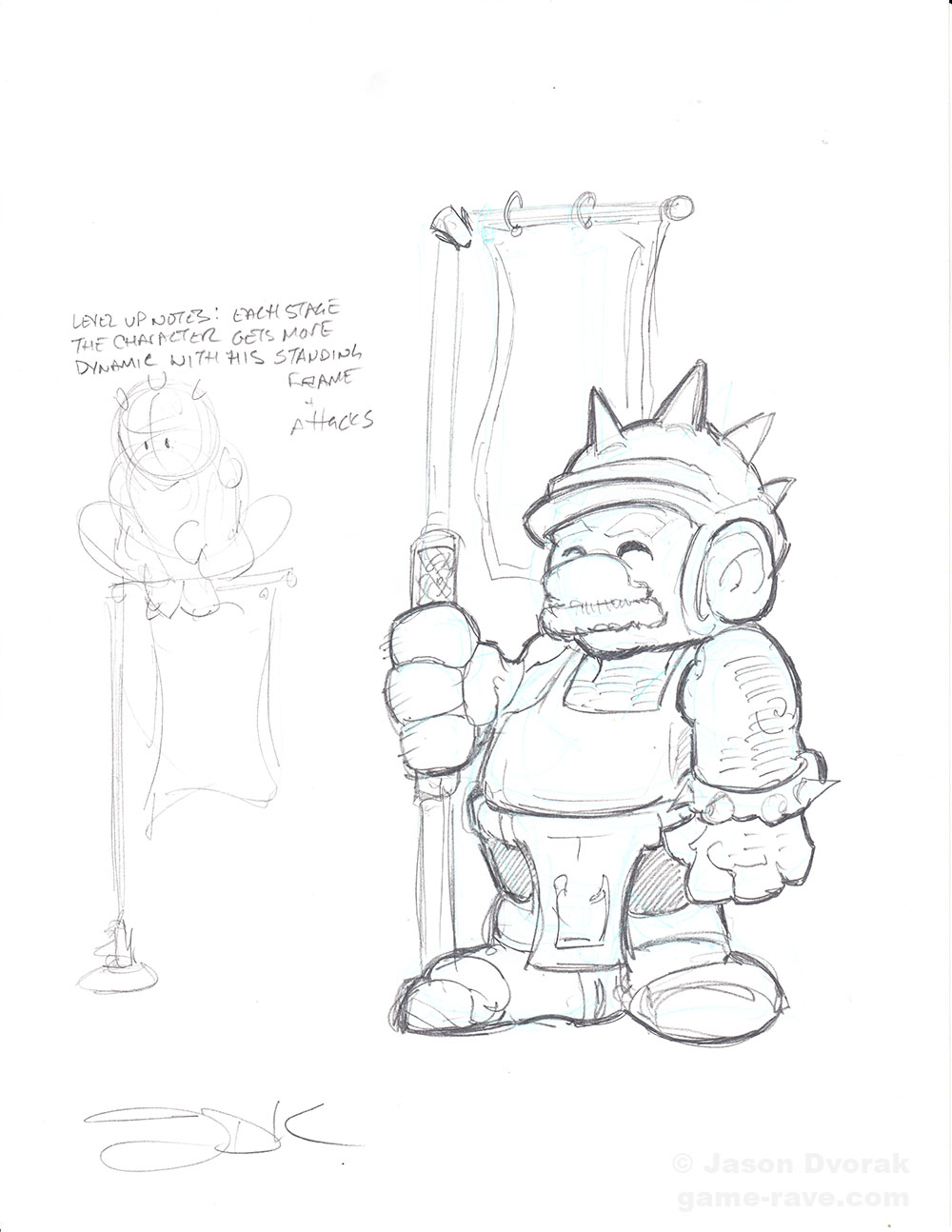
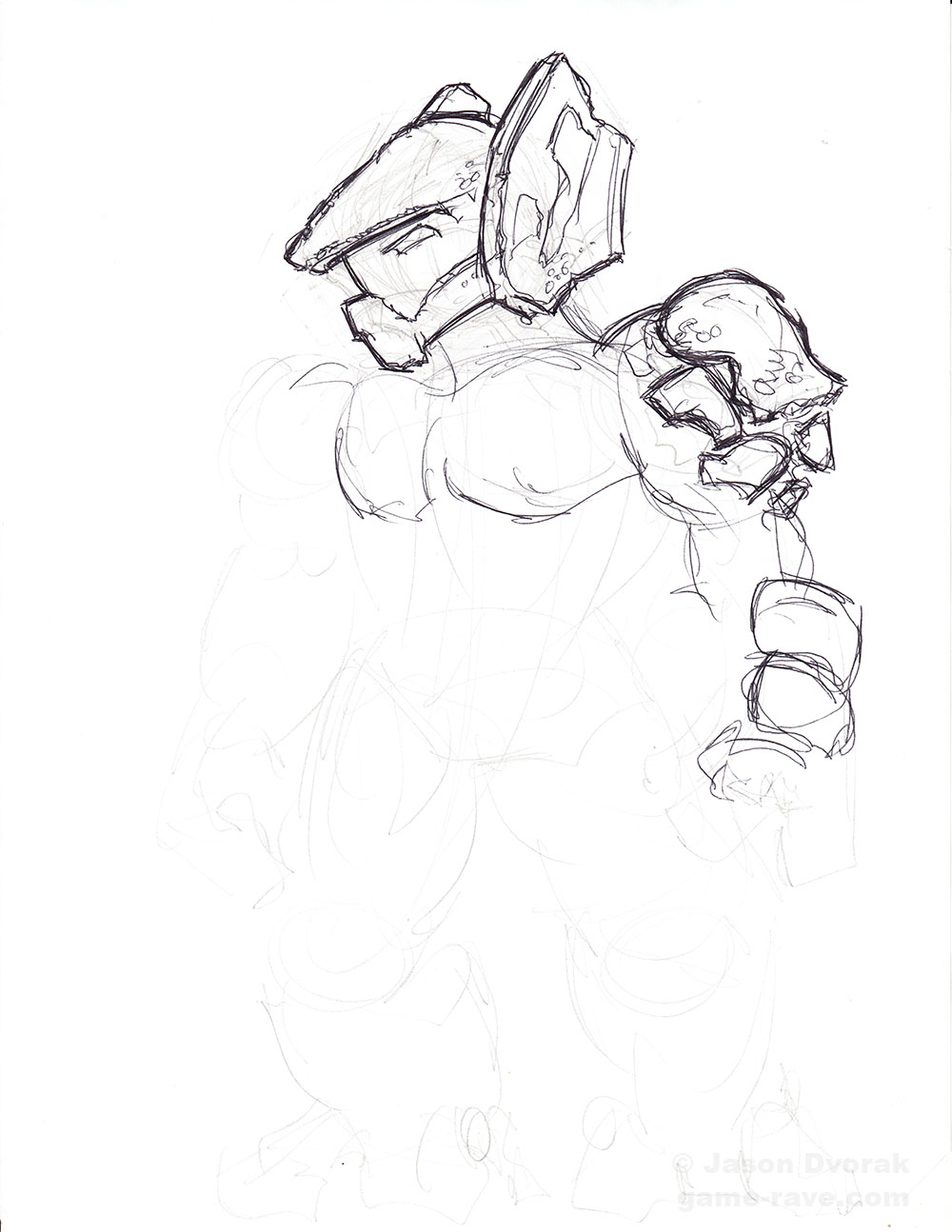
The Earth types only got so far as rock golems and a dwarf. I was fascinated by how I could exploit rocks and pebbles. The “car” characters were a hoot to draw. I liked the idea of the one evolving into a catapult. The dwarf-likes would have had several classes, each based around chess pieces. So you’d have a dwarf in a tower, a female dwarf for the ‘queen’, etc. The only one I got to was the banner carrier. I imagine him as the ‘knight’, since in one evolution, he’d be riding on top of his banner.
Fire
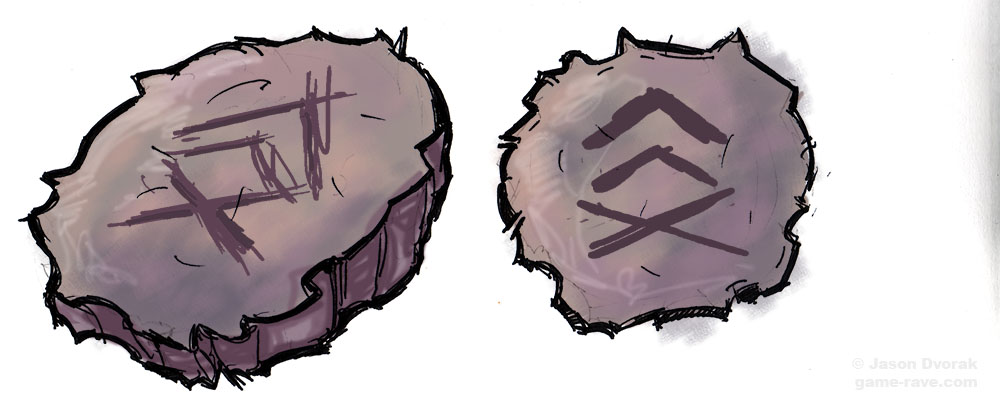
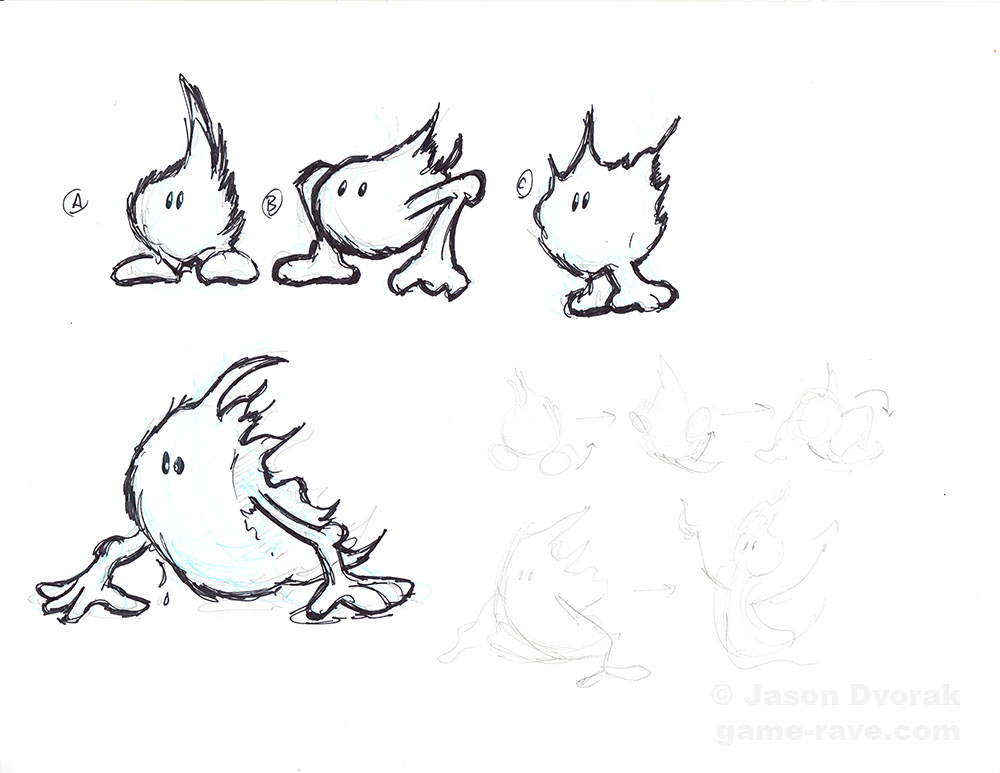
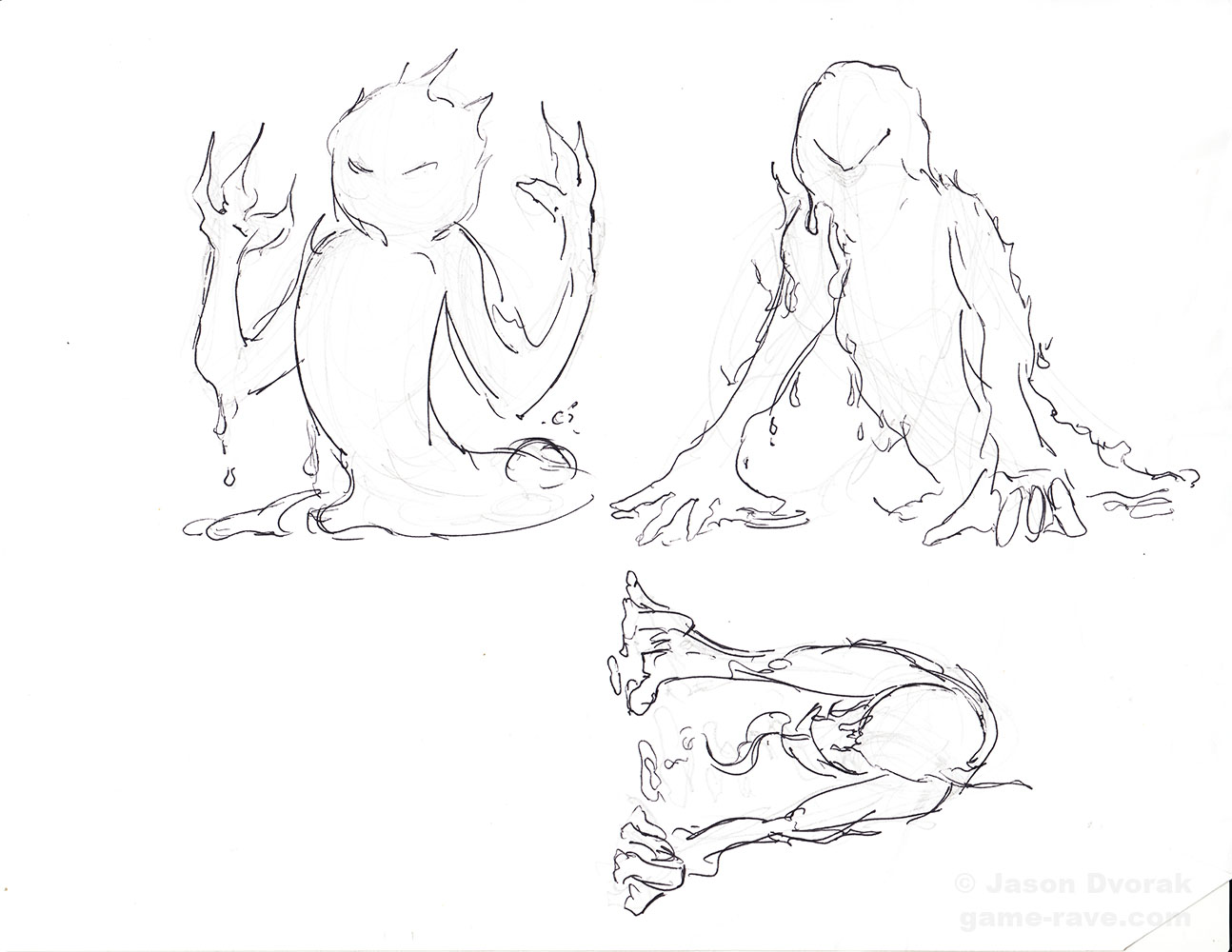
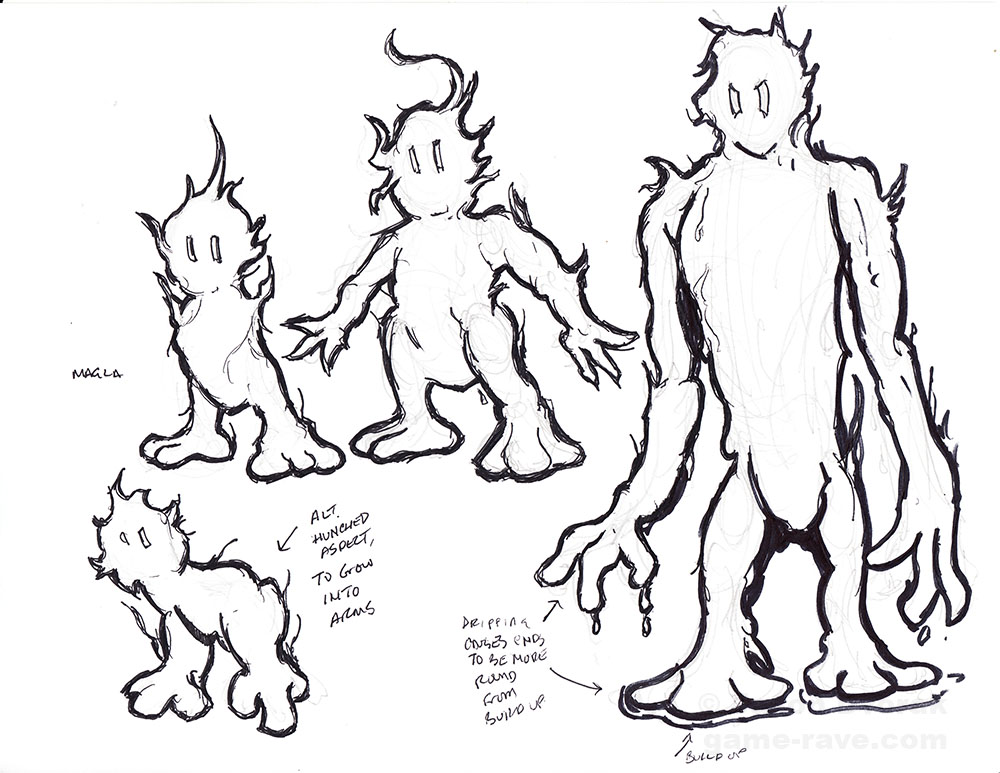
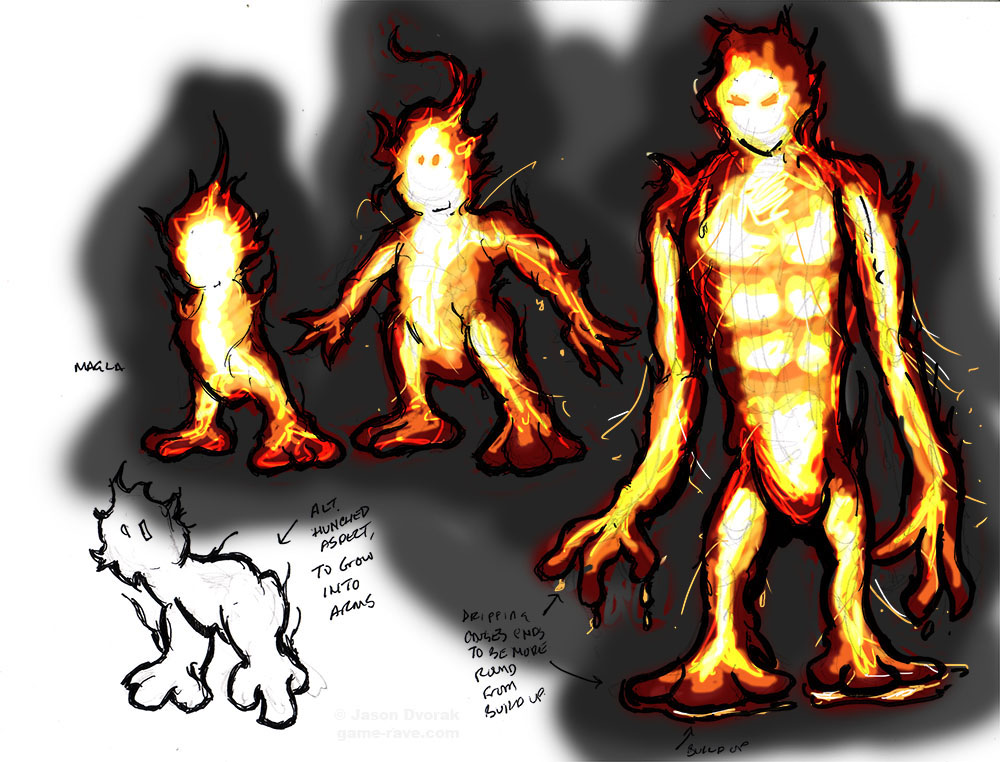
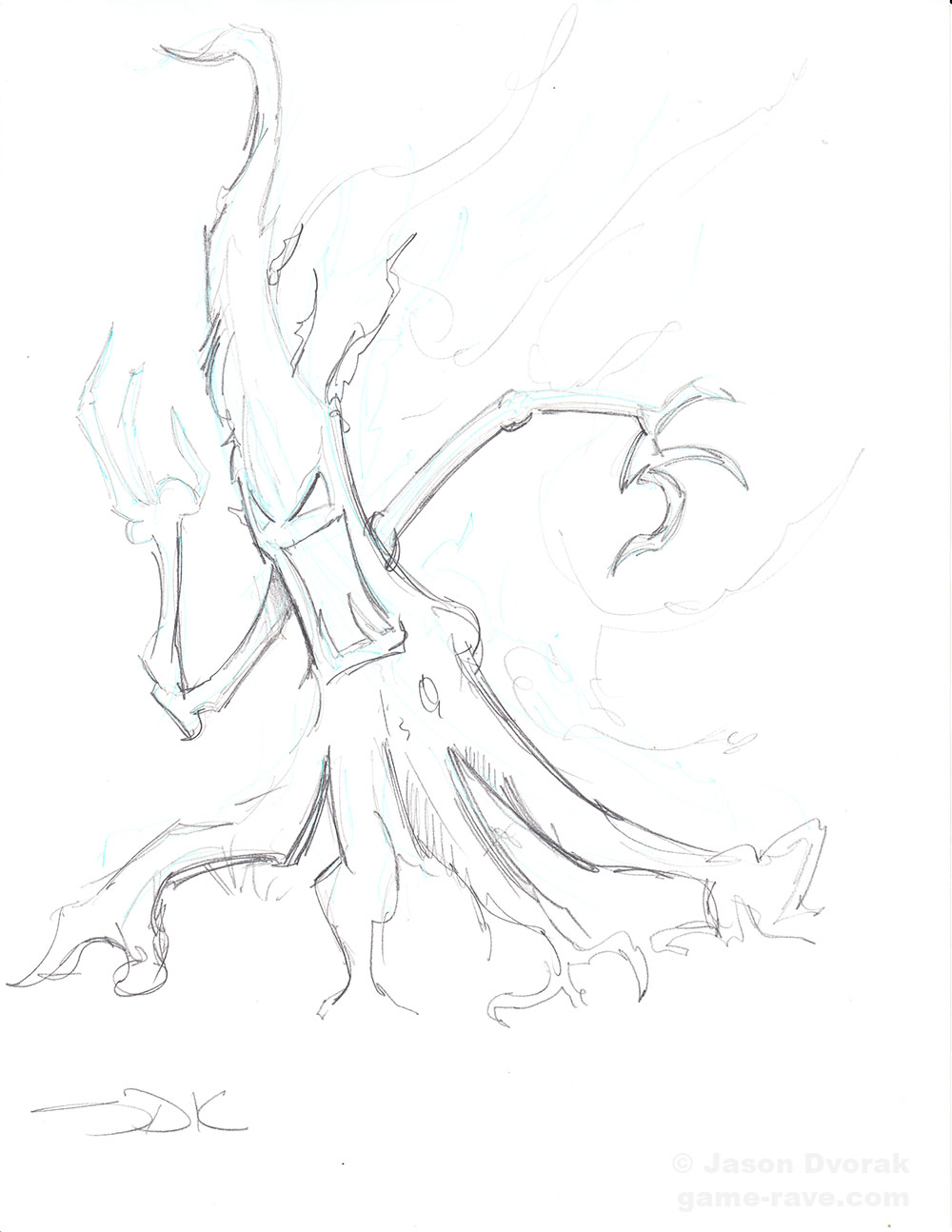
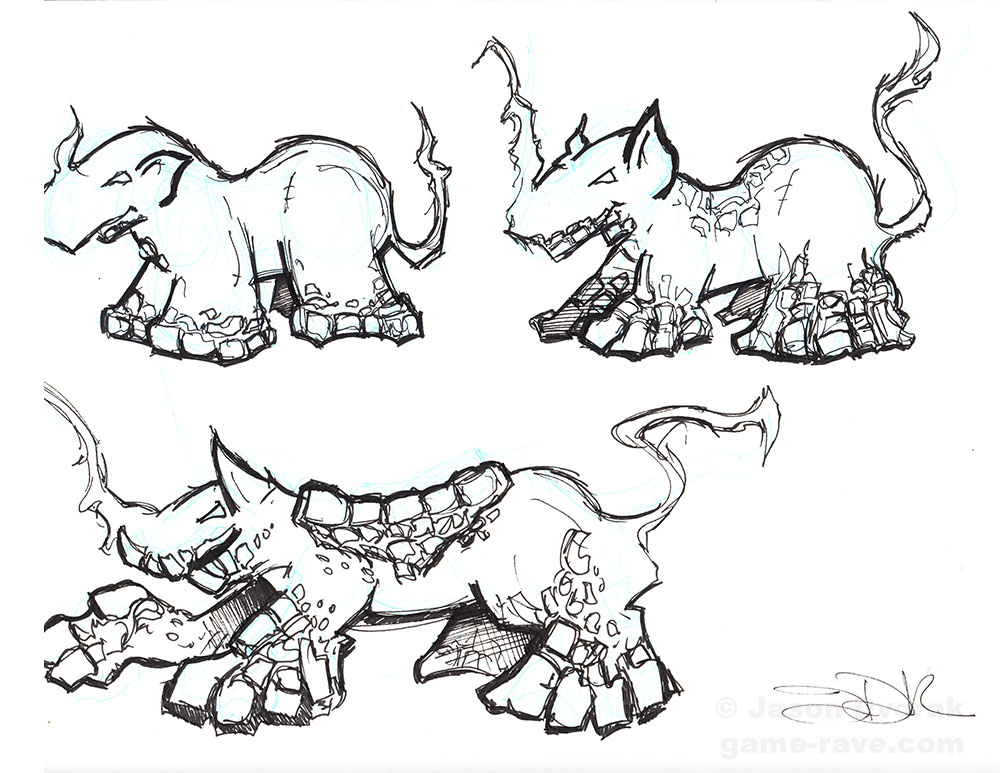
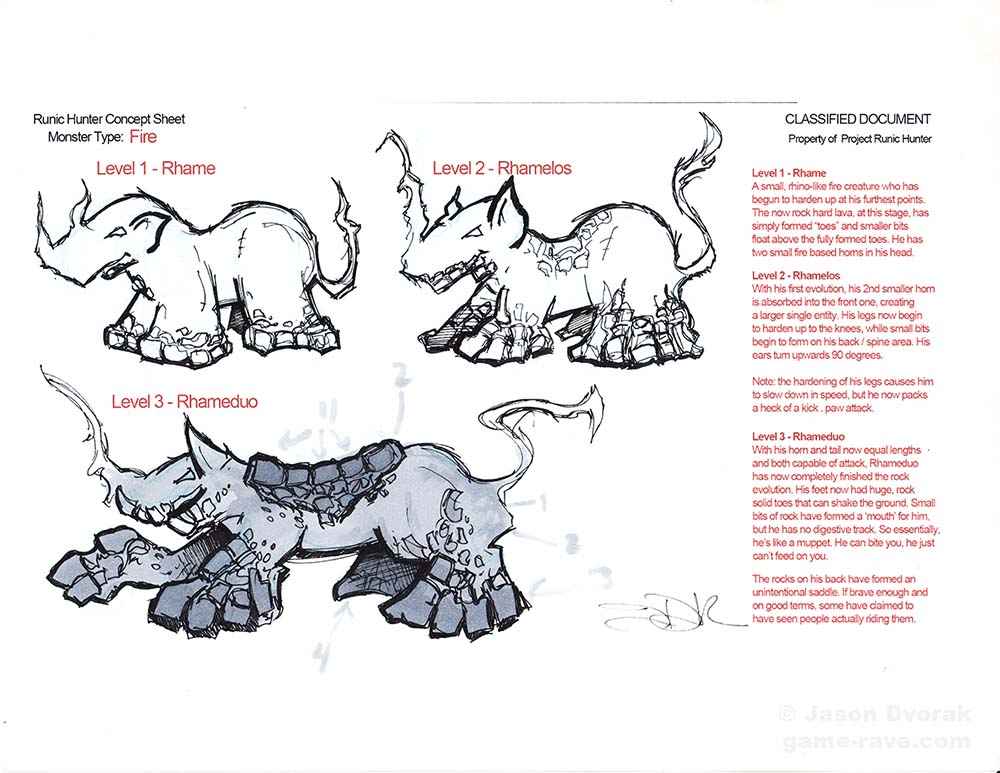
Fire types were my first creatures to be put to paper. My thought process started with “How do I turn a flame into a being that isn’t the Human Torch?” and then turned into, “What animals would be freaky with (Dr. Evil voice) ‘liquid hot magma’ oozing out of them. The rhino-like creature was the first creature I really focused on with details and understanding how cooled bits of lava could become decoration or armor.
The numbers written around his body, I believe, were the pen nib sizes I was experimenting with. You can also see he was one of the only creatures to make it to the ‘lore’ stage of the concept.
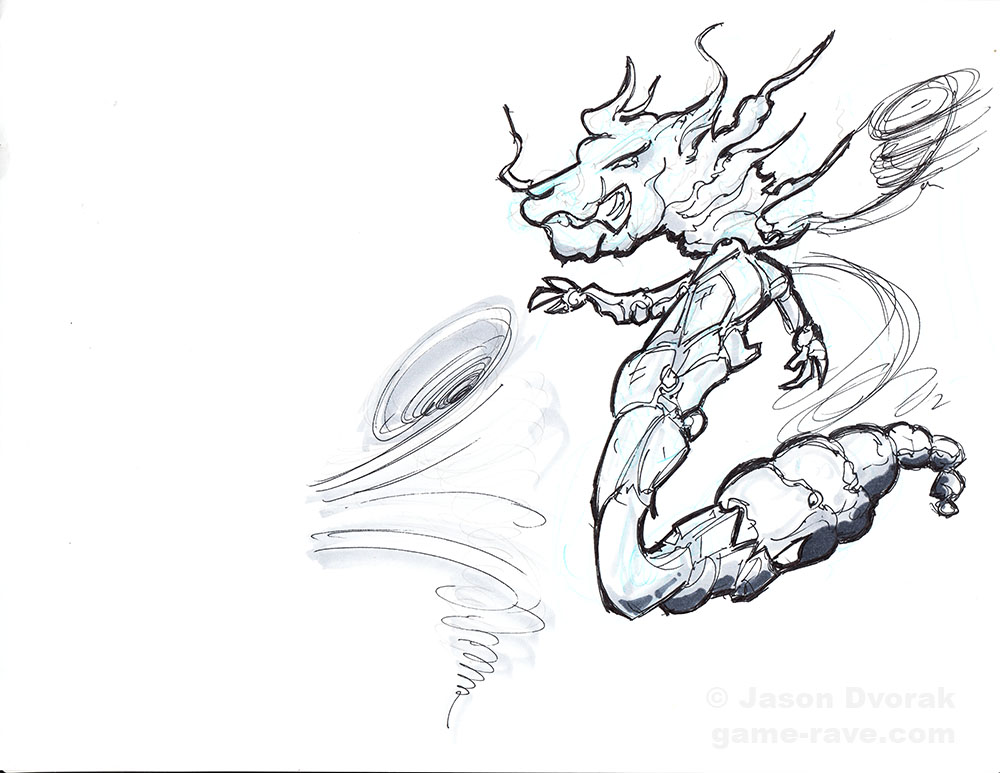
That dragon, like one might have been me, was trying to see if types could be crossed over each other. His head is clearly a fire type, but his body looks like I was trying to sort out more Earth or even a Wind type.
Mystic
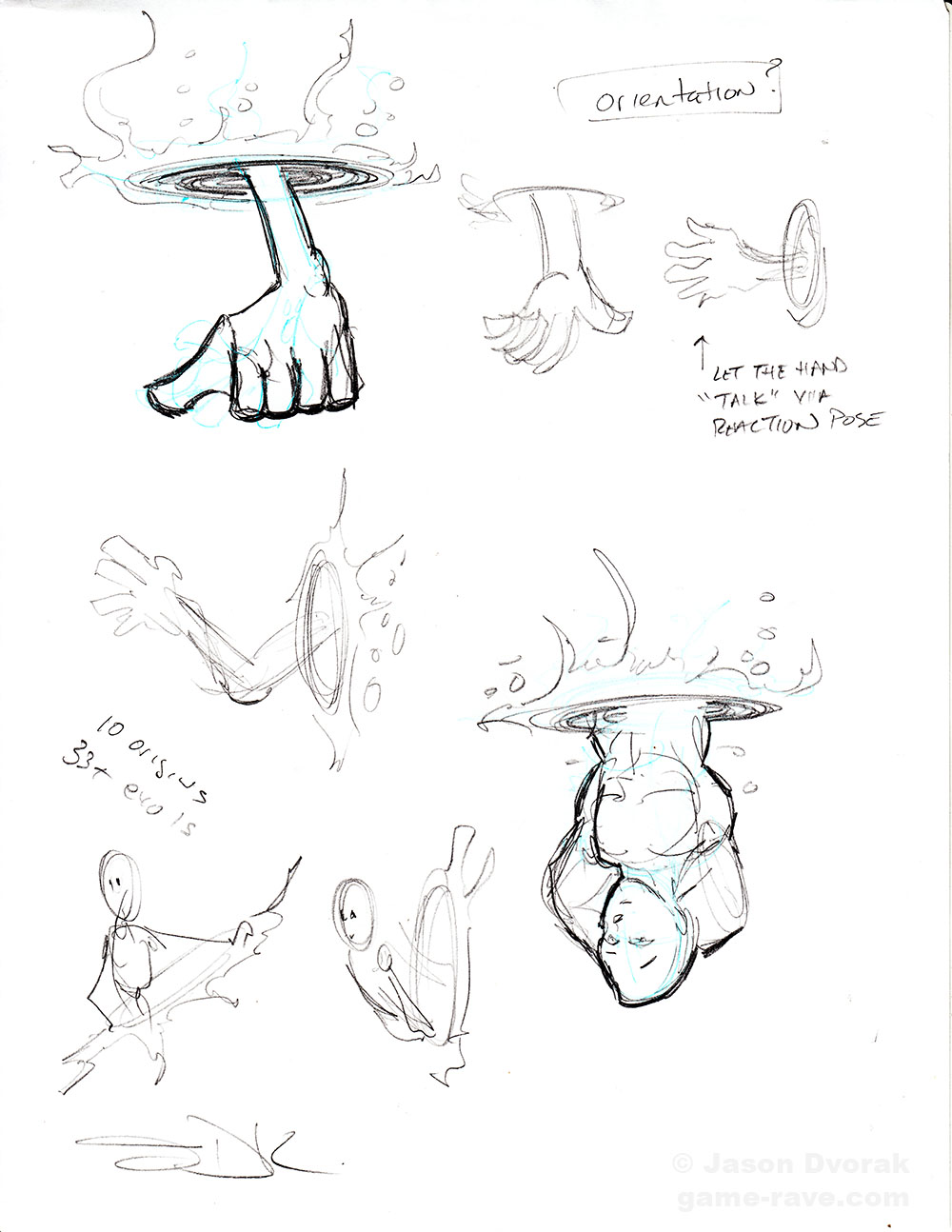
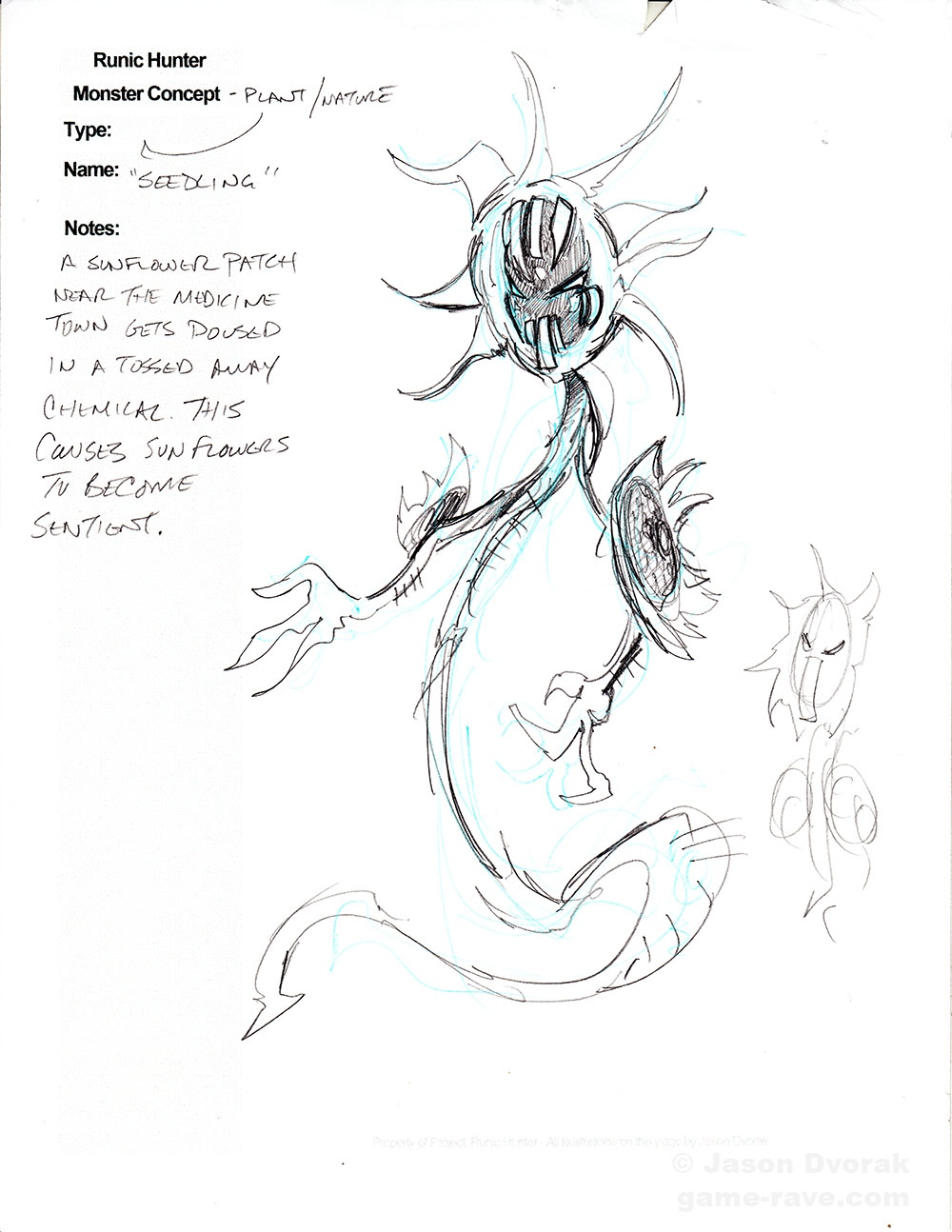
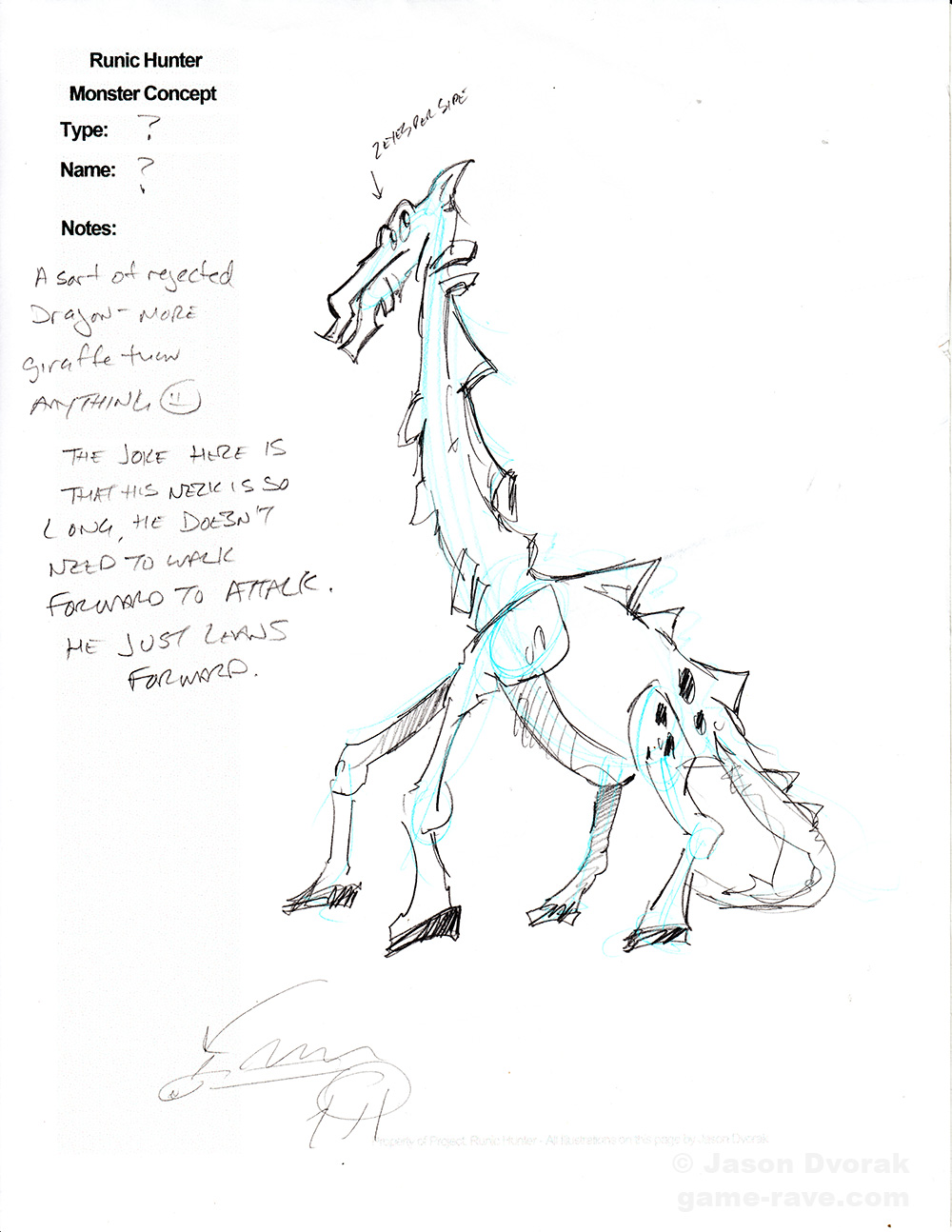
Mytic class was fun for me because I wanted to see just how goofy I could get with it. There was the ‘portal’ being who would only have had one body party hanging out at a time. If they used mental attacks, just the head popped out. If they were the punch and slap time, just a big old hand was visible.
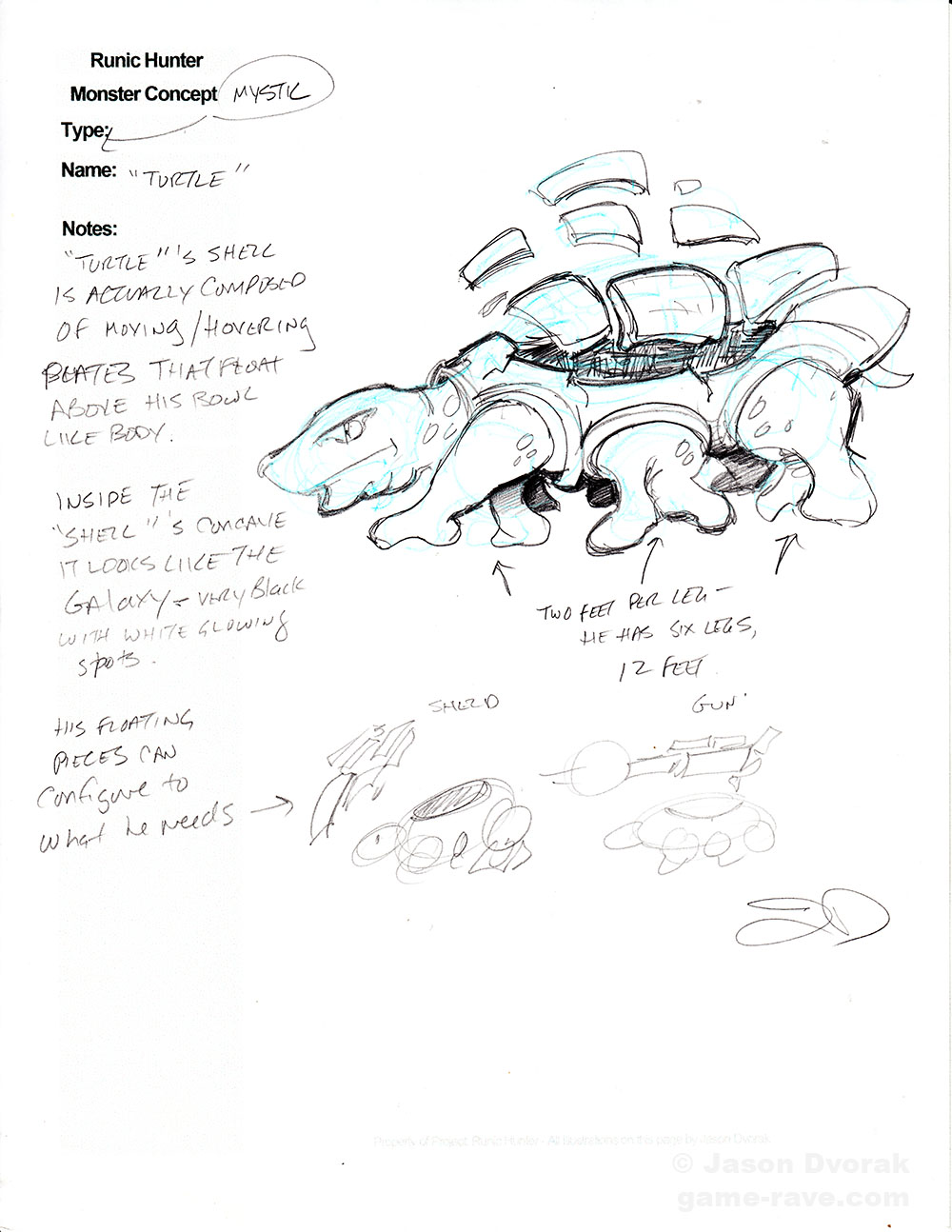
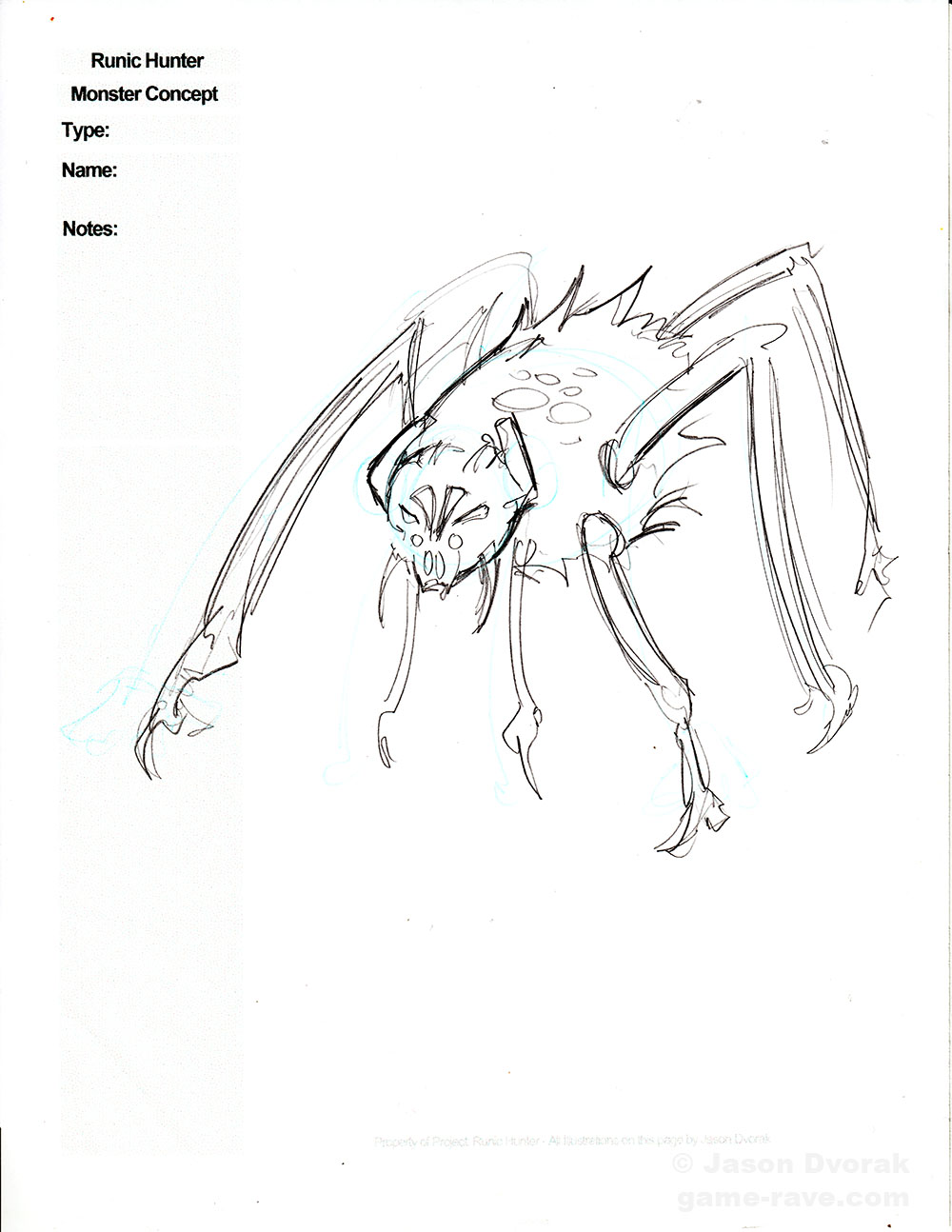
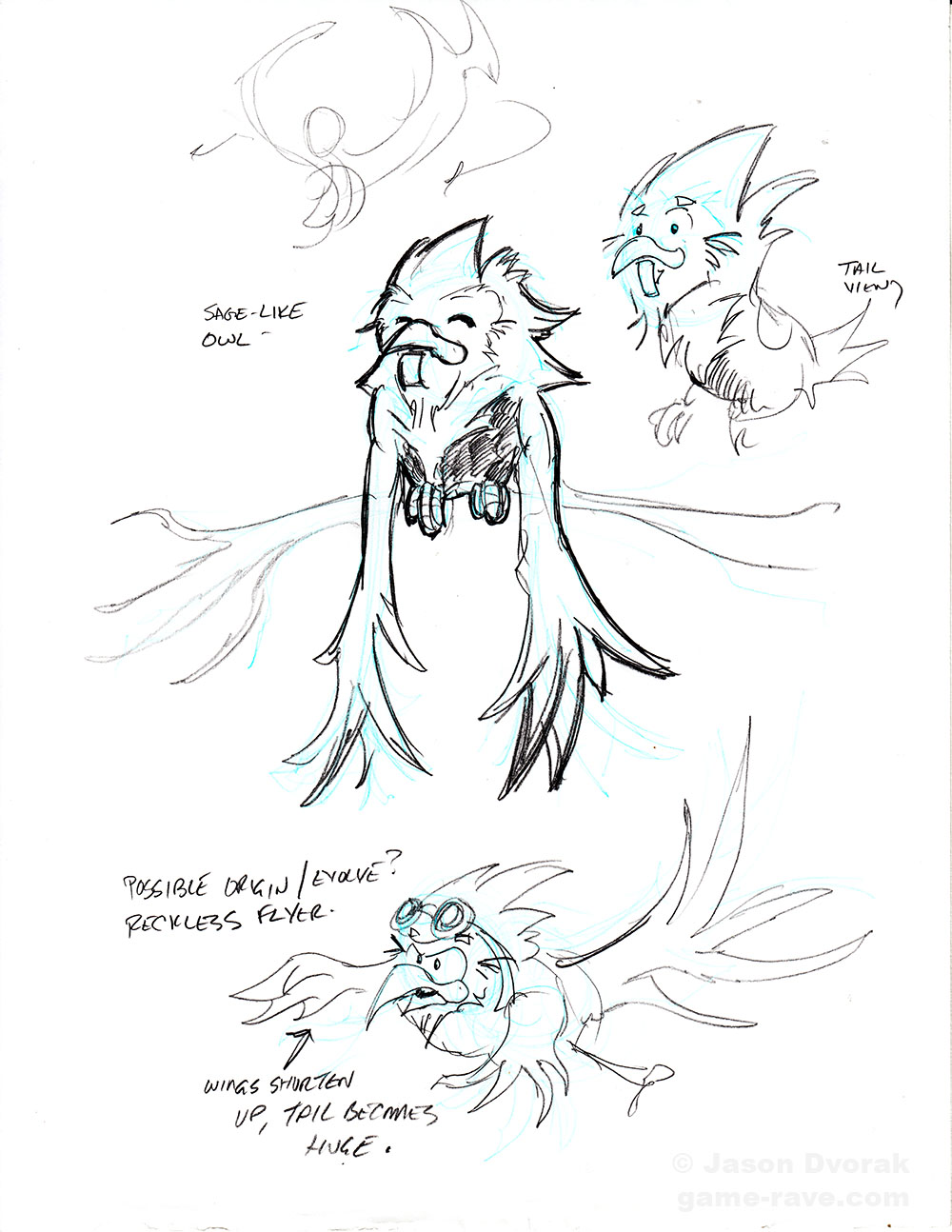
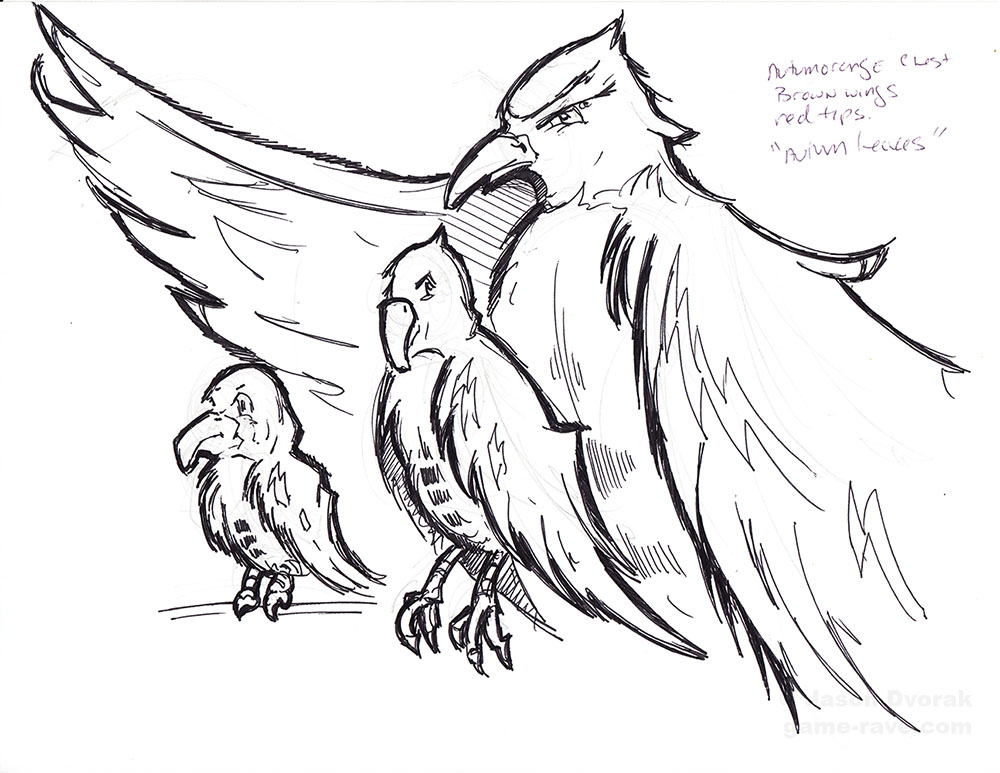
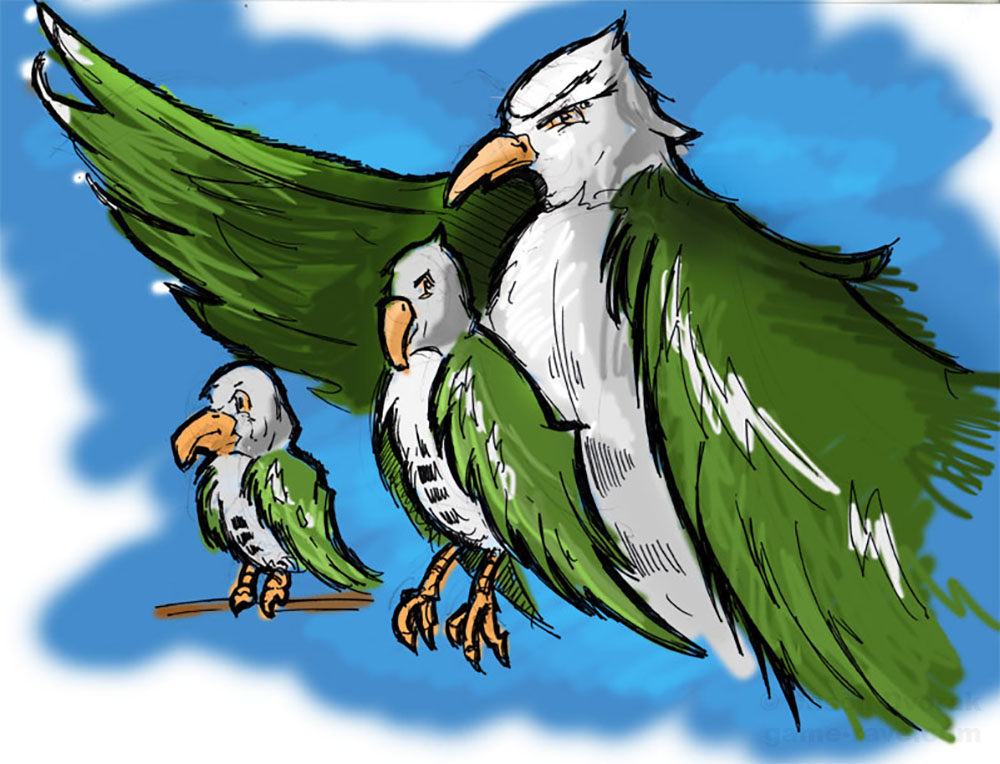
The turtle was my favorite concept of them all – it would have had a shell whose individual ‘shingles’ would be manipulated into various objects. Imagine if a Green Lantern were limited to using a deck of playing cards as his ‘pieces’ to use. It would definitely have been a ‘tank.’ The birds may have been from a “Wind” category I never got to, but they were in the Mystic folder.
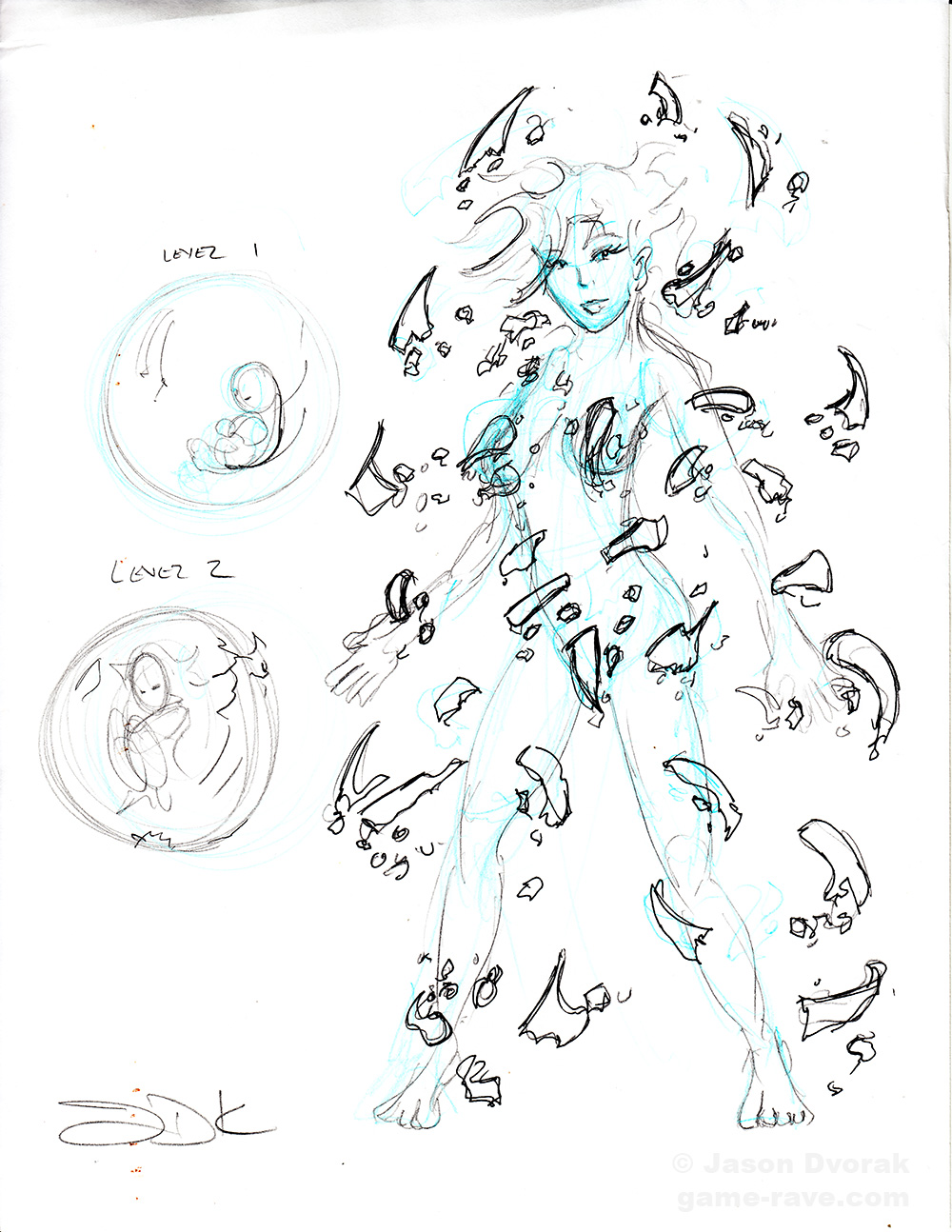
Of course, the female character was a running joke to the Japanese culture we were referencing as a whole. There’s always that ‘how is this allowed in a kids’ show’ risque female character. The joke here was that while she was technically naked (with no parts ever actually drawn in), her shattered crystal ball pieces would have always floated in just the right spots to cover her up. I would have made the important glass pieces much larger in the actual game sprites.
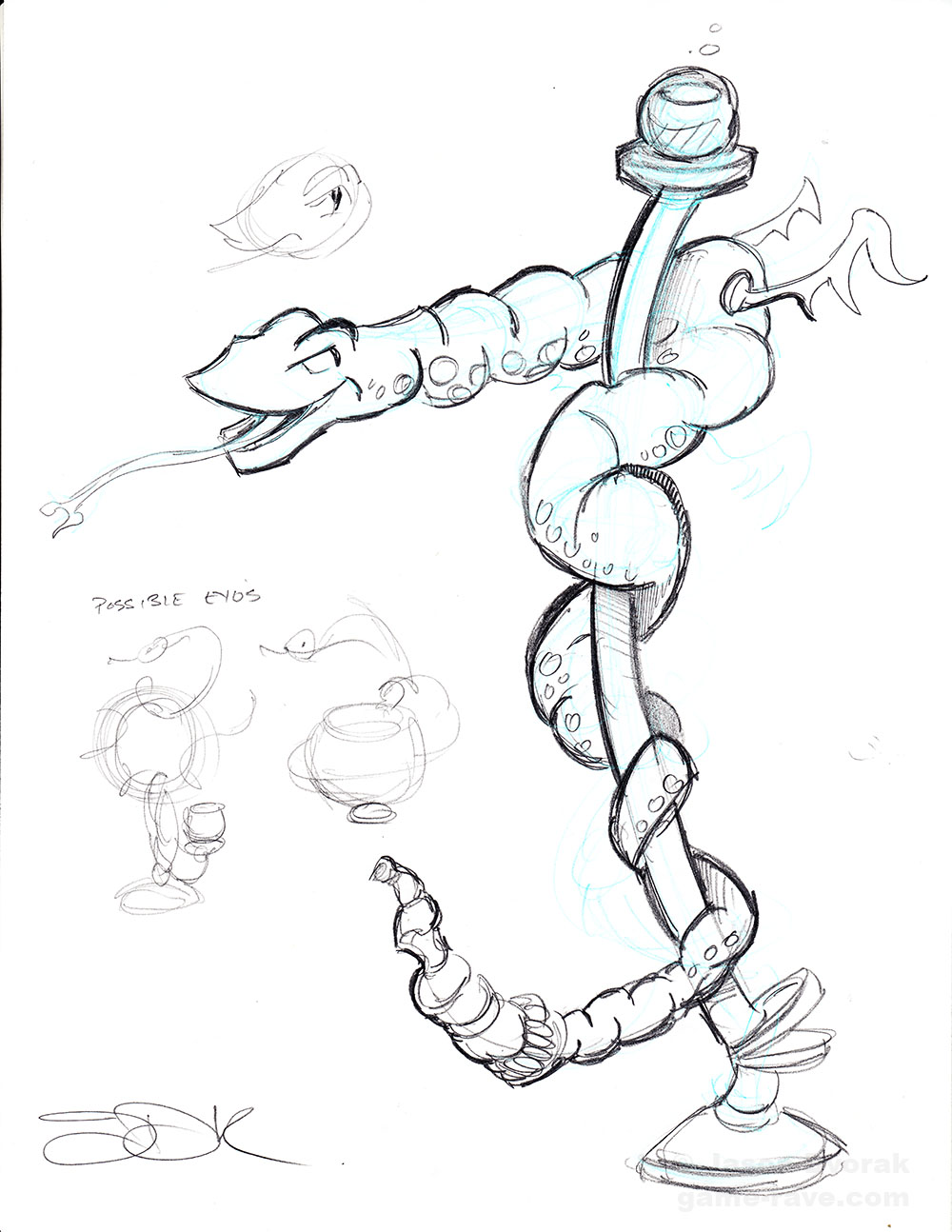
The snake would have been a healing type, based around the actual real-world medical logo with the twin snakes.
Techno
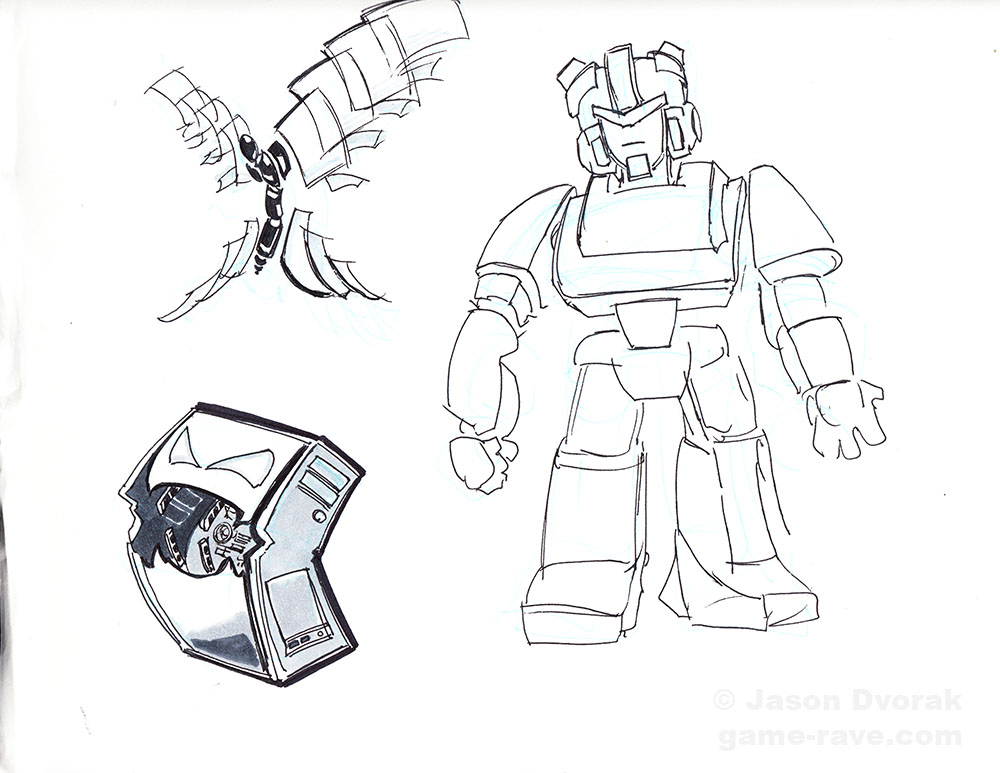
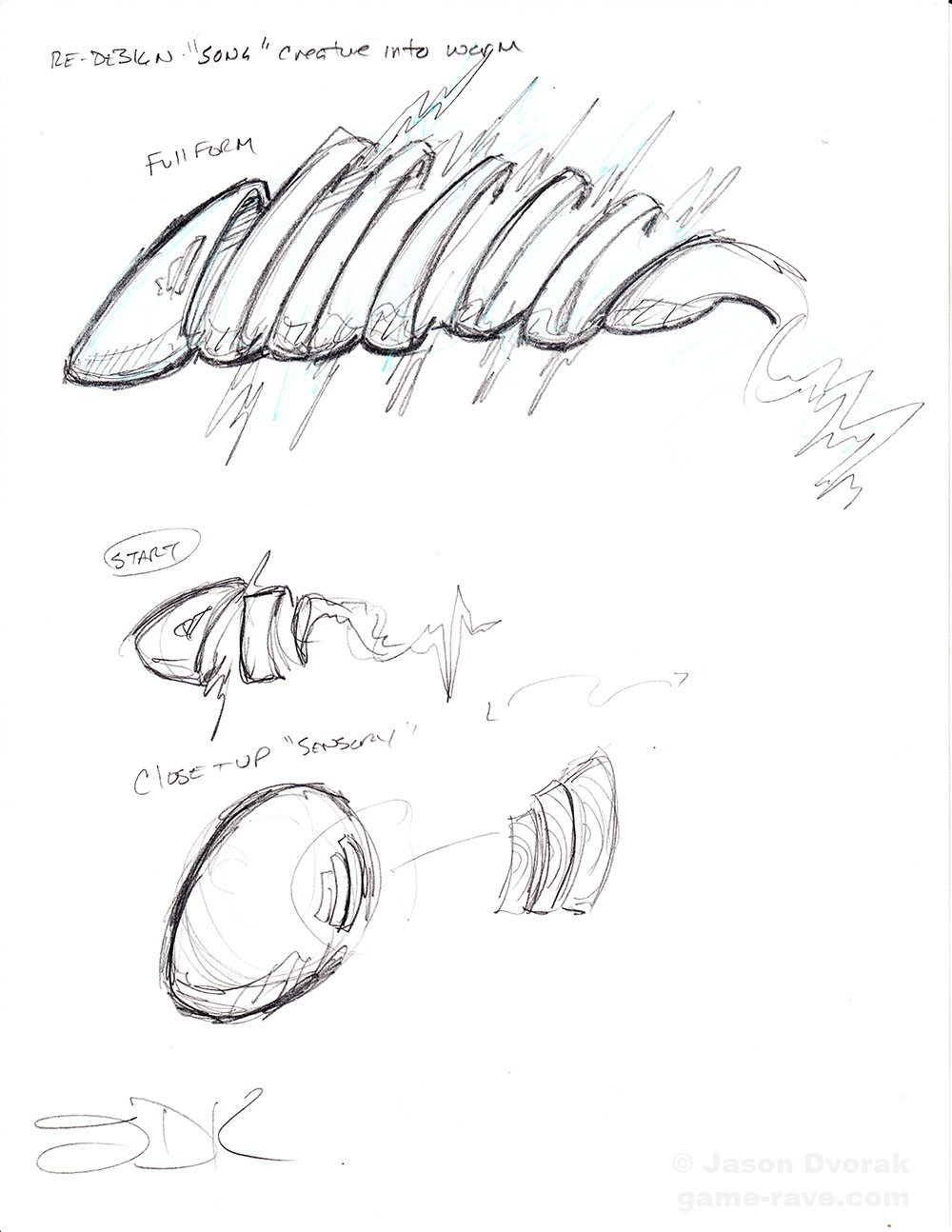
Techno was going to be my playground. Being old enough to have lived through every iteration of a computer and ongoing technology, these monster types would have been spins on typical D&D cliches. The computer tower as a treasure chest mimic still makes me giggle to this day. There were also music concepts, like an audio wave made to look like a worm – aka that ‘earworm’ song. I think the butterfly-like one was supposed to be a file system, where each folder path was a part of the wing system.
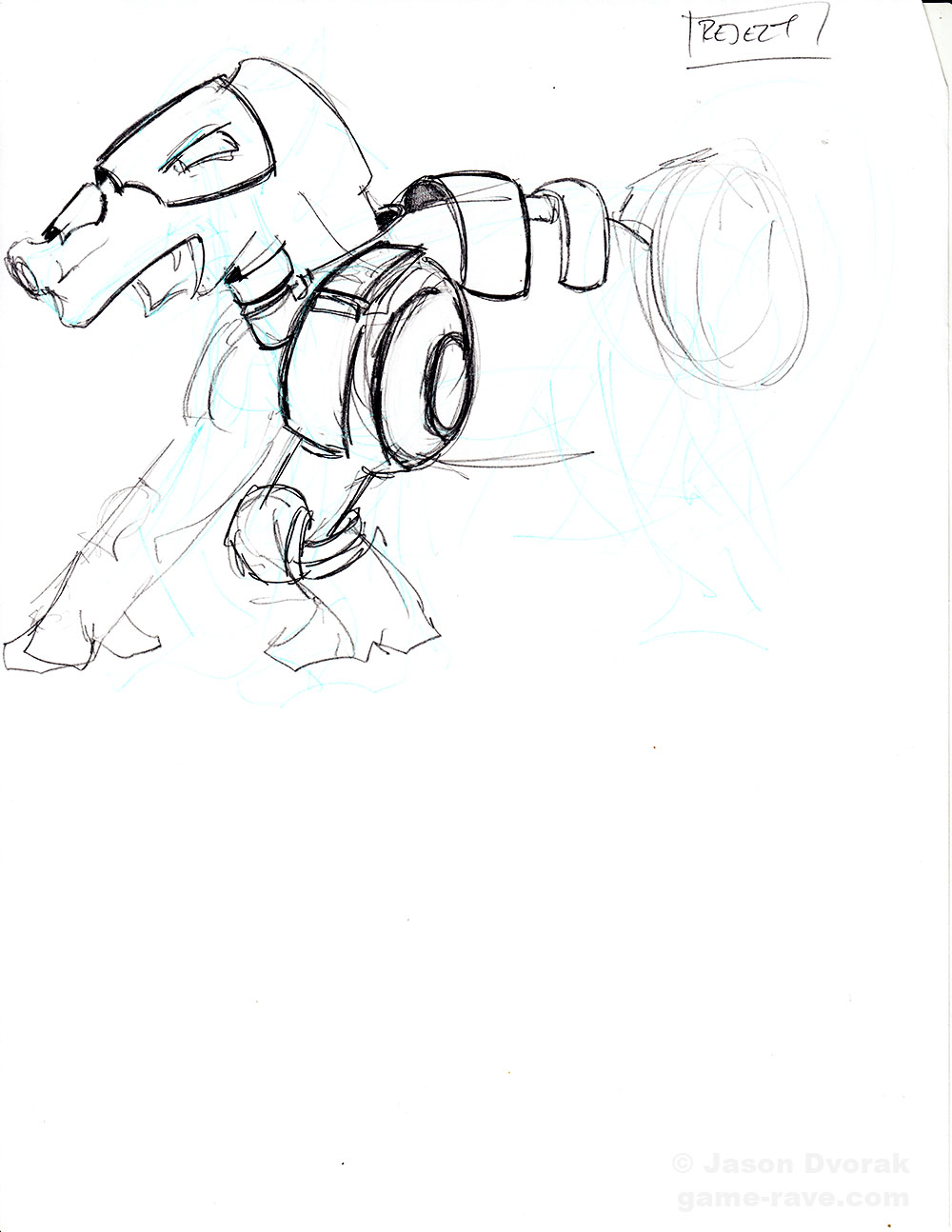
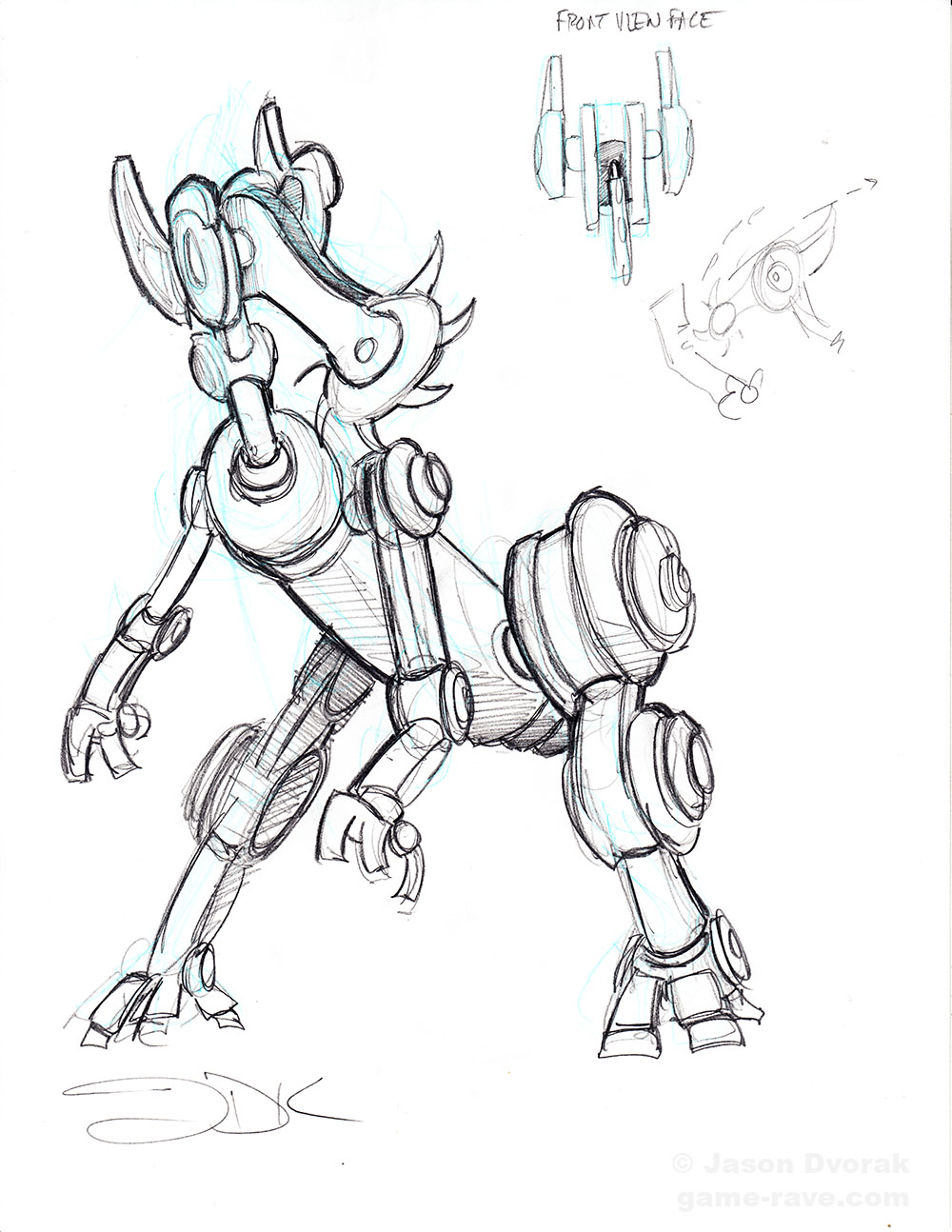
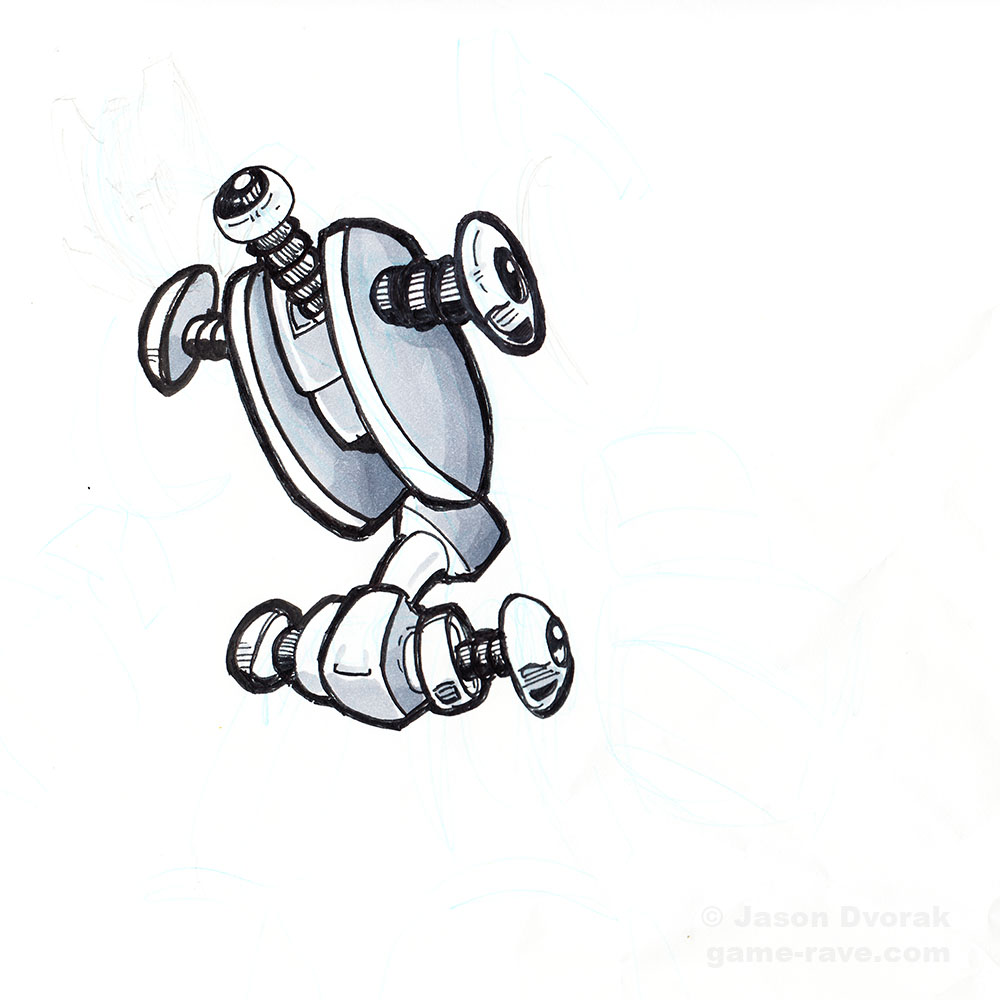
The buzzsaw puppy might have been a bit much. He was coming from the ‘construction technology’ angle, like an earthmover, but made cute. The “torso” was likely just me doing a color study with my markers.
Water
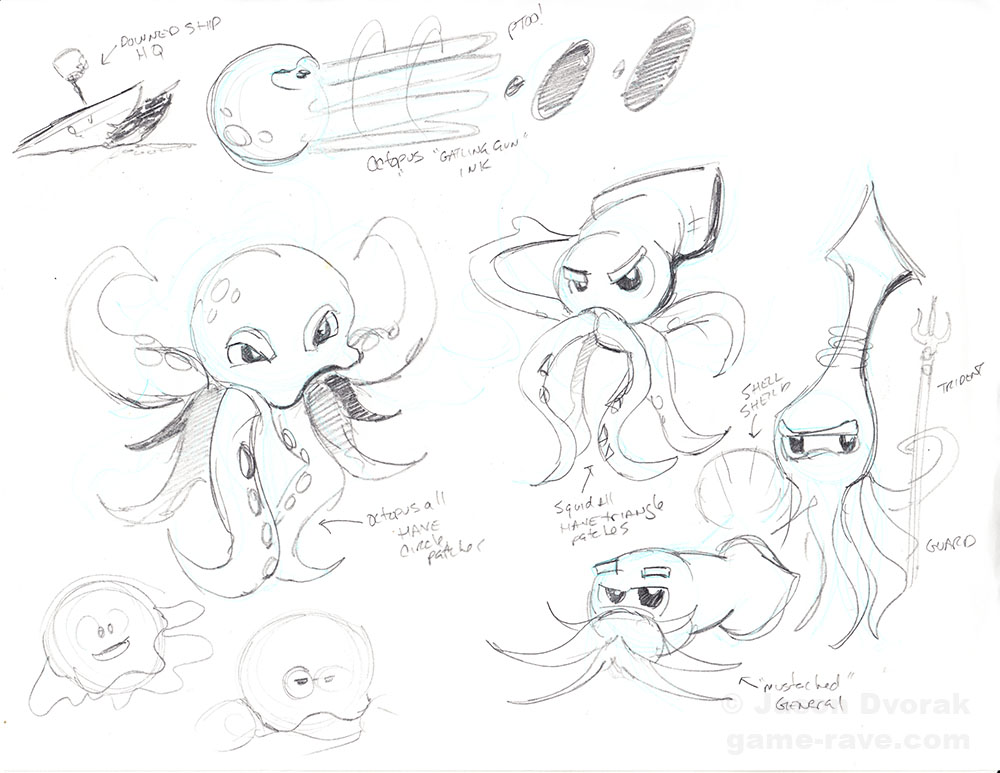
Water was where I started playing with limitations. As in, “If I have an octopus, and only an octopus, how many different attacks could I create from just the 8 tentacles?” Besides the Gatling gun and other ideas, I also tried using them as props or make-up to change the age of one. Curling the tentacles around so they appeared as a fancy mustache and beard made it look like an old southern general.
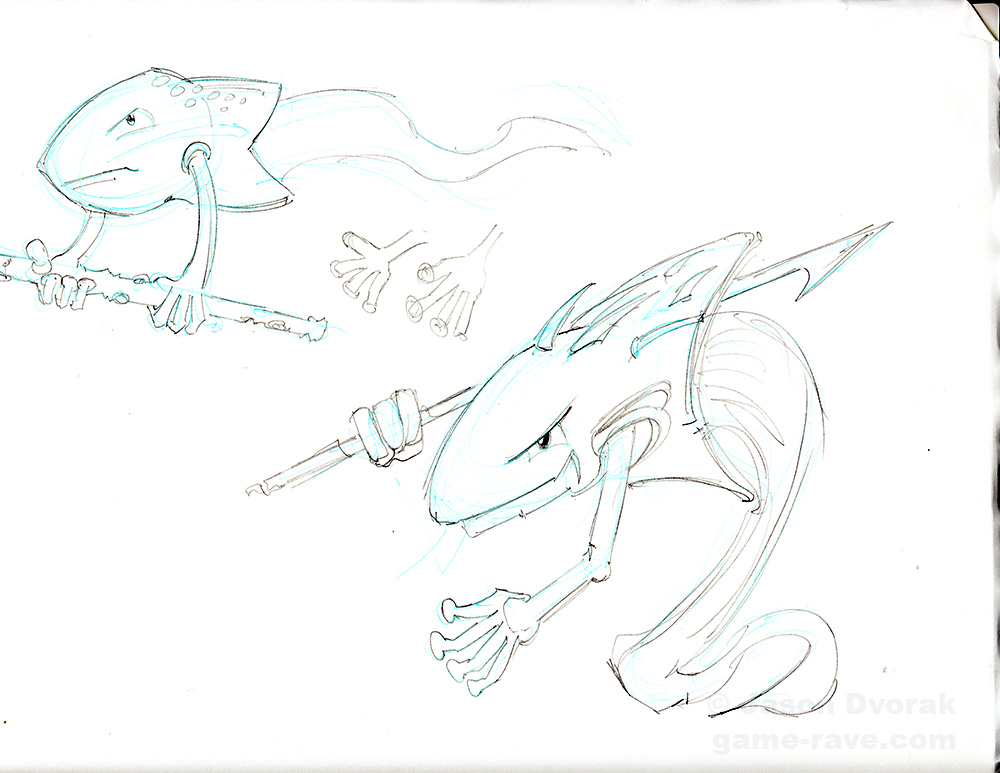
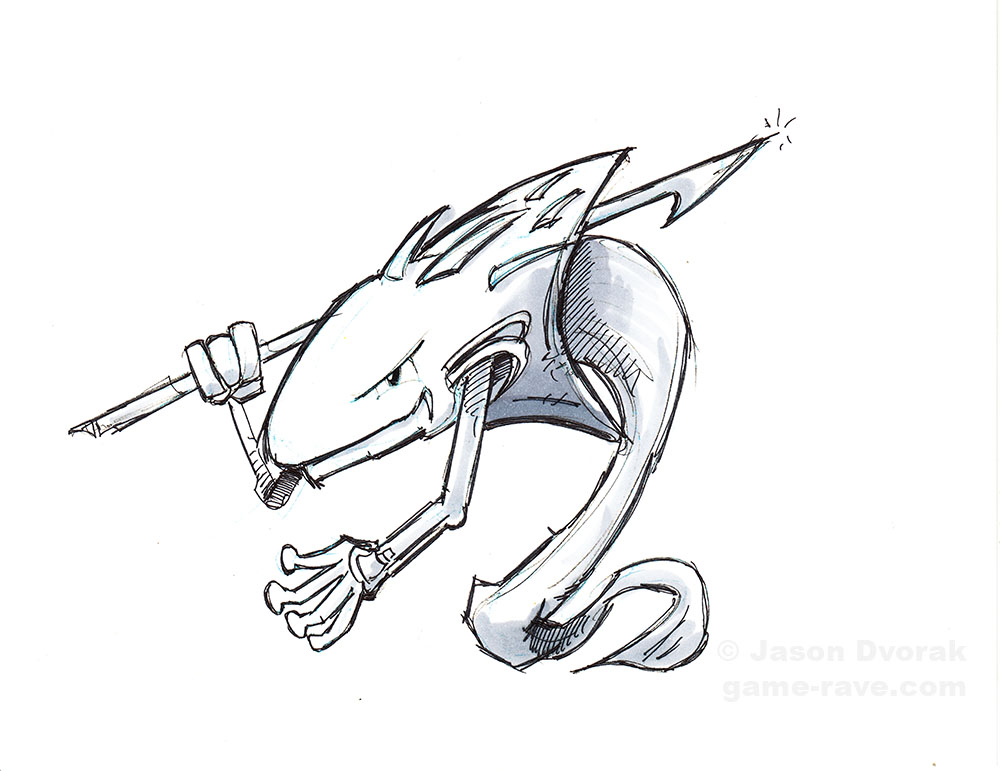
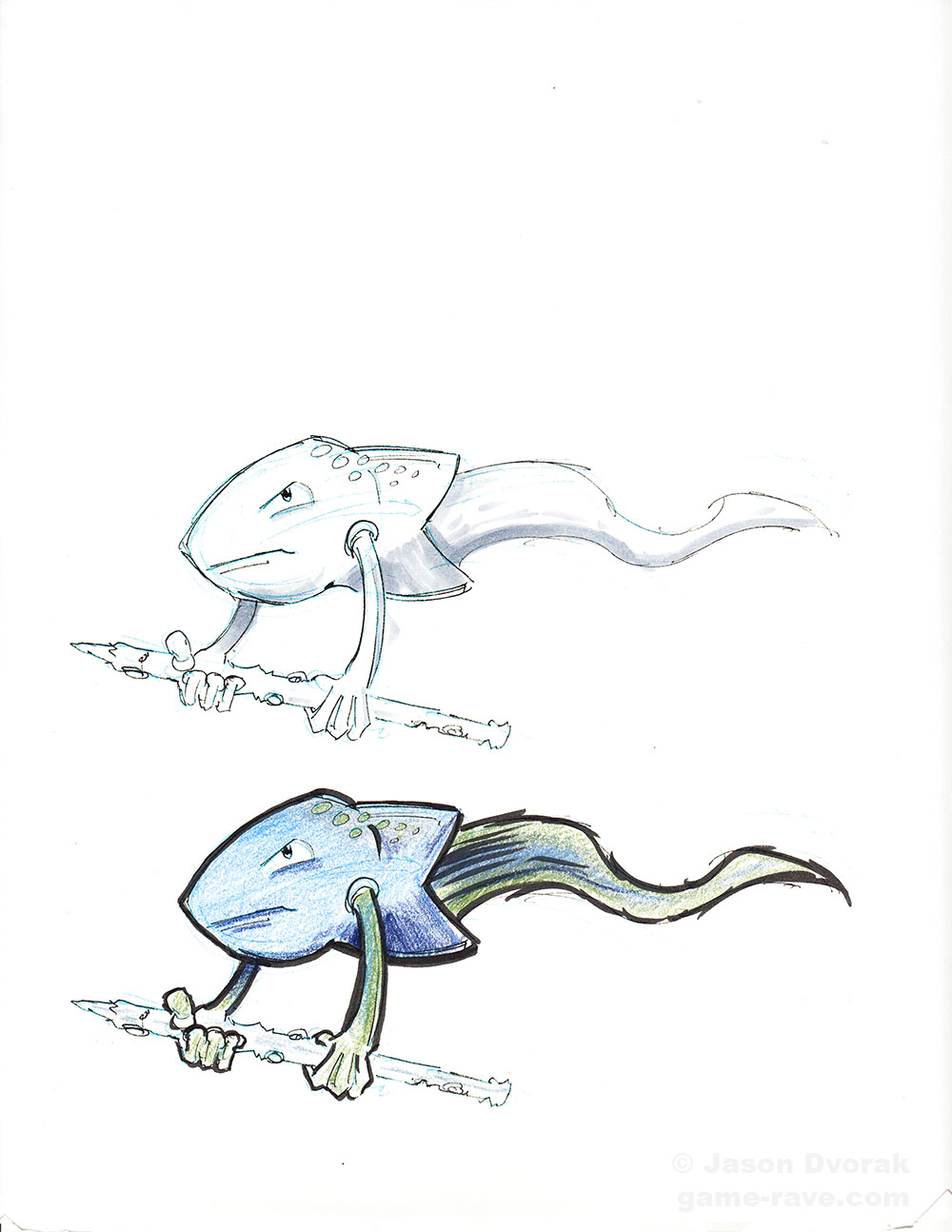
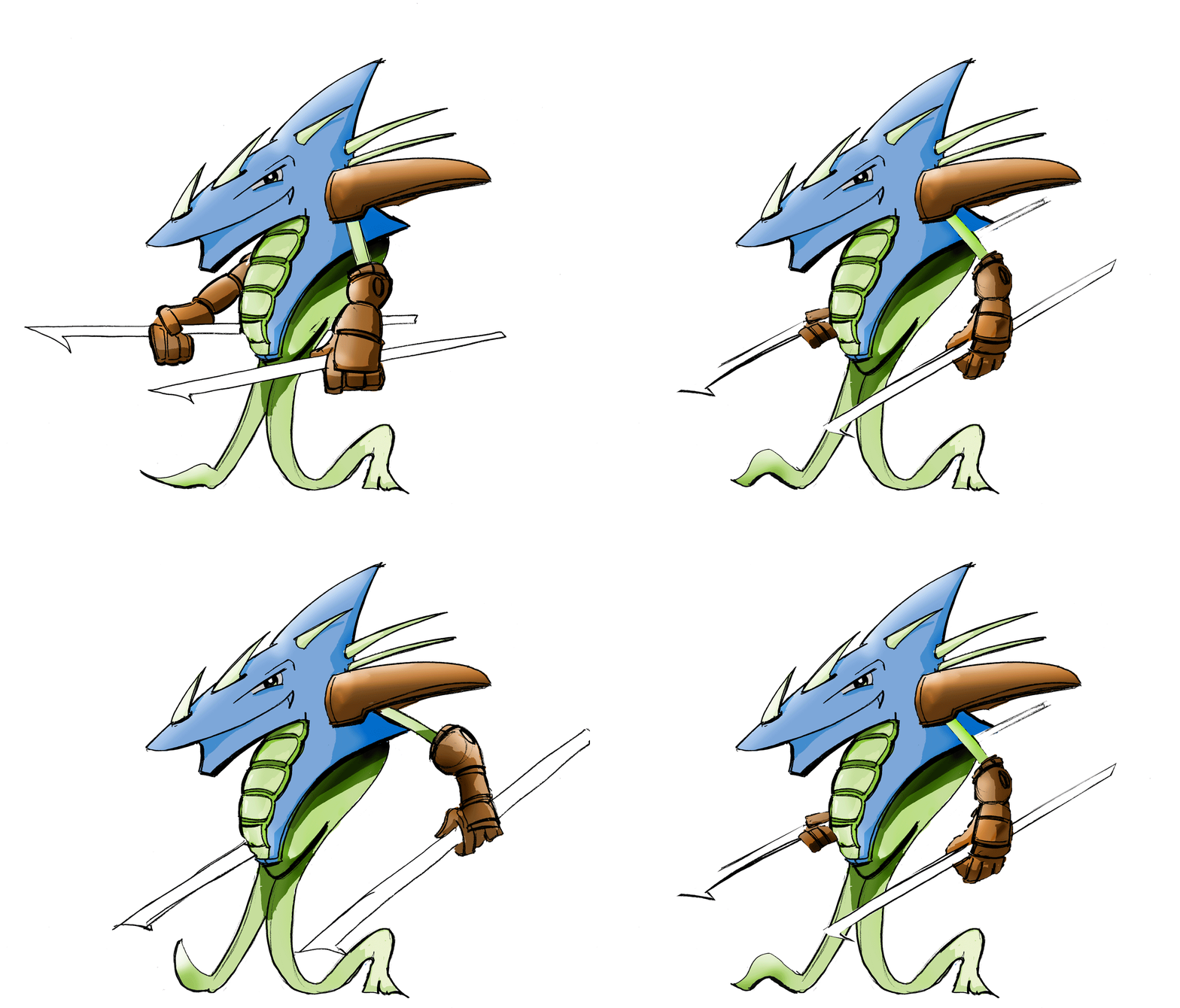
The shark-like creature was the only attempt at animation that got made. It gave perspective on how many frames would be needed per action.
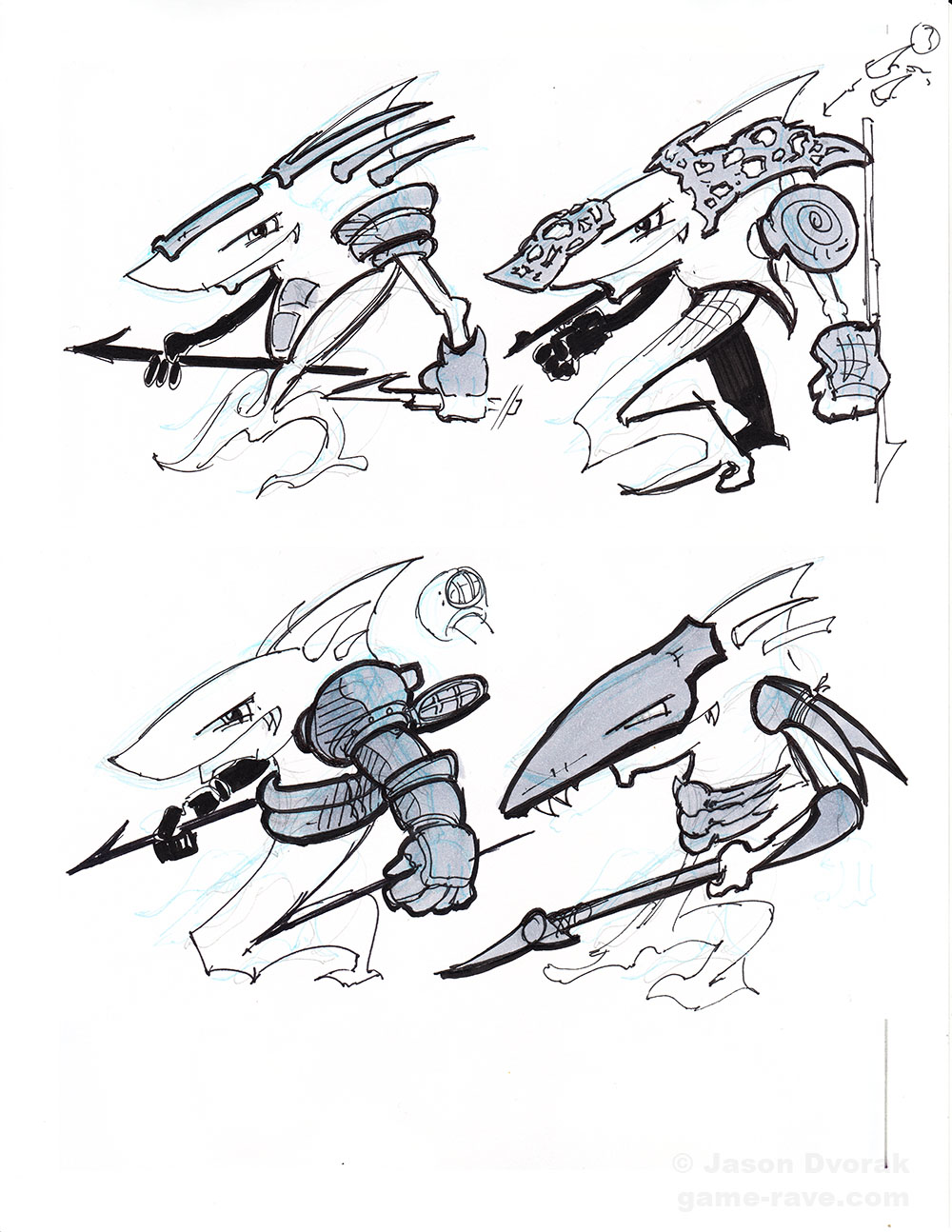
The other limitation was “If these guys lived in the ocean, what do they exclusively have access to. The shark-like soldiers would have had different tiers of armor based on that angle. So, repurposed seashells and algae, human diving equipment remains, and even the bones of other animals came into play.
Zombie
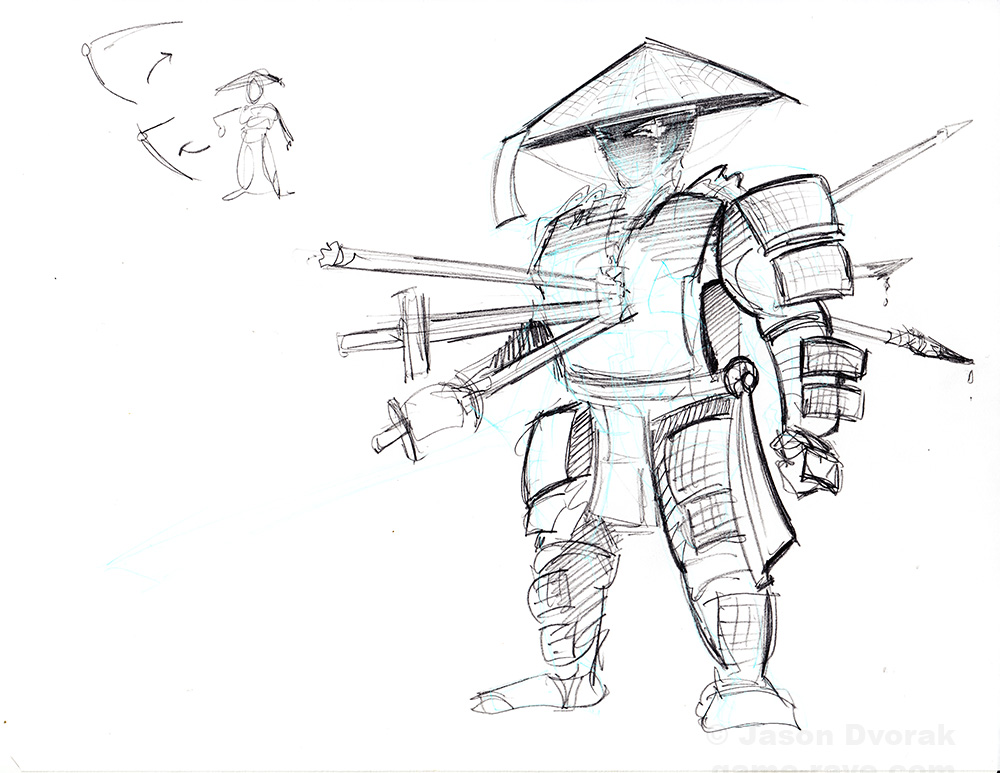
I had just started zombie-type ideas when we realized the party was already over, so there’s not much here. My idea for this class was going to be a mixture of “payback” and “visual storytelling”. The zombie samurai would have had one attack for each sword lodged in his chest. Pulling it out, using it, and then reinserting it back into himself rather than the scabbard. Essentially, sharing his fate with you.
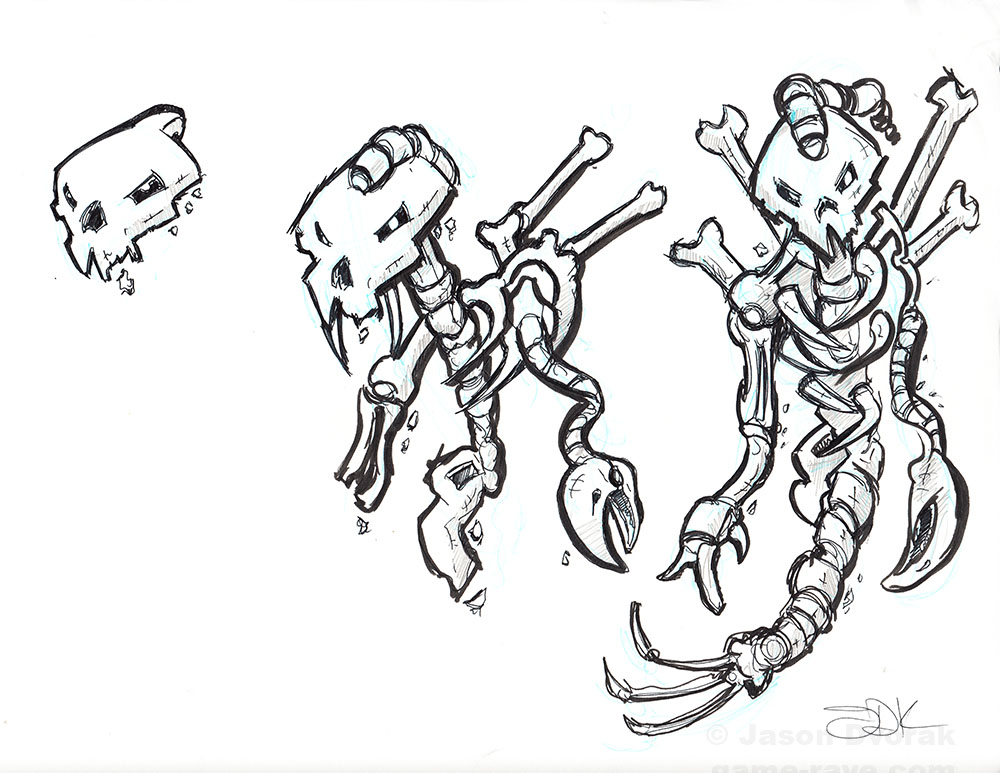
The floating bone creature would have had its evolutions based on which creatures you fought the most. So if you spent hours defeating water type, sea creature bones would be added to him. This would have followed each evolution, so two or three types of bones would be possible. It would have SUCKED to animate that many variants, but it would have made it a fan favorite to mess with.
Never put to paper was a coffin concept. It would have been standing vertical, and the attack type would dictate how the zombie inside would have looked and acted. Casting heal? He’d knock first, then open the casket dressed as a nurse. Cast a spell? The door flies open, and he’s in a magician’s garb.
Towns, Runes, and Characters
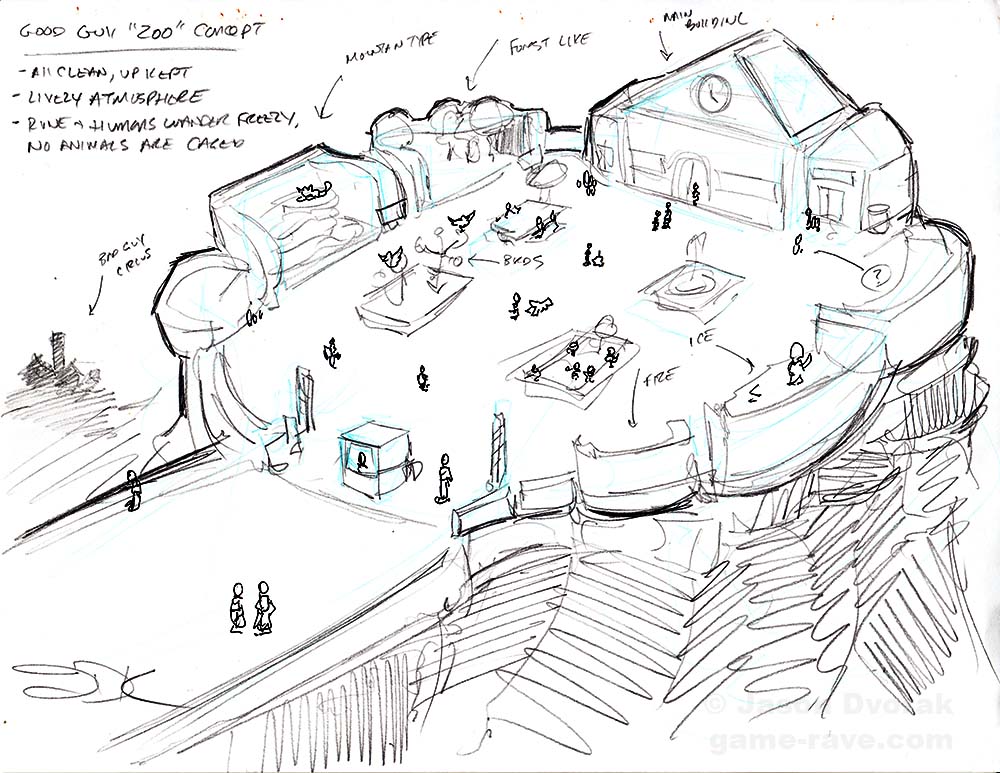
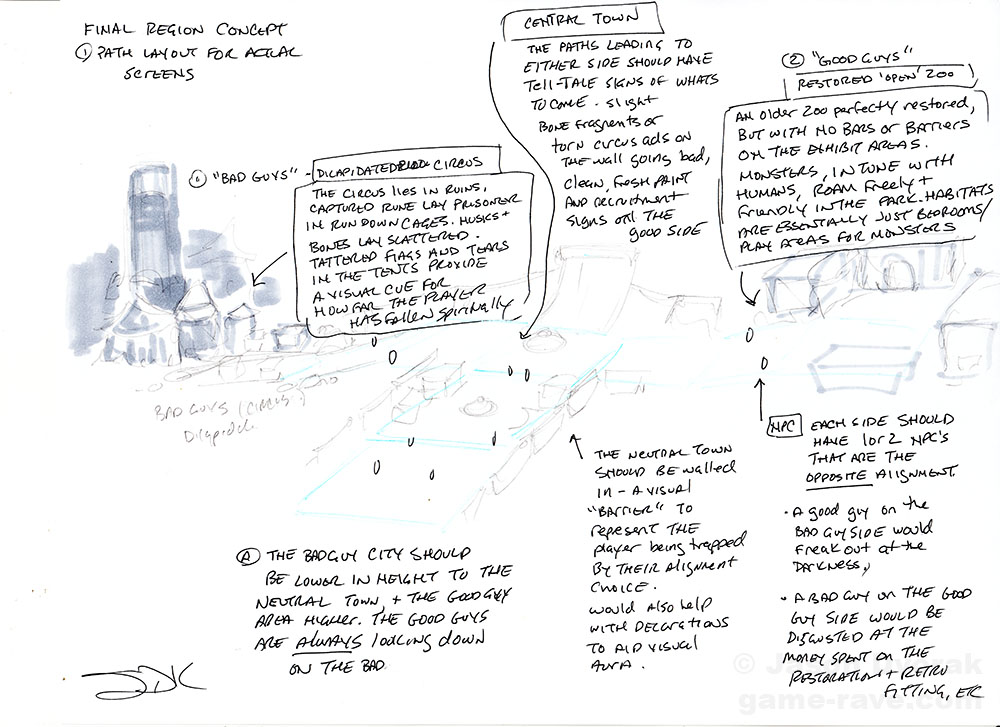
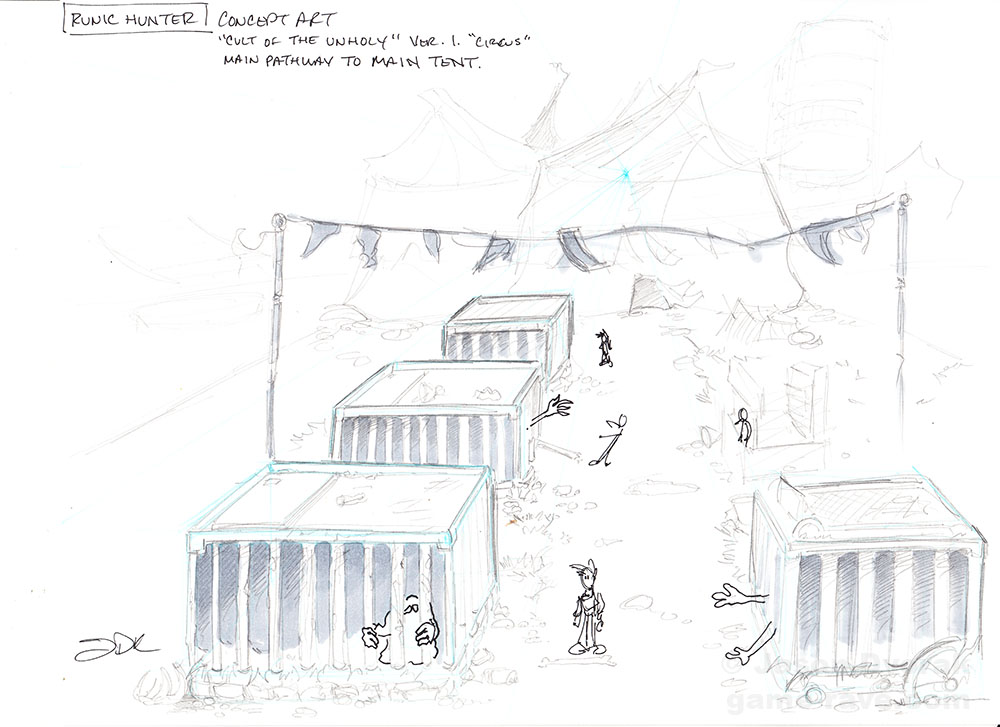
There was only enough time to rough out a few locations. This included the bad guys’ lair, a run-down circus where Runes (the creatures) were always under lock and key. Opposite of that was a sort of free-range zoo environment for the good guys and their runes. I wanted to be a it too on the nose to allow players a sense of emptiness when they saw how the villains treated their creatures.
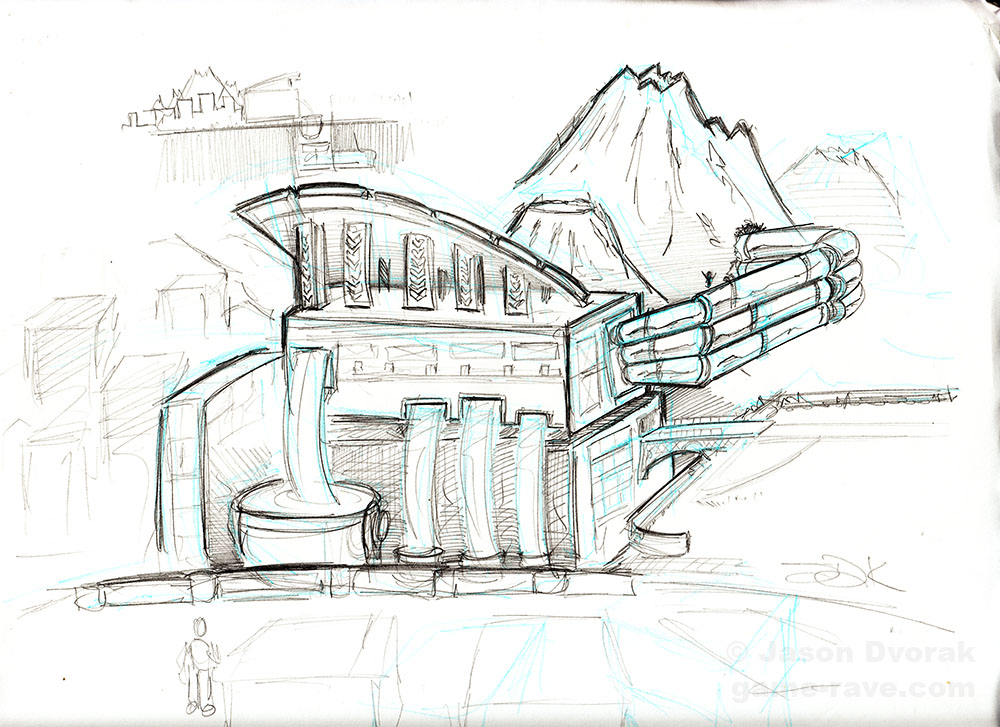
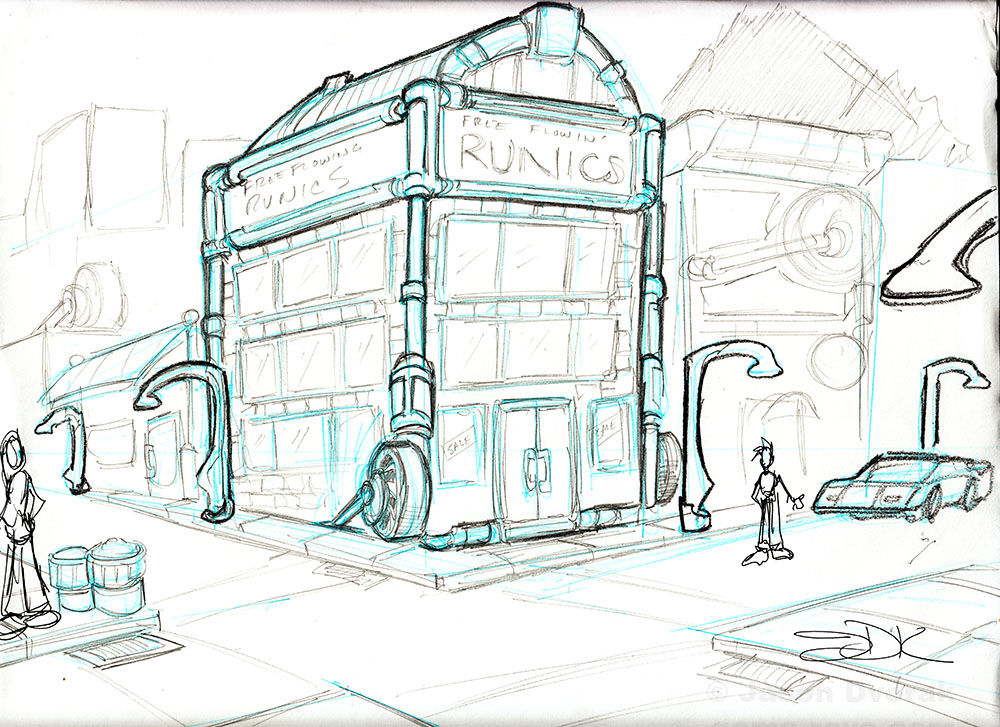
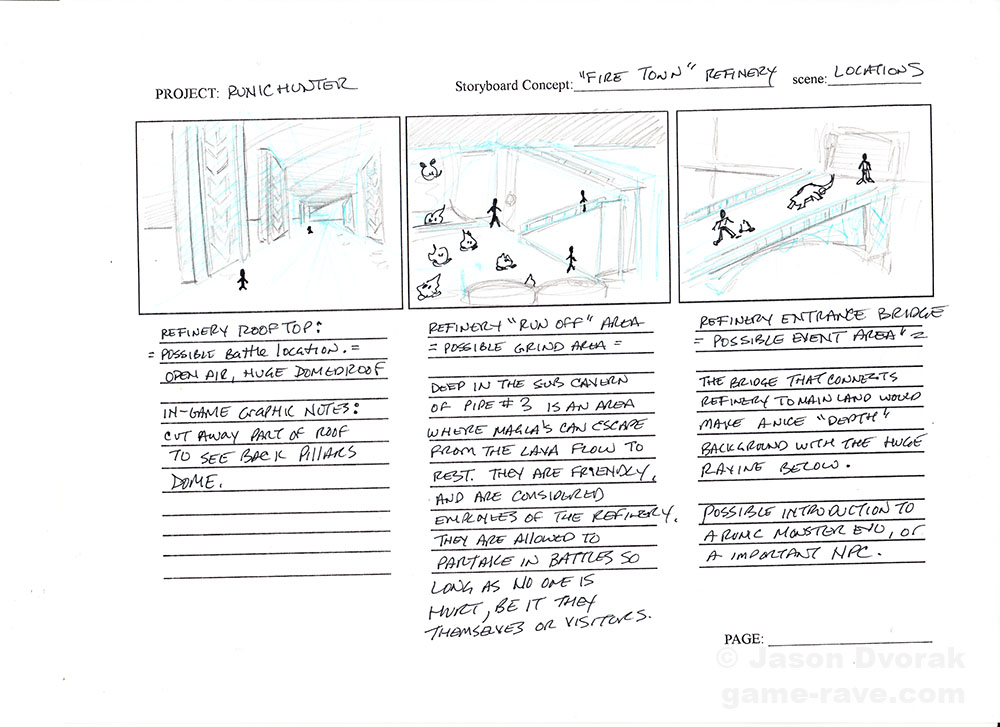
One of the coolest concepts was the Fire Class town. It would have had magma pipes in place of neon tubing. The city would have always been shown at slightly darker evening times to really make the magma pipes glow. Misc thoughts put to paper also included possible battle and scene locations, with the background visuals to help sell the atmosphere and vibe of the location.
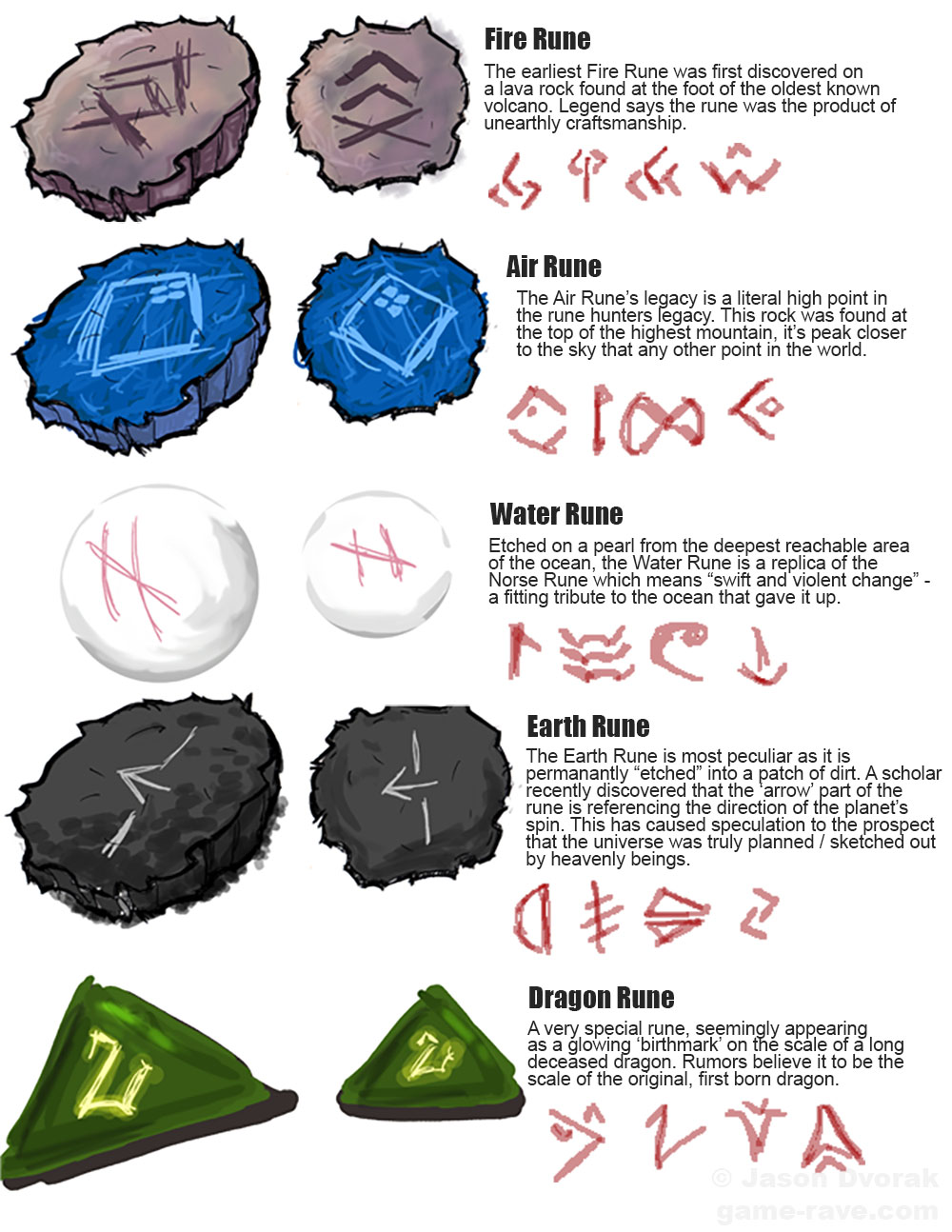
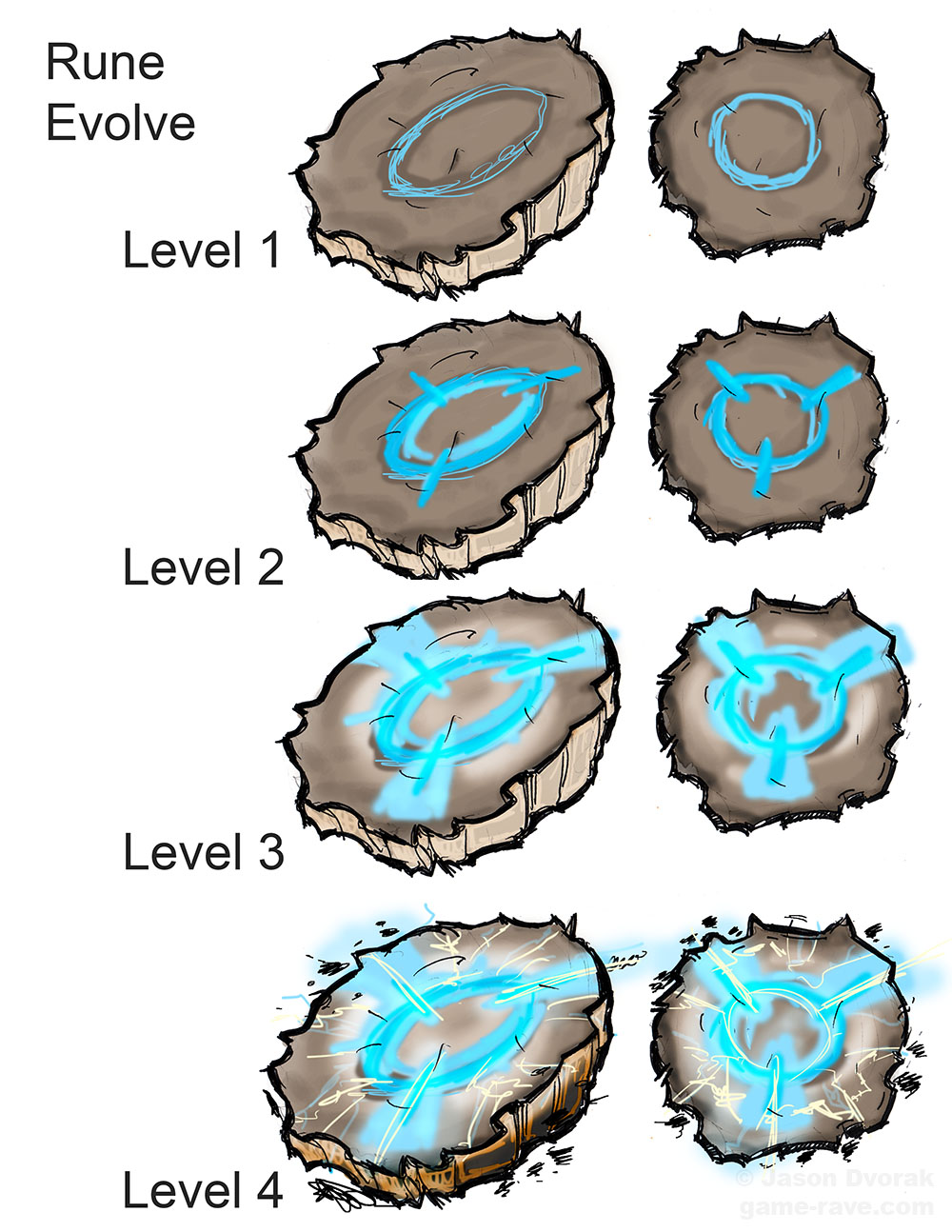
A few of the player-type characters with two NPCs made it to paper, along with a full color explanation of the Runes and their first-draft origin ideas.